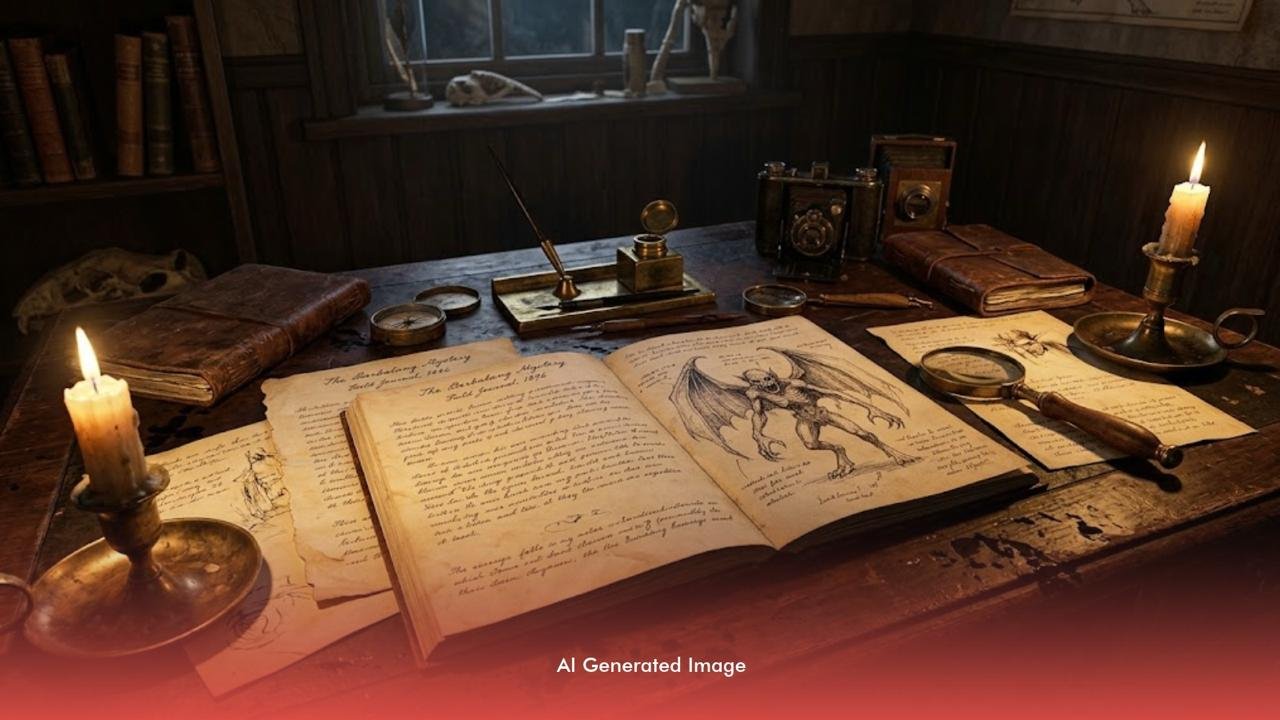
The Berbalang are often described as terrifying creatures from Philippine folklore, said to roam at night, leave their bodies behind, and seek human flesh. Their story appears across supernatural encyclopedias and online lists of legendary monsters.
But follow the trail of citations, and an intriguing question emerges: how much do we actually know about the Berbalang? Much of the English-language story leads back to a single account published in 1896 by a foreign writer who described what he claimed to have learned about the people and traditions of an island in the southern Philippines.
What Are the Berbalang Supposed to Be?
The Berbalang are commonly portrayed in modern retellings as supernatural beings associated with graveyards, human flesh, and unusual eyes. Some versions claim they can send their spirits out of their bodies to search for victims while their physical forms remain behind.
These details are frequently repeated online, but their prominence should not be mistaken for independent confirmation. Many summaries appear to draw from the same historical account rather than from multiple, independently documented sources.
The Berbalang story is therefore best approached as a supernatural narrative recorded in a historical text, not as a verified description of a living community or a complete representation of local folklore.
Where Is Cagayan Sulu?
The location named in the original report, Cagayan Sulu, is now known as Mapun, an island municipality in Tawi-Tawi in the southwestern Philippines.
This geographical connection is important because many modern monster lists simply label the Berbalang as a Filipino creature without explaining where the story was recorded or which community was associated with it.
The distinction matters. A story attributed to a particular place should not automatically be treated as representative of everyone who lives there. Nor is there any basis for portraying the people of Mapun as the supernatural beings described in later retellings.
Who First Recorded the Berbalang Story?
Much of the widely circulated English-language account traces back to Ethelbert Forbes Skertchly, whose paper, Cagayan Sulu, Its Customs, Legends, and Superstitions, was published in 1896 by the Asiatic Society of Bengal.
The publication is a real historical document. However, confirming that a report exists is not the same as confirming that every claim within it is true.
Like many nineteenth-century travel and ethnographic writings, the account must be read with attention to its limitations. A writer might combine personal observations, stories heard from others, interpretations, and assumptions shaped by the period in which the text was produced.
This is an important distinction when researching supernatural folklore. A historical source can confirm that a legend was recorded at a particular time without proving that the events it describes actually happened. For the Berbalang, the 1896 report provides a starting point for investigation, not definitive proof of their alleged abilities.
How Did the Berbalang Story Travel Around the World?
Over time, the Berbalang appeared in English-language discussions of supernatural beings and unusual folklore. Later books, creature encyclopedias, and online articles helped introduce the story to wider audiences.
Repeated retellings can make a legend appear to have a vast documentary history. Yet when several websites rely on the same original source, they do not necessarily provide several independent accounts.
Tracing these citations backward is one way to understand how a story evolves. Details may be repeated, exaggerated, or presented without the historical context that originally accompanied them. In the Berbalang's case, the connection to one nineteenth-century report raises questions about how much of the modern version comes from independent folklore and how much comes from repeated retellings.
Are the Berbalang the Same as the Aswang?
The Berbalang are sometimes grouped with the aswang and other Philippine supernatural beings because modern descriptions associate them with human flesh and the dead.
However, that does not establish that the Berbalang are simply another version of the aswang. Philippine folklore includes many distinct beings, with stories and characteristics that vary across regions and communities.
The Berbalang account has its own specific geographical and historical context. Treating every frightening creature as interchangeable risks erasing those differences and oversimplifying the country's diverse traditions.
It is also important not to assume that the name Berbalang is commonly used by present-day Mapun residents without confirmation from reliable local sources or community members.
What Do the Stories Say About the Berbalang?
Several striking details recur in modern summaries of the account:
- The strange eyes: The supposed beings are described as having distinctive pupils, a feature repeated in later versions of the story.
- The wandering spirit: Some retellings claim they can leave their physical bodies and travel in spiritual form.
- The graveyard connection: The English-language narrative associates them with the dead and an alleged appetite for human flesh.
These details help explain why the Berbalang became memorable in supernatural literature. However, their repetition across websites does not independently verify the claims or establish how closely modern versions reflect the original text.
Is There Evidence That the Berbalang Exist?
There is no credible evidence establishing the existence of people with the supernatural abilities attributed to the Berbalang.
The historical record also leaves important questions unanswered. How accurately did the original writer understand the stories he recorded? Were the accounts shared by multiple independent sources, or did they reflect a narrower set of claims? How have local traditions been understood and preserved by Mapun communities themselves?
Answering these questions would require examining the original publication alongside independent regional folklore research and, where appropriate, accounts shared by contemporary Mapun cultural knowledge holders.
The result might reveal a richer local tradition than the surviving English-language record suggests. It might also show how a dramatic nineteenth-century account became the foundation for a widely circulated monster legend.
The Berbalang remain an intriguing example of how folklore travels. Their story is frightening, unusual, and easy to repeat. But the trail behind the tale reminds us that a legend's popularity is not proof of its truth, and a historical account is only the beginning of understanding a community's traditions.