A new museum in Digos City is giving visitors a closer look at Mt. Apo as the site moves closer to a possible United Nations Educational, Scientific and Cultural Organization (UNESCO) Global Geopark designation. The Mt. Apo Geopark Museum in Sitio Baras, Barangay Kapatagan, features rock specimens, information on the mountain’s biodiversity and conservation, and traditional clothing and practices of its Indigenous peoples. The museum’s opening coincided with UNESCO validators conducting their field mission for the bid.
Earning the Distinction
A UNESCO Global Geopark is more than just a recognition for an impressive rural landmark. It covers a geographical area with significant geological heritage, where conservation, education, and sustainable development are pursued together.
The Philippines already has one example: the Bohol Island UNESCO Global Geopark. Its attractions include the Chocolate Hills, limestone caves, marine environments, and other geological features. Beyond the physical lies its agriculture, fisheries, tourism, biodiversity, and cultural heritage, showing how a geopark can connect the land with the communities that depend on it.
Profiling Mt. Apo
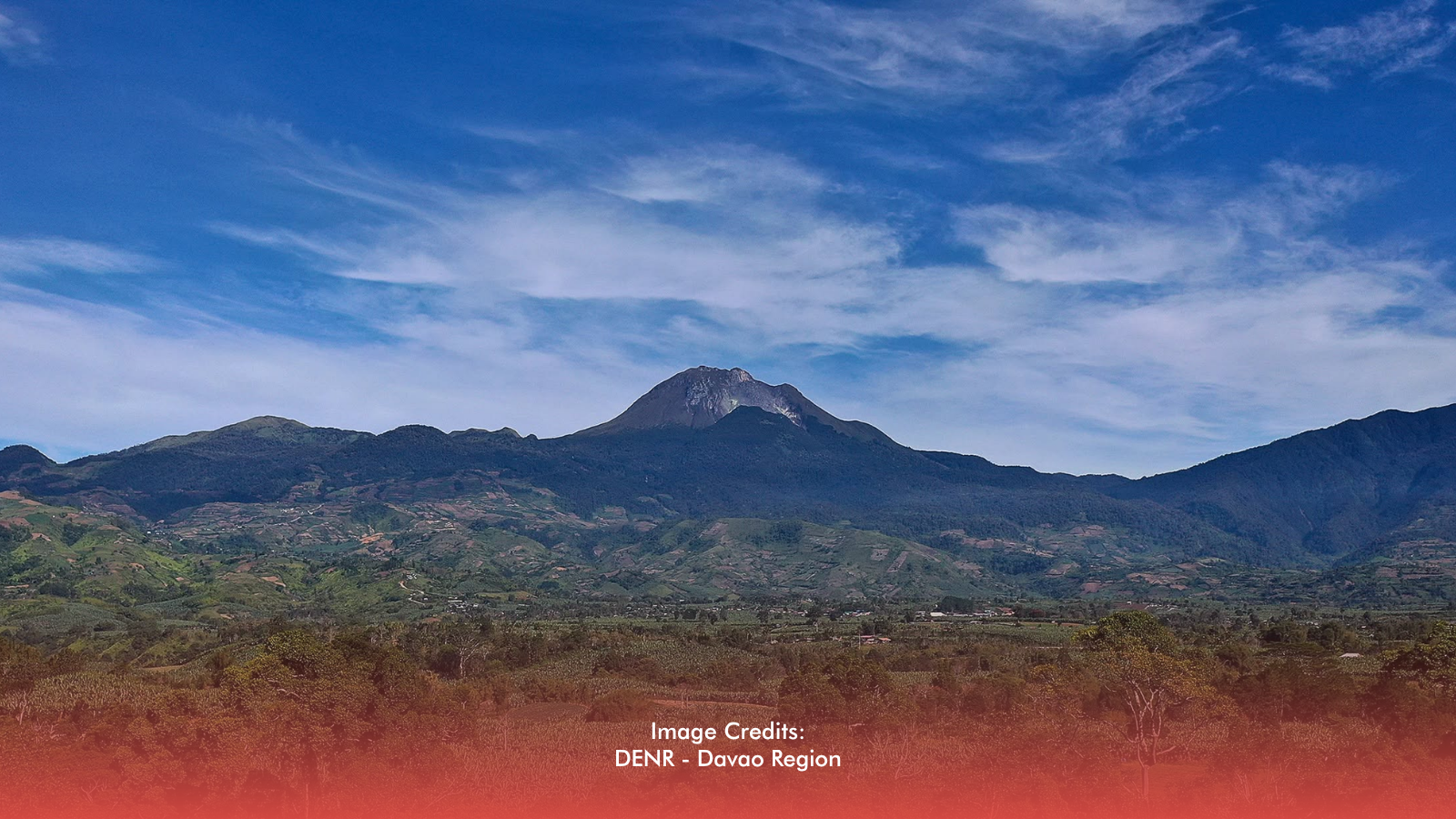
Mt. Apo offers a similarly connected landscape. It bears the highest peak in the Philippines at 2,954 meters above sea level and features sulfur vents, lakes, and other volcanic and geothermal formations.
It is also recognized as an ASEAN Heritage Park, as it is a habitat for wildlife and plant species, including the Philippine eagle and waling-waling.
Highlighting Communities
The UNESCO evaluation is also looking at the communities tied to Mt. Apo. Validators visited the Bagobo Tagabawa Cultural Village in Sta. Cruz, Davao del Sur, where they were welcomed through traditional rituals and cultural dances.
Indigenous communities such as the Bagobo Klata, Bagobo Tagabawa, and Obu Manuvu are participating in the evaluation. Validator Zhang Chenggong emphasized this connection, saying that while Mt. Apo is known for its ecological and geological significance, “it is your culture that gives life to it.”
Recognizing Responsibility
The bid also raises the question of how Mt. Apo can be protected while remaining accessible to visitors. As a protected area, tourism and mountaineering activities are carefully managed, including limits on climbing activities. Meanwhile, the new museum provides another way to experience the mountain by helping others understand its geology, biodiversity, conservation efforts, and cultural heritage.