
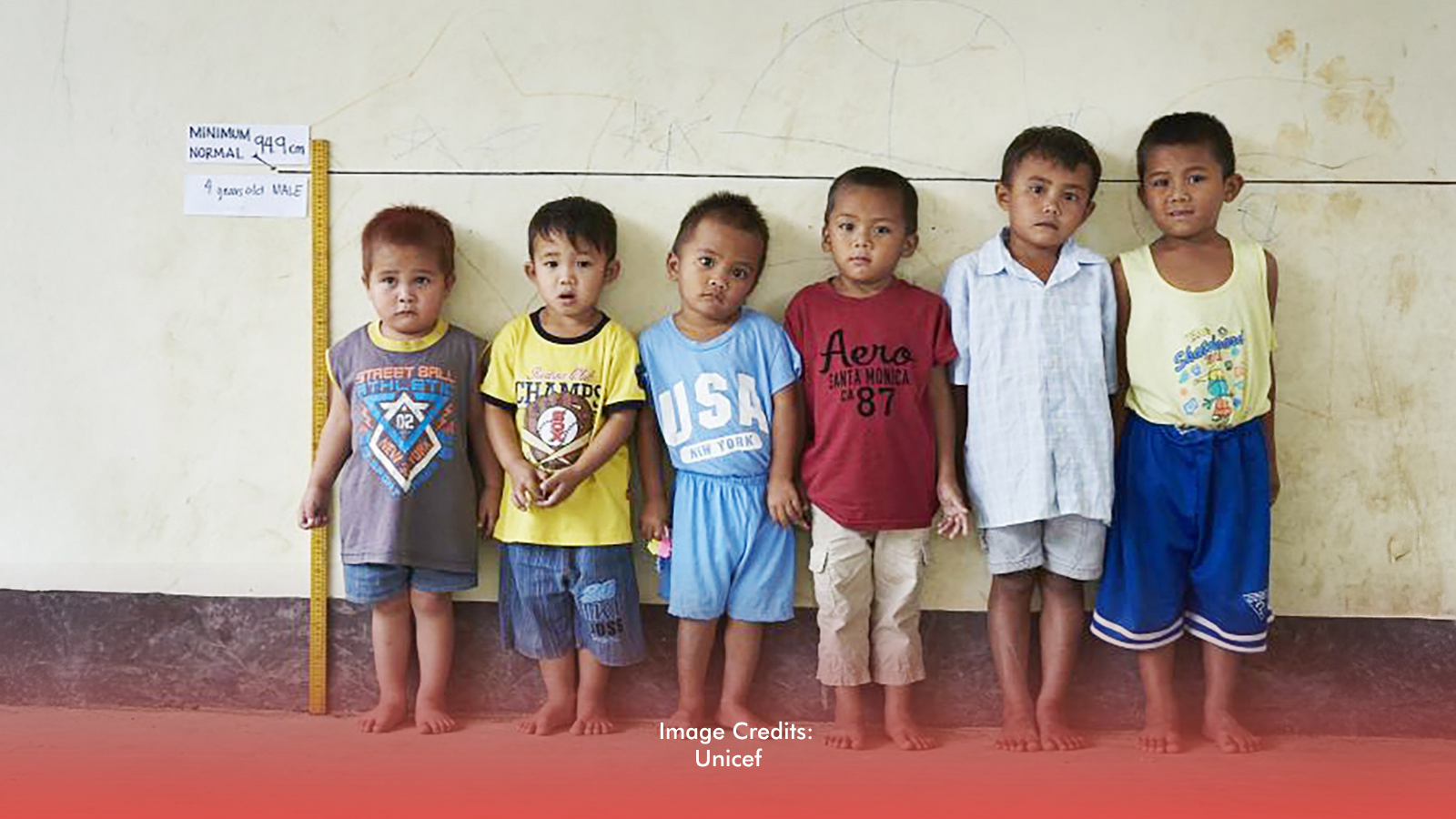
One in every four Filipino children under the age of five is now stunted, according to a new government survey, raising concerns about the long-term impact of poor nutrition on children's health and learning.
Data from the Department of Science and Technology’s Food and Nutrition Research Institute (FNRI) showed that the country's stunting rate rose to 25.3 percent in 2025, the first increase recorded since 2015. Stunting is a condition caused by chronic undernutrition that can affect a child's physical growth, brain development, and ability to learn.
Rural Areas and Poor Families Most Affected
The survey found that stunting remains more common in rural communities, where 27.8 percent of children under five are affected, compared to 23.2 percent in urban areas.
The highest rates were recorded in the Bangsamoro Autonomous Region in Muslim Mindanao, Zamboanga Peninsula, Negros Island Region, and Mimaropa.
Malnutrition is also affecting older children and teenagers. Nearly one in five children aged 5 to 10 are stunted, while more than one in five adolescents experience the same condition.
Food insecurity continues to be a major challenge, with nearly a third of Filipinos struggling to access enough food. Many families rely on borrowing money or buying food on credit to meet their daily needs.
The survey also showed that 16.7 percent of pregnant women are nutritionally at risk, with the figure rising to 40 percent among pregnant teenagers.
Nutrition Crisis Linked to Learning Problems
The Second Congressional Commission on Education (Edcom 2) warned that the rise in stunting highlights a deeper problem that begins long before children enter school.
According to Edcom 2 Co-Chairman and Pasig Rep. Roman Romulo, poor nutrition during a child's earliest years can have lasting effects on learning and development.
He stressed that the country's learning crisis cannot be solved without addressing child malnutrition, noting that the effects of poor nutrition in the first years of life are difficult to reverse later on.
Call for Stronger Government Action
Edcom 2 is urging national agencies and local governments to strengthen programs on maternal health, child nutrition, food security, and early childhood care.
The commission said investments during a child's first 1,000 days are crucial to improving both health and education outcomes, emphasizing that child malnutrition should be treated not only as a health concern but also as an education issue.