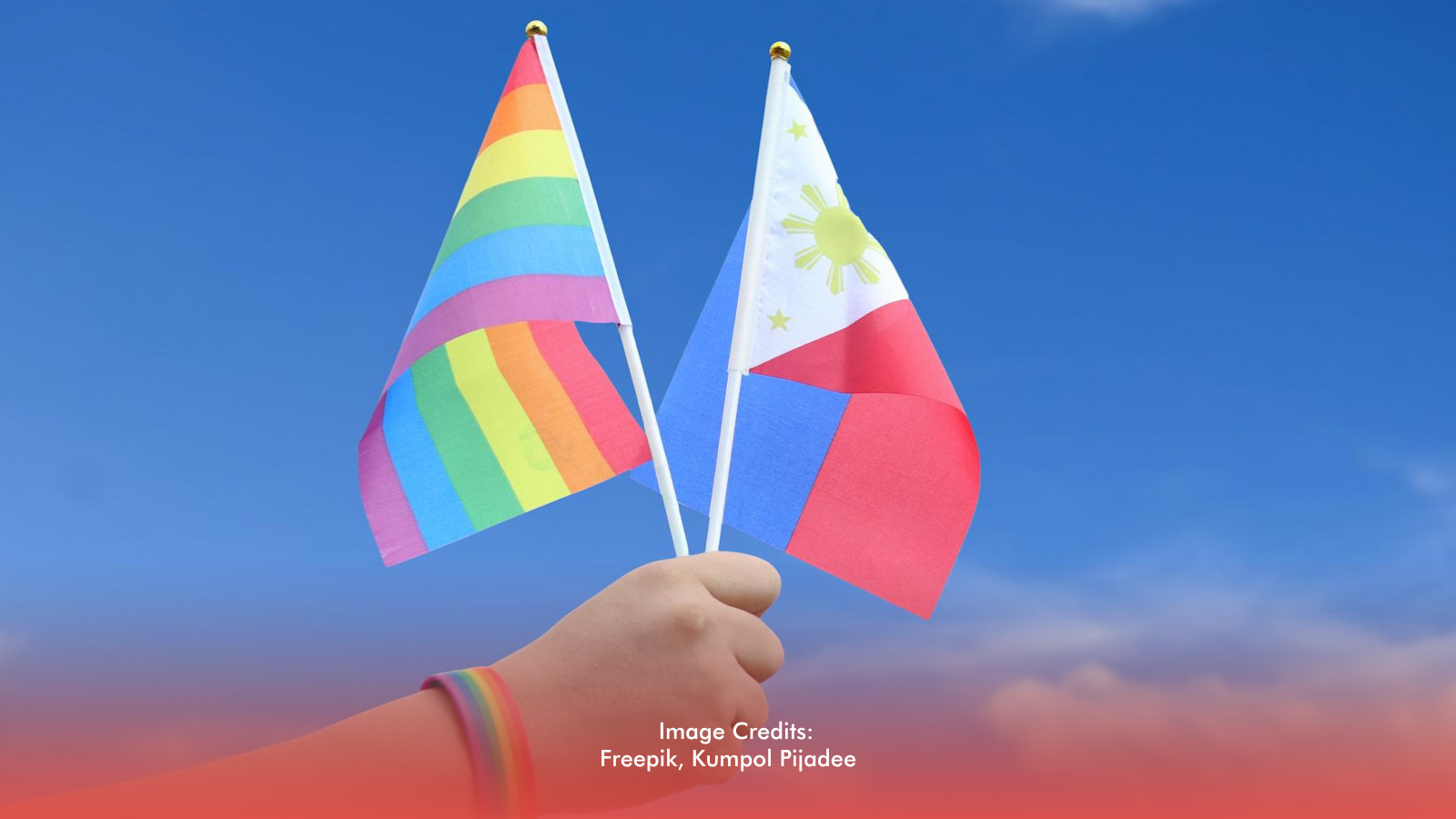
The Philippines ranks third among nine East and Southeast Asian economies in public acceptance of LGBTQ+ people, according to an analysis of the latest World Values Survey by a University of the Philippines data scientist.
Dr. Alicor Panao, an associate professor at the University of the Philippines, found that 24.9 percent of Filipinos fall under the survey's "high acceptance" category for homosexuality. The Philippines trails only Japan (55.3 percent) and Thailand (26.1 percent), while ranking ahead of Taiwan (22 percent), Singapore (17.4 percent), China (8.4 percent), and South Korea (7.5 percent).
The findings are based on Wave 7 of the World Values Survey, conducted from 2017 to 2022.
Philippines Outpaces Some Wealthier Economies
Panao said the results challenge the long-held assumption that economic development naturally leads to more liberal social values.
While modernization theory suggests that wealthier societies become more accepting of individual freedoms, several of Asia's richest economies recorded lower levels of acceptance than the Philippines.
"Asia's attitudes toward homosexuality should follow a predictable pattern if economic development ushers more liberal social values," Panao said, noting that the survey points to a more complex relationship between prosperity and social attitudes.
Acceptance Remains Divided
Despite its relatively strong regional ranking, the Philippines is far from uniformly accepting.
The survey found that 40.1 percent of Filipinos fall under the low-acceptance category, while 35 percent hold moderate views.
Panao said religion continues to play a significant role in Philippine society, but this coexists with the long-standing visibility of LGBTQ+ individuals in entertainment, workplaces, communities, and everyday life. The results suggest the country is balancing traditional beliefs with evolving social attitudes rather than moving toward complete liberalization.
Among the countries surveyed, Indonesia posted the highest share of respondents with low acceptance of homosexuality at 91.1 percent, followed by China (80.6 percent), South Korea (61.4 percent), Singapore (59.3 percent), and Malaysia (56.1 percent).