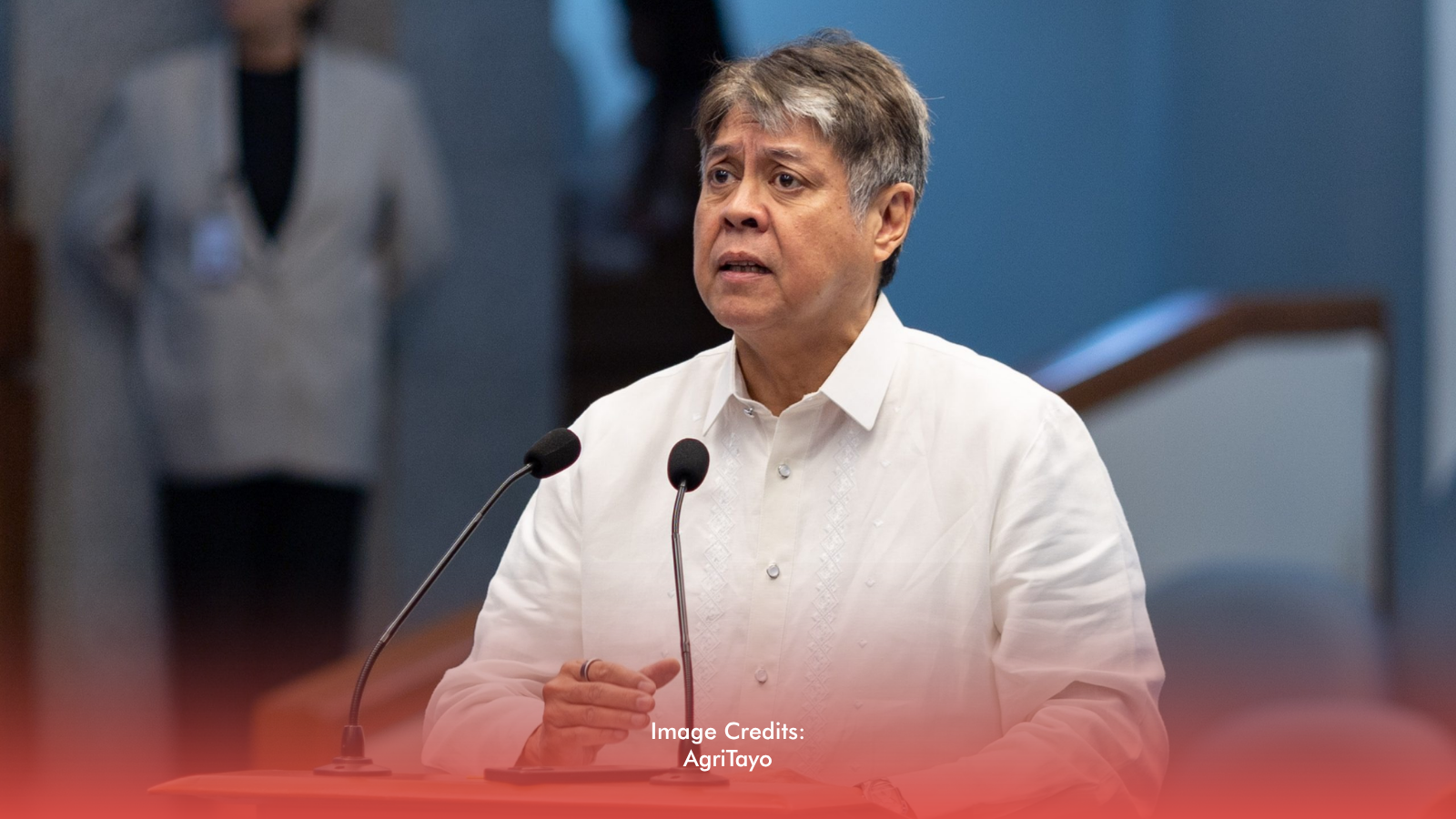
Access to modern technology could play a major role in strengthening the Philippines’ food supply, according to Sen. Francis Pangilinan, who is advocating for greater adoption of digital tools and climate-resilient practices in the agriculture and fisheries sectors.
Speaking during the 10th ClickConEx: Convergence of Luzon I.C.T. Champions and Exhibitions in Naga City on Friday, Pangilinan emphasized that improving the capabilities of farmers and fisherfolk is essential to ensuring long-term food security. As chairman of the Senate Committee on Agriculture, Food and Agrarian Reform, he stressed that innovation should be used to support those at the frontlines of food production.
RELATED: [Dumagat Farmers In Aurora Receive Rice Transplanter From DAR]
Technology as a Tool for Food Security
The senator highlighted how digital solutions can help agricultural workers make better decisions and respond more effectively to challenges in the field. Through smartphones and other connected technologies, farmers and fisherfolk can gain access to weather updates, pest advisories, market information, and guidance on planting schedules.
“If we want to have an ample food supply, we must mobilize resources toward the weakest link and provide them with capacity, with technology, with organization, with extension service,” Pangilinan said during his keynote address.
He also pointed out that information and communications technology can help bridge the gap between producers and consumers by creating more efficient and connected supply chains.
At the same time, Pangilinan clarified that technological advancements should not be viewed as replacements for traditional farming and fishing practices. Instead, he said innovation should complement the knowledge passed down through generations and enhance it through science, research, and data-driven tools.
Stronger Cooperatives, Stronger Communities
Beyond technology, Pangilinan underscored the importance of organization among food producers. He expressed support for reestablishing the Bureau of Agriculture Cooperatives, saying it could help farmers and fisherfolk improve their bargaining power, access financing, invest in equipment, and secure better market opportunities.
“What is the point of technology if our food producers, farmers and fisherfolk are not organized? Whatever interventions are made by national and local governments, if farmers and fisherfolk are not organized and capacitated, any intervention will not be sustainable,” Pangilinan said.
Drawing lessons from neighboring countries, the senator added:
“The lessons of superpowers in agriculture in the region are that they have strong, organized farming and fishing cooperatives, regulations and associations,” the senator said, pertaining to Taiwan, Vietnam and Thailand.
For ordinary Filipinos, stronger agricultural and fisheries sectors could help ensure a more stable food supply, improve rural livelihoods, and reduce vulnerabilities caused by climate-related disruptions. As food prices continue to affect households nationwide, efforts that combine technology, organization, and support services may contribute to greater food security and economic resilience across the country.
RELATED: [DOST Introduces Solar-Powered Pumps For Climate-Resilient Agri In Aurora]