The International Monetary Fund (IMF) says the Philippines was right to suspend excise taxes on LPG and kerosene, but warned against extending the break to gasoline.
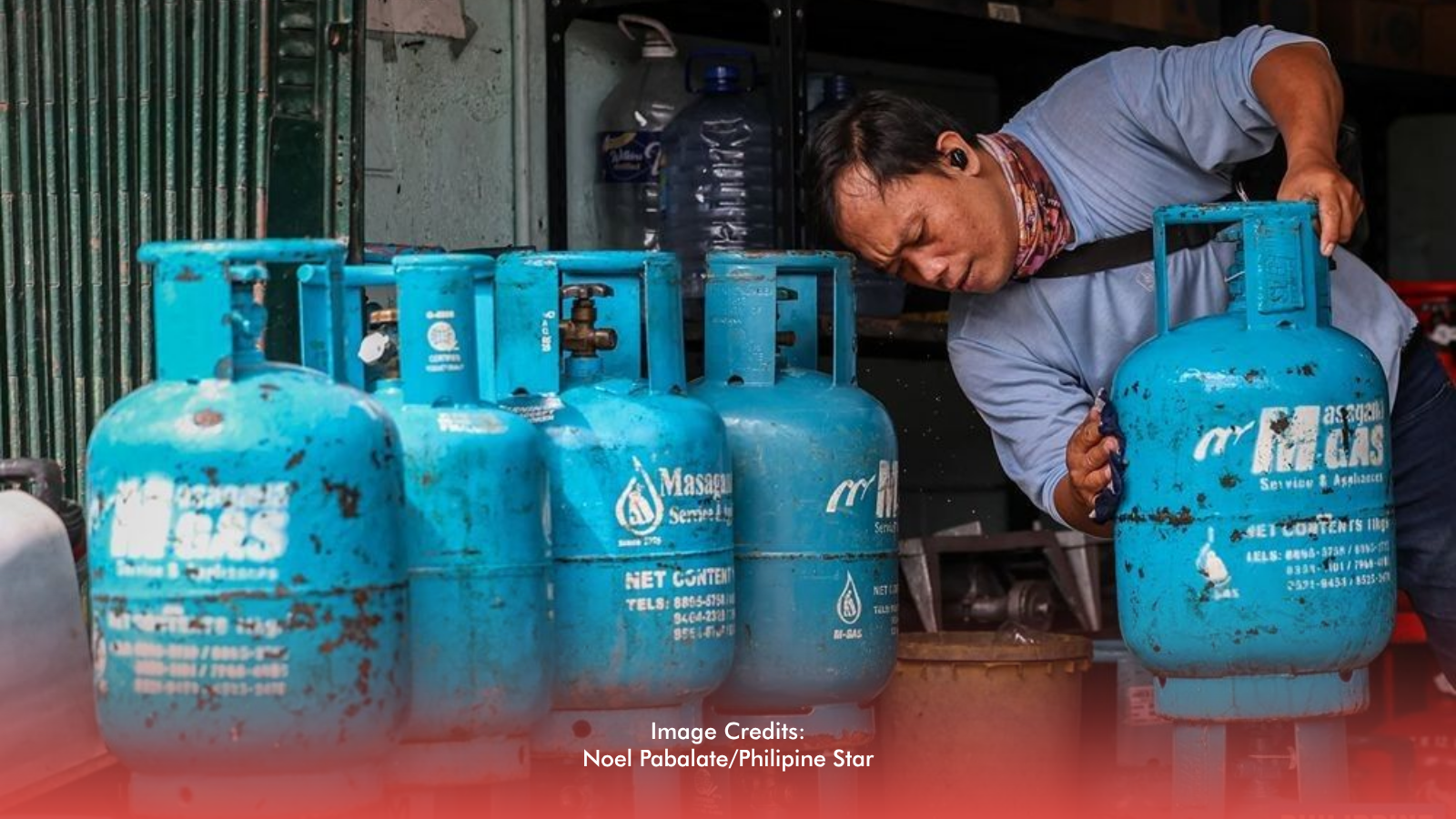
Meanwhile, the Bureau of Internal Revenue (BIR) has issued the rules for the renewed tax holiday, and LPG dealers say household gas could get cheaper by at least P3 per kilo this week, then jump by P10 to P15 per kilo as early as Oct. 3.
IMF: Good for the Poor, Not for Gasoline
IMF Mission Chief for the Philippines Andrea Pescatori said suspending the excise tax on kerosene and LPG is appropriate because it would mainly benefit low-income households, BusinessWorld reported.
He spoke at a briefing after the IMF’s Article IV consultation on Friday.
“Well, it seems that those are used mostly by the low-income segment of the population, and also (in) rural areas. It’s important in agriculture. So, that’s why we think that this is actually an appropriate measure,” he said.
Gasoline is different, according to Pescatori.
“We do not recommend muting the signal for gasoline, because in fact, as you know, it’s not net progressive, and in high-income households, they can afford to pay higher gasoline prices,” he said, according to BusinessWorld.
He said the government has so far offset the lost LPG and kerosene excise revenue with higher VAT collections from pricier gasoline, making the move “sort of a budget neutral.”
Finance Secretary Frederick Go has said suspending the excise tax on gasoline and diesel would cost the government about P12 billion in foregone revenue, BusinessWorld reported.
BIR Issues RMC 100-2026
The BIR issued Revenue Memorandum Circular 100-2026 to implement the renewed suspension, GMA News reported.
It follows Executive Order 125, which President Marcos signed on Sept. 25, according to Philstar.
Key points, according to GMA News, BusinessWorld and Philstar:
- The suspension lasts for up to three months, or ends one week after the one-month average price of Dubai crude falls below $80 per barrel, as certified by the Department of Energy, whichever comes first.
- It does not cover LPG used as raw material for petrochemicals or for motive power, or kerosene used as aviation fuel.
- The TRAIN Law excise taxes being suspended are P3 per kilogram for LPG and P5 per liter for kerosene.
This is the second time the tax relief has been imposed since the Middle East war broke out in late February, BusinessWorld reported.
GMA News noted that it comes less than three months after the previous break was lifted.
The move is allowed under Republic Act 12316, signed in March, which gives the President emergency powers to suspend or cut fuel excise taxes once Dubai crude averages at least $80 per barrel for a month, GMA News reported.
LPG: Down First, Then Possibly Way Up
LPG Marketers Association president Arnel Ty said on Monday that prices are expected to drop by at least P3 per kilogram because of the suspension, Philstar reported.
Republic Gas Corp. (Regasco) will cut its price by P3 per kilo starting Wednesday, Sept. 30.
Ty said the cut could reach P3.36 per kilo once the 12% VAT on the excise tax is included, but the Department of Energy has yet to formalize the final figure.
The relief may not last long.
Ty warned of a possible P10 to P15 per kilo increase as early as Oct. 3, with the final adjustment to be computed on Oct. 1.
He attributed the possible increase to higher world prices and shipping premiums amid tensions in West Asia.
“Lubhang napakataas po ng inangat ng premium cost. It is almost $200 plus per metric ton,” Ty said, according to Philstar.
The excise suspension stays in place even with the expected market-driven hike, which could soften the increase, Philstar noted.
Pump Prices
Fuel retailers raised pump prices for a third straight week last week, pushing gasoline to as much as P111.60 per liter, diesel to P121, and kerosene to P147, BusinessWorld reported.
Motorists expect rollbacks this week of up to P8 per liter for diesel, P1 for gasoline and P6 for kerosene.
Why It Matters
For households that cook with LPG, the tax break is real but may be quickly swamped by global prices.
For motorists and transport groups pushing to scrap fuel taxes, the IMF’s message is that gasoline relief should not be next.