
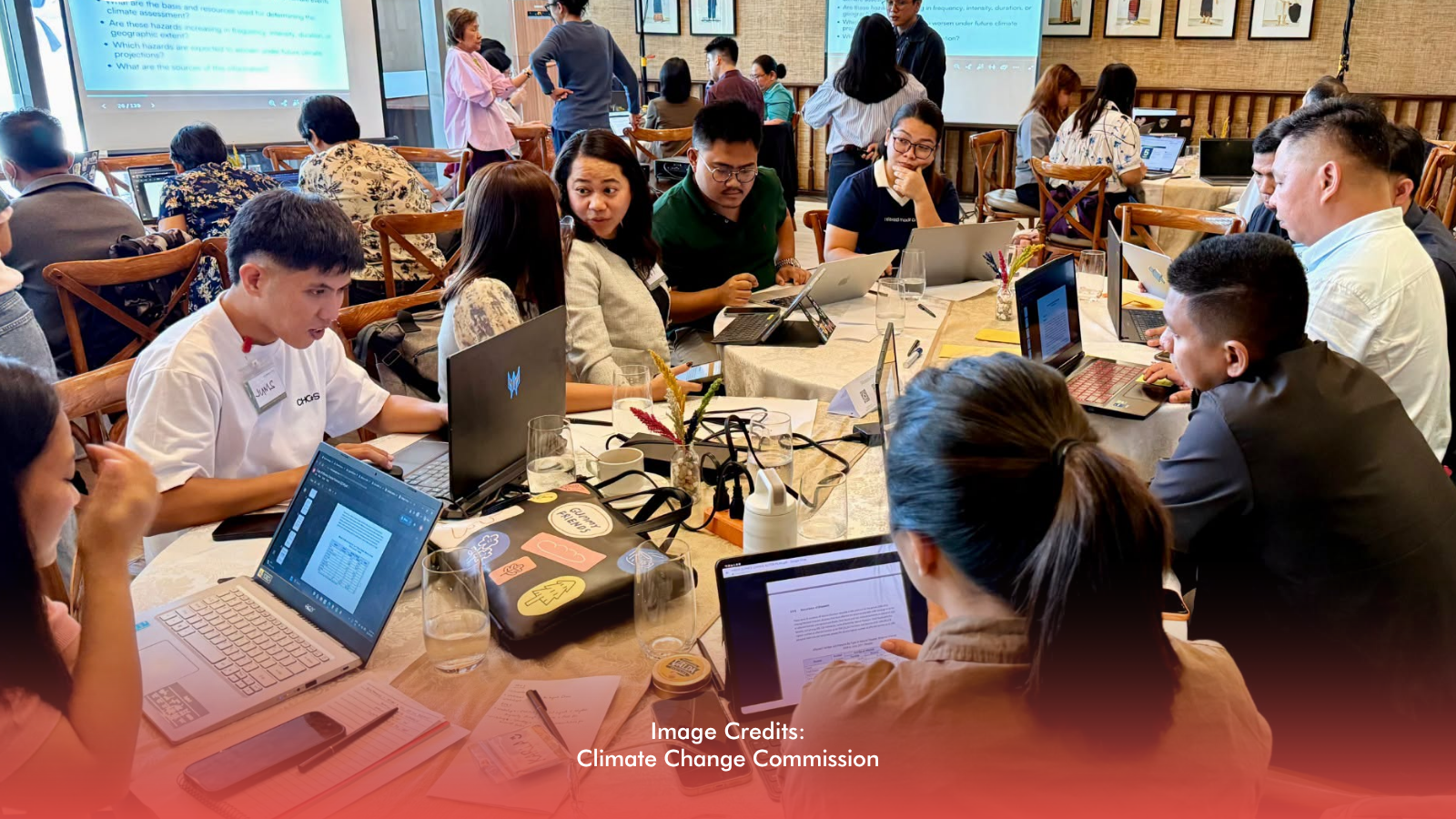
Local governments need climate action plans that go beyond broad commitments and address the specific environmental risks faced by their communities. The Climate Change Commission (CCC) is pushing for stronger science-based planning to help local government units (LGUs) develop responses grounded in data, local vulnerabilities, and community needs.
The agency recently brought together provincial officials from Iloilo, Misamis Oriental, and Oriental Mindoro to improve their Enhanced Local Climate Change Action Plans (eLCCAPs), emphasizing the importance of evidence-based and inclusive approaches in preparing for climate impacts.
RELATED: [Cebu Forms Task Force as El Niño Threatens Water Supply]
Strengthening Local Climate Planning Through Science
As of October 2026, 91 percent of LGUs nationwide had submitted their climate plans, but only 68 percent incorporated scientific data. The gap highlights the need to improve local governments' technical capacity so their strategies reflect actual climate hazards and community vulnerabilities.
“It is through a science-driven eLCCAP that a provincial government can determine with mathematical precision which barangay requires an early warning system first, which critical watershed demands immediate ecological restoration, and which agricultural assistance programs must be restructured to withstand rising heat index levels,” CCC Commissioner Rachel Anne Herrera said during the workshop.
The two-day Transformative Actions for Climate and Ecological Protection and Development brought provincial representatives together to examine climate data, exchange effective practices, and refine their plans. Participants assessed climate hazards, their potential impacts, and local adaptive capacity before refining impact chain analyses and identifying priority interventions.
Their recommendations will contribute to improving the eLCCAP Quality Assurance Tool and developing an eLCCAP Quality Assurance Guide, which are intended to help strengthen the quality of local climate planning.
“The eLCCAP turns our highest national commitments — our National Adaptation Plan and our Nationally Determined Contribution — from high-level policy declarations into concrete, life-saving local actions,” Herrera emphasized.
Making Climate Action Inclusive and Responsive
Beyond scientific evidence, the CCC also underscored the importance of making climate plans gender-responsive and socially inclusive. Herrera called for greater participation of women in climate consultations and planning, noting that climate change disproportionately burdens women because of their household and caregiving responsibilities.
Climate planning that accounts for these differences can help ensure that local interventions respond to the needs of communities most exposed to environmental risks.
As extreme heat, flooding, and other climate hazards increasingly threaten livelihoods and essential services, the effectiveness of local climate plans can directly affect how communities prepare and recover. Science-based, inclusive planning gives LGUs a stronger foundation for deciding where resources are needed most, making climate action not just a policy obligation but a practical measure of public safety and community resilience.