
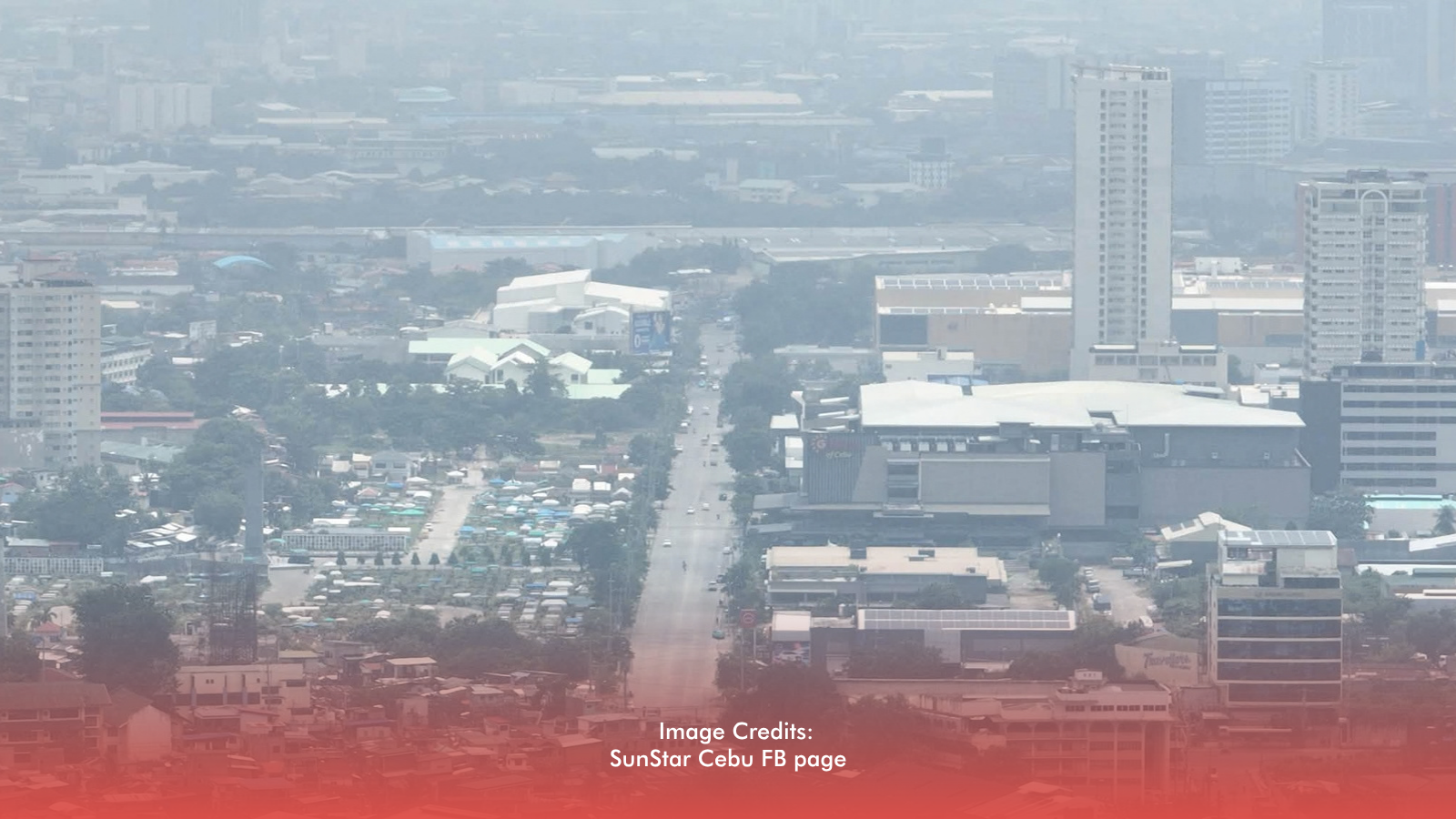
Metro Cebu’s air quality is deteriorating, but the problem is not coming from forest fires in Indonesia.
The Environmental Management Bureau Region VII (EMB-7) said local emissions and current weather conditions are instead driving the increase in fine particulate matter, or PM2.5, across Metro Cebu.
Vehicle emissions, industrial activities, and other local sources are contributing to the buildup of pollutants, while cooler temperatures are making it harder for them to disperse.
The assessment came after the Philippine Atmospheric, Geophysical and Astronomical Services Administration (PAGASA) declared the end of the southwest monsoon, or habagat, following the strengthening of a high-pressure system over East Asia.
Indonesian wildfires are not the culprit
EMB-7 said there are no indications that smoke or pollution from forest fires in Indonesia is affecting Metro Cebu.
The bureau cited data from Copernicus Fire Emission Watch, which showed no signs of transboundary pollution from Indonesian wildfires.
EMB-7 also said its monitoring has not detected patterns consistent with pollution coming from Indonesia.
Instead, officials identified local emissions and meteorological conditions as the main reasons behind the elevated PM2.5 levels in Metro Cebu.
Cold temperatures are trapping pollutants
The weather is also making the situation worse, particularly during nighttime and early morning when temperatures are lower.
EMB-7 explained that “temperature trapping” can occur when cooler air prevents warmer air carrying pollutants from rising. This leaves pollutants concentrated closer to the ground instead of allowing them to disperse.
Monitoring data further showed that PM2.5 concentrations tend to increase when temperatures drop.
Poor air quality could continue
EMB-7 warned that elevated PM2.5 levels could persist in the coming days if local emissions remain high and weather conditions continue to limit the dispersal of pollutants.
Rain showers could help improve air quality by washing some pollutants out of the atmosphere.
As of 7 a.m. Thursday, Oct. 8, the Metro Cebu monitoring station recorded an Air Quality Index (AQI) of 134, classified as “Unhealthy for Sensitive Groups.” Meanwhile, the station in Barangay Cabitoonan, Toledo City, recorded an AQI of 25, classified as “Good.”
People with respiratory conditions, including asthma, were advised to limit strenuous outdoor activities while air quality remains unfavorable.
EMB-7 also urged residents to monitor official air-quality updates, as conditions can change depending on weather and pollution levels.