Ciudad Verdadero, Spanish for “City of Truth,” is a privately owned hill along the road between Lucban and Sampaloc in Quezon.
The property has a chapel, a spring, two massive boulders, stone labyrinths, and a concrete helipad. Most drivers probably pass its small roadside sign without giving it a second look.
For psychics, mediums and spiritual seekers, however, the hill is said to be something else entirely: a place filled with spirits, strange encounters and stories involving diwata, engkanto, UFOs and extraterrestrials.
But there is one important detail: you can't simply drive in.
Ciudad Verdadero is private property, and visits require prior arrangements.
What Is Ciudad Verdadero?
Ciudad Verdadero is a private spiritual sanctuary owned by businessman Artemio “Art” Cataquiz of Pateros. Published accounts place the property at between 23 and 29 hectares.
According to Cataquiz's story, he bought the undeveloped land in the mid-1980s as an investment and planned to grow coffee. The crops failed.
Then, the story goes, mediums began receiving messages from spirits who said the land was meant to become a place where people could commune with them. They supposedly gave the property its name and instructed Cataquiz not to charge visitors or ask for donations.
Paranormal writer Jaime Licauco wrote in 2011 that Cataquiz also claimed the spirits helped provide money for the property's development through unusual real estate deals.
Whatever one makes of those claims, the physical property is real. When Licauco visited, only part of the land had been cleared, with much of the hill still covered in vegetation.
Where Is It?
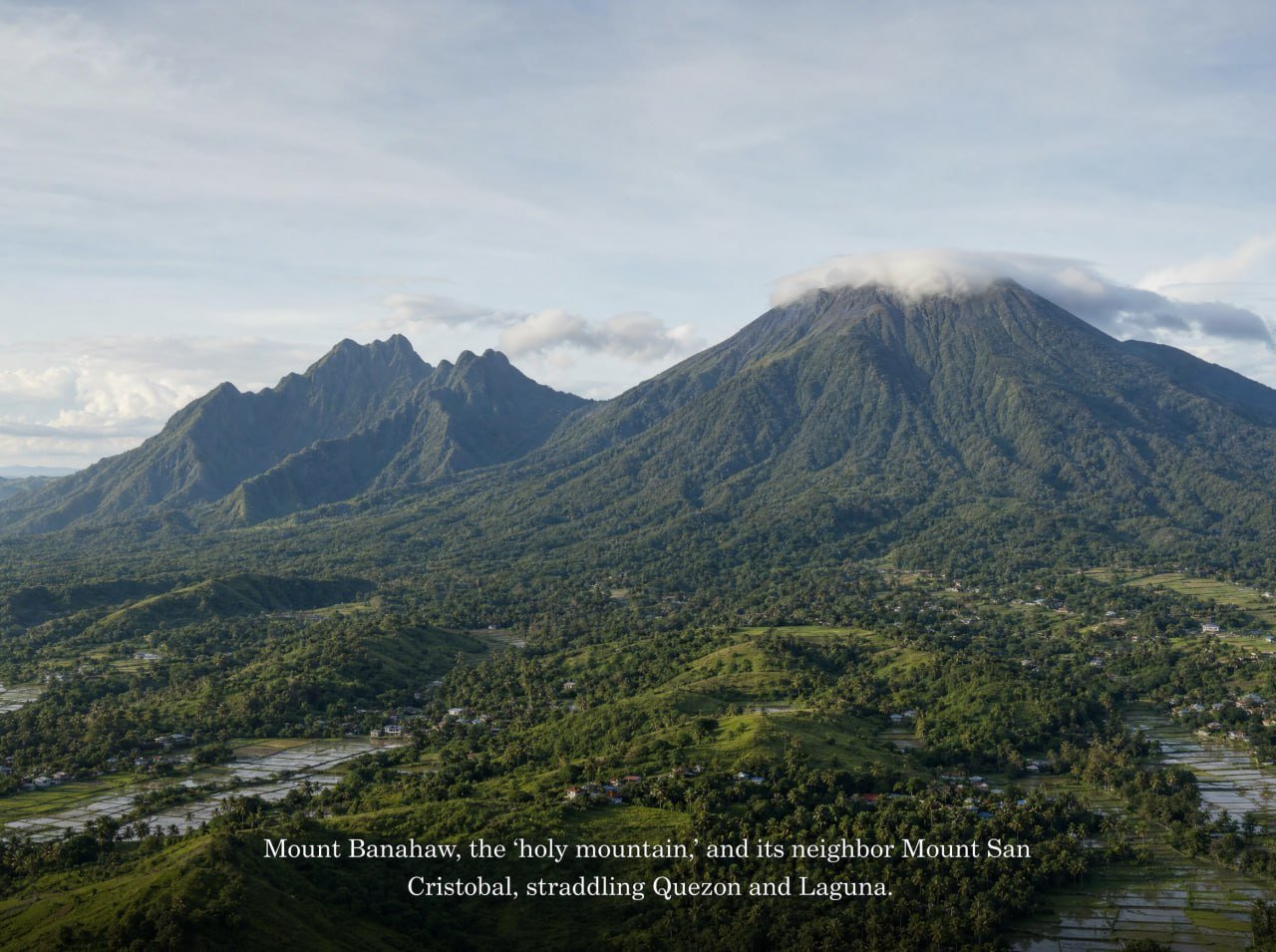
Ciudad Verdadero is along the Lucban–Sampaloc road in Quezon, near Mount Banahaw.
Its exact municipal location is unclear. Some accounts place it in Sampaloc, others in Lucban, while several simply describe it as being between the two towns.
Older directions tell visitors to ask locals for the property, where a small sign marks a dirt road leading into the wooded area.
Unlike the established pilgrimage sites around Mount Banahaw, Ciudad Verdadero is private property.
What Happens When You Visit?
For believers, visiting Ciudad Verdadero can feel almost like a ritual.
Guests reportedly begin at the caretaker's house, register, and ring a bell three times. According to local accounts, this announces their arrival to the spirits and clears away negative energy.
From there, visitors may go to the chapel, light white candles, and walk through a small indoor labyrinth said to be modeled after the one at Chartres Cathedral in France.
Visitors are encouraged to move slowly while keeping a prayer, wish, or intention in mind, then pause at the center before walking back out.
The next stop is the spring, which flows into a pool beside a grotto containing an image of the Virgin Mary. Some visitors wash with the water, drink it, or pray for healing.
Nearby are two large boulders. Believers place their hands or foreheads against them and some claim to feel the rocks “breathing” or detect a heartbeat.
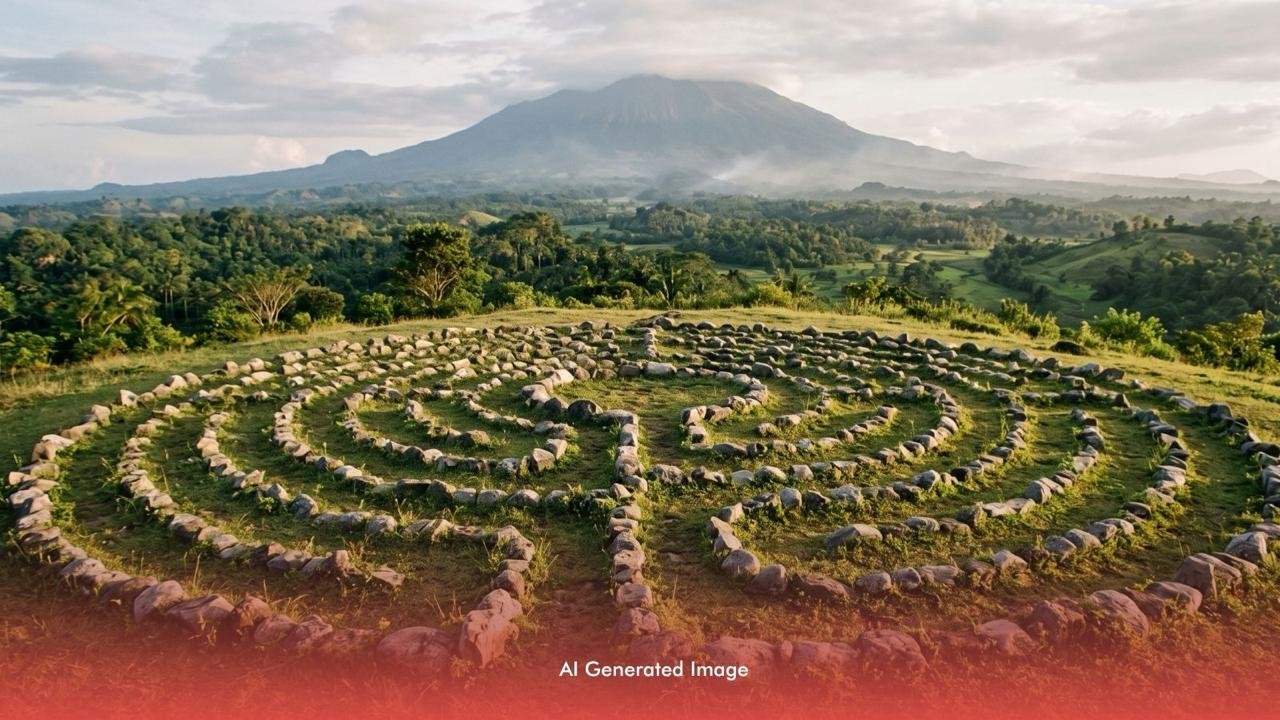
At the top of the hill is a larger labyrinth following the classical Cretan pattern, along with a meditation tower, lily pond, and another Marian grotto.
Then there's the helipad.
The white concrete slab overlooks Mount Banahaw. Believers and UFO enthusiasts have given it another name: the UFO landing pad.
Not everyone experiences anything unusual. Licauco, who visited the property himself, noted that some visitors felt nothing at all.
Is It Connected to Mount Banahaw?
Not formally.
There is no clear record establishing a direct connection between Ciudad Verdadero and the religious groups associated with Mount Banahaw, including the Ciudad Mistica de Dios in Dolores.
The connection mostly comes from stories.
One psychic account describes Ciudad Verdadero as a kind of “new Mount Banahaw,” claiming that nature spirits moved there after the mountain became too crowded and neglected. Some believers also say the spring's water comes from Banahaw.
The similarities are easy to spot: sacred springs, unusual rocks, guardian spirits, and rituals involving movement between sacred places.
But Ciudad Verdadero adds its own mix of Catholic imagery, diwata, engkanto, New Age spirituality, energy vortices, portals, extraterrestrials, and even Greek mythology.
What Do Believers Say They've Seen?
The stories surrounding Ciudad Verdadero are almost as unusual as the place itself.
Published accounts mention diwata, lambana, or tiny winged fairies, giants, angels, strange figures in the trees, a spring fairy in a white dress and flower crown, extraterrestrials, and even Zeus.
Cataquiz reportedly told a television newsmagazine that UFOs frequently appeared above the helipad and meditation area and that he had photographs of them.
One visitor described the hill's chief guardian, known as Impô, as an elderly-looking man who could move unusually fast.
Licauco also wrote about an experience while in a trance near one of the boulders. He described seeing a gray, almond-eyed being accompanied by four small winged figures. A UFO enthusiast later told him that extraterrestrials operated a laboratory beneath the rock.
Other accounts describe a giant, colorful sarimanok flying over the lagoon, a huge black bird with three eyes and, in one particularly unusual story, Zeus appearing in a beam of light at the hilltop labyrinth.
These accounts come from people who already believe in the site's supernatural character. There is no independently verifiable evidence confirming the paranormal claims.
The physical features, however, are there: the chapel, spring, boulders, labyrinths, and helipad.
Can You Visit Ciudad Verdadero?
Not by simply showing up.
Older accounts say visitors had to make arrangements before entering, while more recent accounts suggest some may need a guide or mentor.
There are also reports of people offering to arrange visits for a fee, despite Cataquiz's long-standing claim that the property does not charge admission or request donations.
If someone offers to take you there, ask exactly what you're paying for and confirm the arrangements before traveling. Old phone numbers and directions found online may no longer be current.
Believers might say a failed visit means the guardians decided you weren't ready.
The simpler explanation? It's private property, and access can change.
Before You Go
If you do get permission to visit:
- Arrange your visit ahead. Don't assume walk-ins are allowed.
- Ask about fees. The owner's stated policy has been that visitors are not charged admission or asked for donations.
- Respect the chapel and grottoes. Ask before photographing people who are praying.
- Wear proper shoes. Expect dirt roads, slopes, and stone paths.
- Come during daylight. The entrance can be difficult to spot.
- Follow the caretaker's instructions. You're visiting private property, regardless of what you believe.
- Check Banahaw rules separately. If you're visiting Mount Banahaw too, check current regulations with DENR Calabarzon.
A City of Truth, or a City of Belief?
Ciudad Verdadero may not appear on most maps, but it has built a world of its own.
There is the hill, the chapel, the spring, the labyrinths, and the strange white slab overlooking Mount Banahaw. Then there are the stories: spirits among the trees, boulders that seem to breathe, fairies by the water, UFOs above the helipad and a god from Greek mythology appearing in a beam of light.
Whether you see these as supernatural encounters, folklore, or stories passed from one visitor to another, they have become part of Ciudad Verdadero's identity.
Somewhere along the road between Lucban and Sampaloc, behind a small sign most motorists probably never notice, that strange little world continues to exist.
And if you ever find yourself passing by, don't be too quick to dismiss the road into the trees.
Tabi-tabi po.