The guardian of Pampanga’s most recognizable mountain is sometimes described as a king and sometimes as a woman. That is not necessarily a mistake. Here is how a living legend changes with its storytellers.
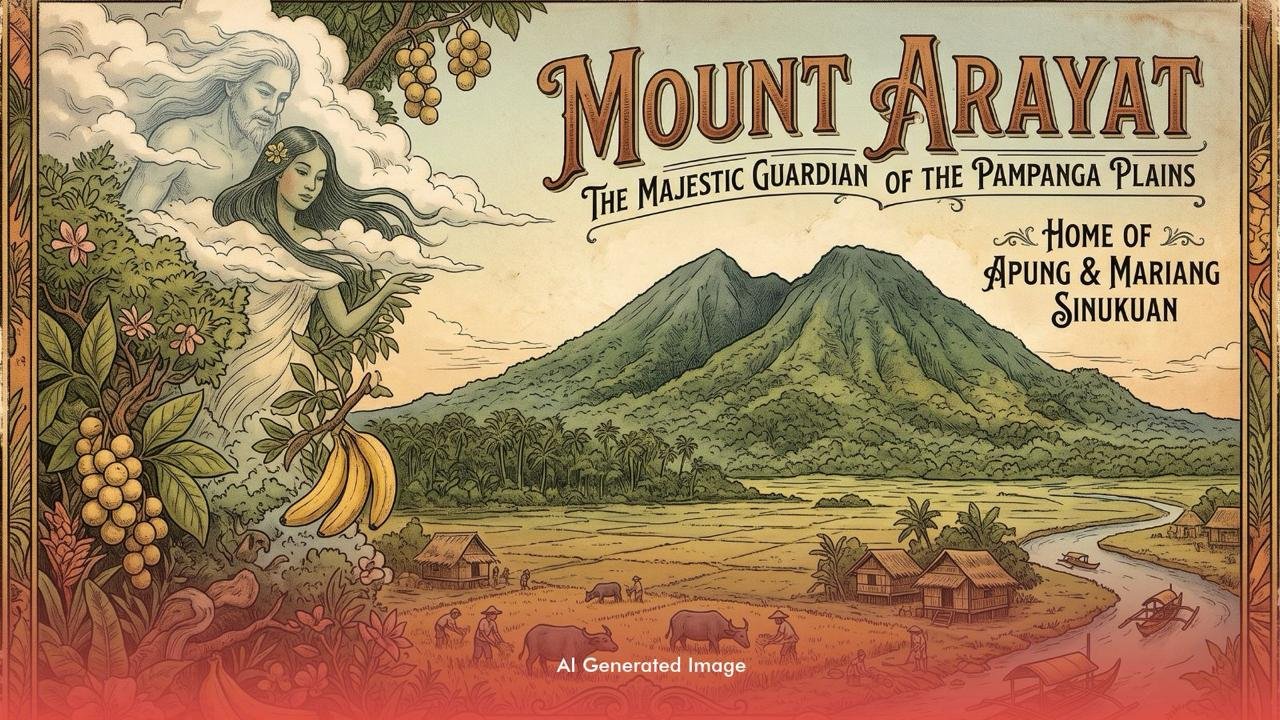
Mount Arayat rises above the plains of Pampanga, its distinct silhouette visible from far across the surrounding landscape. For generations, Kapampangans have connected the mountain to a powerful supernatural figure believed to dwell among its slopes.
Ask who lives there, and you may hear the name Sinukuan or Sinukwan. Ask what the figure looks like, however, and the story becomes less straightforward.
Who Is Sinukuan?
Sinukuan is a legendary figure closely associated with Mount Arayat and Kapampangan cultural identity. In oral accounts discussed by scholar Julieta Mallari, King Sinukwan appears as a powerful and noble ruler, often described as wise, generous, and authoritative.
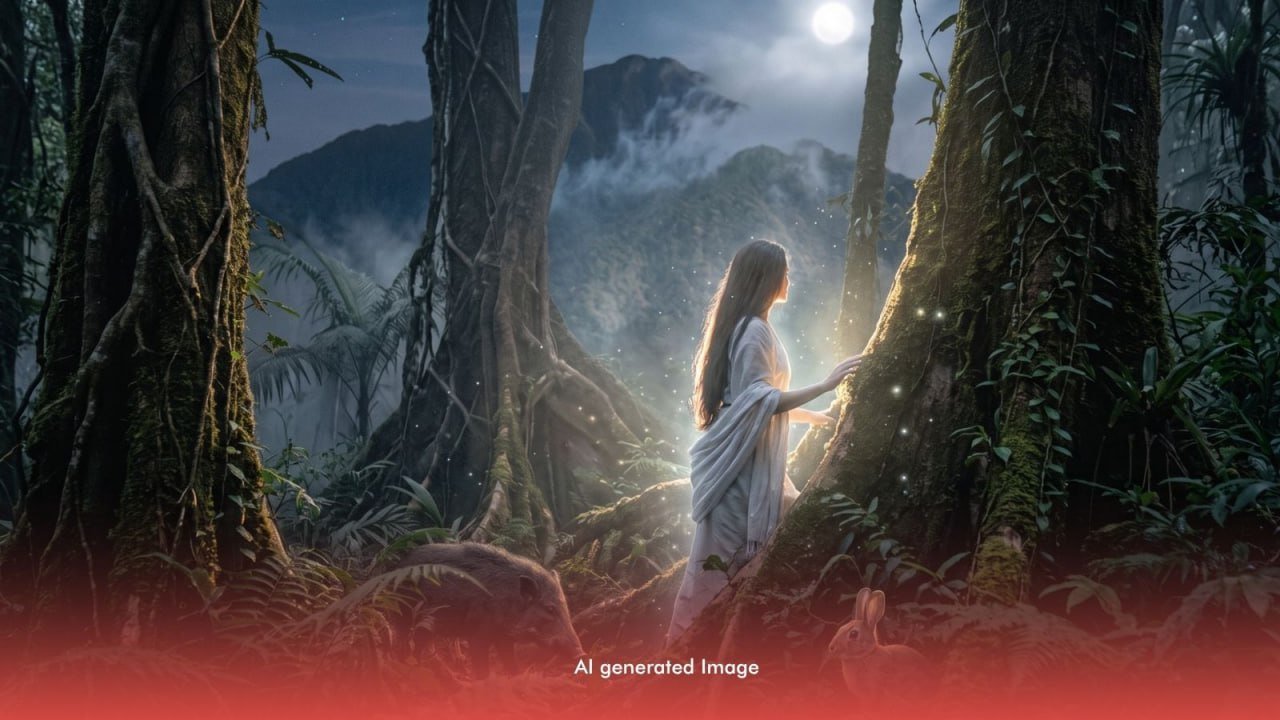
Other versions tell of Mariang Sinukuan, a female supernatural guardian associated with the mountain.
These accounts do not always describe the same character in the same way. Rather than forcing them into one definitive biography, it is more accurate to recognize them as different versions of a regional tradition.
Why Do Some Stories Describe a King and Others a Woman?
Folklore changes as stories pass between generations and move through different cultural and religious settings. Storytellers may emphasize different characters, combine familiar motifs, or adapt older narratives to their own communities.
The relationship between King Sinukwan and Mariang Sinukuan should therefore be approached carefully. Without comparing specific historical records and accounts from local storytellers, it is difficult to establish exactly how or when the different portrayals developed.
Mallari's research examines King Sinukwan and the ways the legend reflects Kapampangan identity and values. Other discussions of Mariang Sinukuan explore the mountain as a place of cultural and environmental significance.
Did you know? An academic study titled King Sinukwan Mythology and the Kapampangan Psyche examines what the legend reveals about Kapampangan identity and ways of understanding the world. The focus is not simply on whether a mythical ruler existed, but also on what the stories mean to the people who tell them.
The differences between the king and the female guardian are part of the story's history, not details that need to be erased to create one neat version.
What Makes Mount Arayat Special?
Mount Arayat is a prominent geographic landmark in Pampanga and an important reference point in Kapampangan culture. Its physical presence has helped make it a natural setting for stories about supernatural beings, hidden domains, and guardians who influence human affairs.
In folklore, a mountain can become more than scenery. It may be imagined as the home of a powerful ruler, a source of extraordinary wealth, or a place where people encounter forces beyond ordinary experience.
Arayat's distinct shape makes it easy to recognize across the surrounding plains. Even people who have never explored its forests can identify the mountain, giving its legends a familiar and enduring setting.
Is Sinukuan Related to Maria Makiling?
Sinukuan and Maria Makiling are sometimes grouped together in popular retellings because both are associated with mountains and supernatural power. Their stories may also include lessons about generosity, respect, and human behavior.
However, they belong to different regional traditions. Maria Makiling is associated with Mount Makiling in Laguna, while Sinukuan is linked to Mount Arayat in Pampanga.
Comparing the figures can help reveal shared themes in Philippine folklore, but their differences matter. The stories surrounding Mount Arayat reflect Kapampangan culture and should be understood within that local context rather than treated as interchangeable versions of a single national mythology.
Is There One Official Version of the Legend?
No single version should automatically be treated as the definitive account of a living folklore tradition.
Researchers document stories by recording who told them, where they were collected, and the circumstances in which they were shared. Written records, literary retellings, and present-day oral accounts may differ because traditions continue to evolve.
Those differences offer an opportunity to learn more about the legend. Conversations with Kapampangan historians, cultural workers, and local storytellers can help establish which version people remember and how they understand the figure associated with their mountain.
For a tradition like Sinukuan's, preserving the variety of accounts is often more informative than forcing every detail into one description.
Can You Visit Mount Arayat?
Mount Arayat attracts interest for its natural environment as well as its cultural associations. However, access to hiking routes and protected areas may depend on current regulations and local conditions.
Before planning a visit, check with the relevant local authorities or protected-area managers for updated information on access, permits, trail conditions, and safety requirements. Do not assume that every part of the mountain is open to visitors.
Legends of Mount Arayat
- The giant ruler: Some accounts portray Sinukwan as a powerful and noble king associated with the mountain.
- The female guardian: Other tellings feature Mariang Sinukuan as a supernatural woman connected to Arayat.
- The mountain household: The mountain becomes more than a landscape, serving as the imagined home of a being whose presence shapes the stories of the surrounding community.
Mount Arayat has one unmistakable outline, but the figure said to inhabit it has more than one face. The changing portrayals of Sinukuan and Mariang Sinukuan reveal how folklore carries a community's memories, values, and identity across generations.