
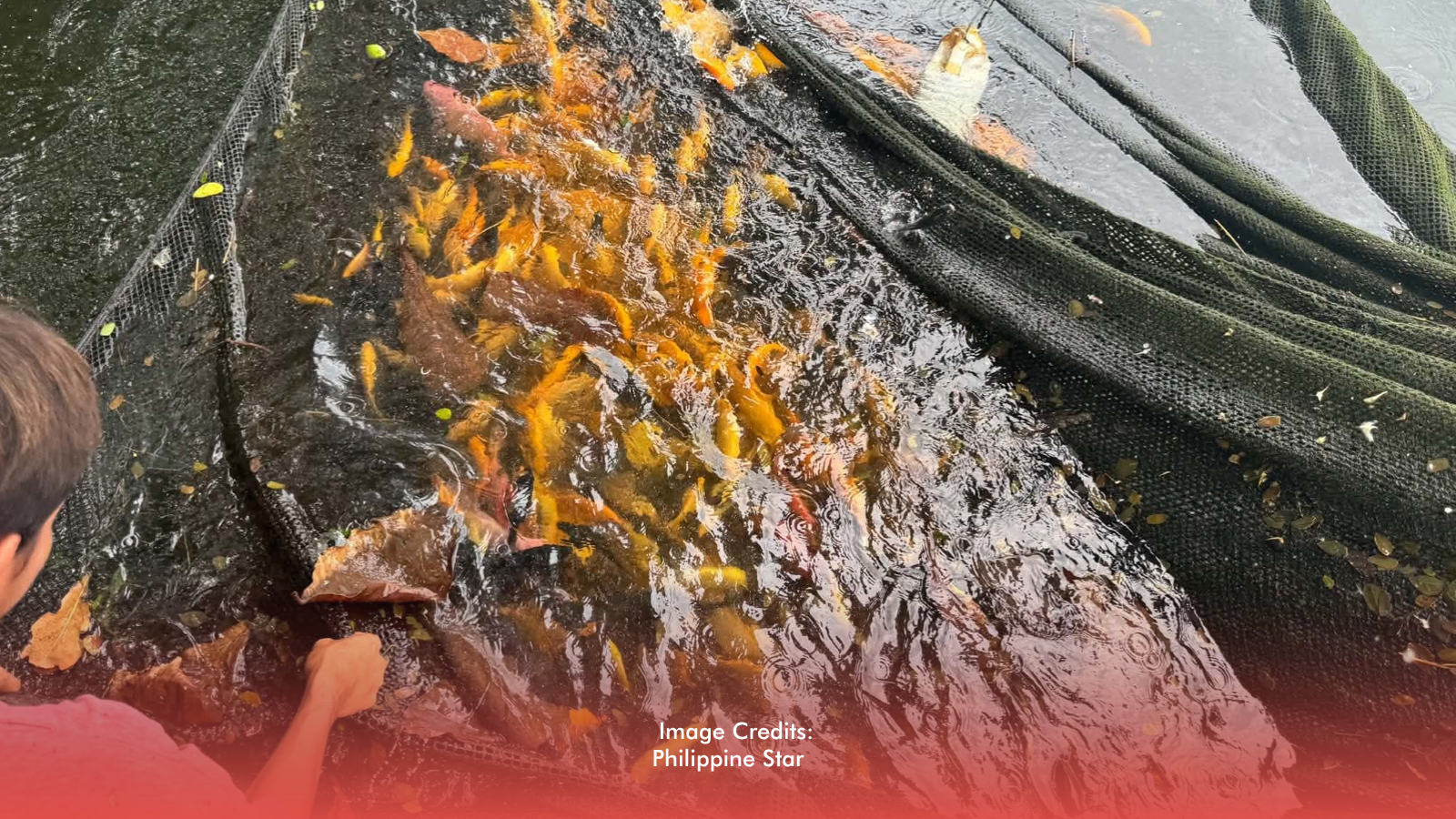
An invasive ornamental fish is posing growing threats to biodiversity and public health in Lake Sampaloc, a volcanic crater lake in San Pablo City, Laguna, according to a study by researchers from the Ateneo de Manila University.
The study, published in March 2026, found that flowerhorn cichlids have been established in the lake since at least 2016. Originally introduced through the aquarium trade, the species is believed to have escaped into the lake during a major typhoon before becoming integrated into local aquaculture.
Researchers Hannah Nicole Gasmen and Dr. Janice Ragaza said the flowerhorn's continued spread is now being reinforced by human activity through its intentional retention and sale.
Native Fish Under Pressure
Known for their aggressive territorial behavior, flowerhorn cichlids dominate feeding and breeding grounds, making it difficult for native fish to compete for resources.
Among the species affected is the ayungin (Leiopotherapon plumbeus), once common in Lake Sampaloc but now rarely seen. It is currently listed as "Vulnerable" by the International Union for Conservation of Nature (IUCN).
Researchers also found that flowerhorns thrive even in degraded environments. Despite pollution from untreated sewage, household runoff, aquaculture activities, microplastics, and other contaminants, the invasive fish continues to flourish because of its high adaptability.
Public Health Risks Emerge
Beyond ecological damage, the study warned that flowerhorns could also pose health risks.
Previous studies have shown the species can host Paracapillaria philippinensis, a parasite that causes intestinal capillariasis in humans, leading to abdominal pain, chronic diarrhea, and malnutrition.
Gasmen said flowerhorns may also serve as reservoirs of parasites, pathogens, and contaminants, underscoring the need for more ecological and public health research.
Sustainable Solutions Proposed
To manage the invasive population, the researchers recommended a circular economy approach that involves harvesting flowerhorns and processing them into aquafeed after screening them for parasites, contaminants, and microbiological safety.
They also urged wider use of the Aquatic Species Invasiveness Screening Kit (AS-ISK), a risk assessment tool successfully demonstrated in a 2024 study of Lake Naujan, to detect high-risk invasive freshwater species before they spread.
The researchers said addressing the flowerhorn invasion will require coordinated action among communities, scientists, and policymakers to protect Lake Sampaloc's biodiversity while safeguarding public health.