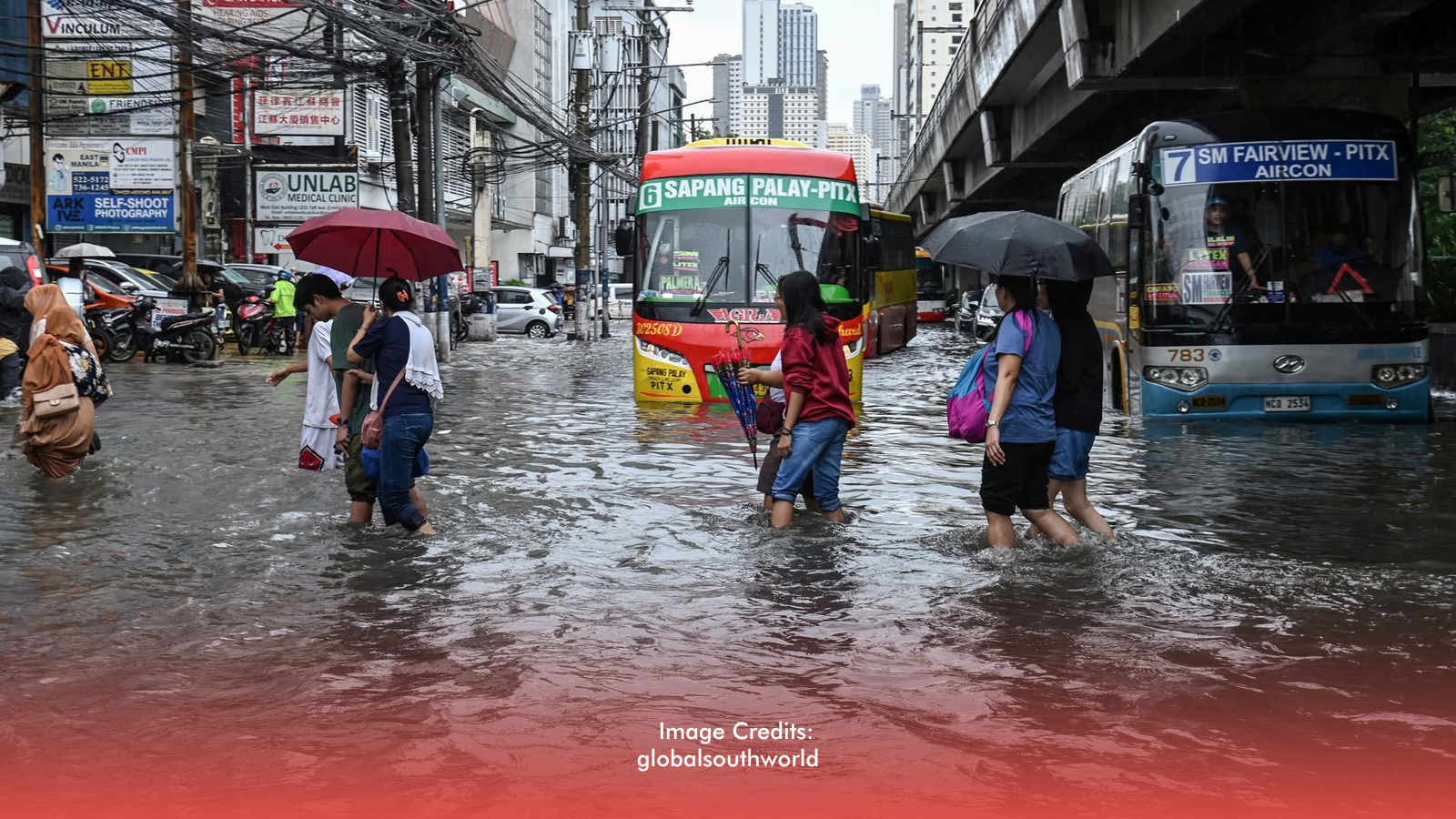
Metro Manila’s severe flooding this week has raised questions about whether building more flood control infrastructure is enough to protect the region from increasingly intense rainfall.
Project NOAH Executive Director Mahar Lagmay said the government should look beyond adding more flood control structures and consider the volume of rainfall, the capacity of waterways and the region’s naturally flood-prone geography.
Flood Control Systems Can Only Handle So Much
Metro Manila received 201.7 millimeters of rain within five hours on Monday, August 17, overwhelming existing flood control structures and waterways.
Lagmay said these systems were designed to accommodate a certain volume of floodwater, but the amount of rain exceeded their capacity.
“Malakas talaga 'yung ulan kahapon, expected po na talagang magbabaha,” Lagmay told ANC on Wednesday, August 18.
Metropolitan Manila Development Authority General Manager Nicolas Torre III similarly said the amount of rain that fell within a few hours was enough to overwhelm the metropolis’ limited waterways.
Several major roads became impassable from morning until late evening, while floodwaters reached around 26 inches in some areas. Parts of Quezon City also experienced above-head-level flooding.
Metro Manila’s Geography Adds to the Risk
Lagmay said Metro Manila and neighboring Bulacan are located in naturally low-lying areas known as deltas, which were formed over time as rivers deposited soil and silt.
“We are in an urbanized area sitting on land that is really flood-prone,” he said.
Many vulnerable areas are near rivers, streams and other waterways. Urban development can also reduce the ground’s ability to absorb rainwater as more surfaces become paved.
This means additional dikes and drainage systems may not be enough when rainfall exceeds the capacity of both infrastructure and waterways.
Solutions Beyond Concrete and Dikes
Lagmay recommended combining traditional flood control projects with nature-based solutions such as retention basins, rainwater harvesting and “sponge roads,” or streets designed with porous materials that allow rainwater to seep into the ground.
For the short term, he also urged authorities to use accurate forecasts and flood-risk maps to identify vulnerable communities and move residents before floodwaters rise.
For longer-term planning, he recommended studying the land and using simulations to test proposed flood mitigation projects before construction.
The goal is to capture and manage rainwater earlier, reducing the amount that reaches low-lying areas at the same time.
For Metro Manila, the challenge may not simply be building more flood control projects, but building smarter and managing water before it becomes a flood.