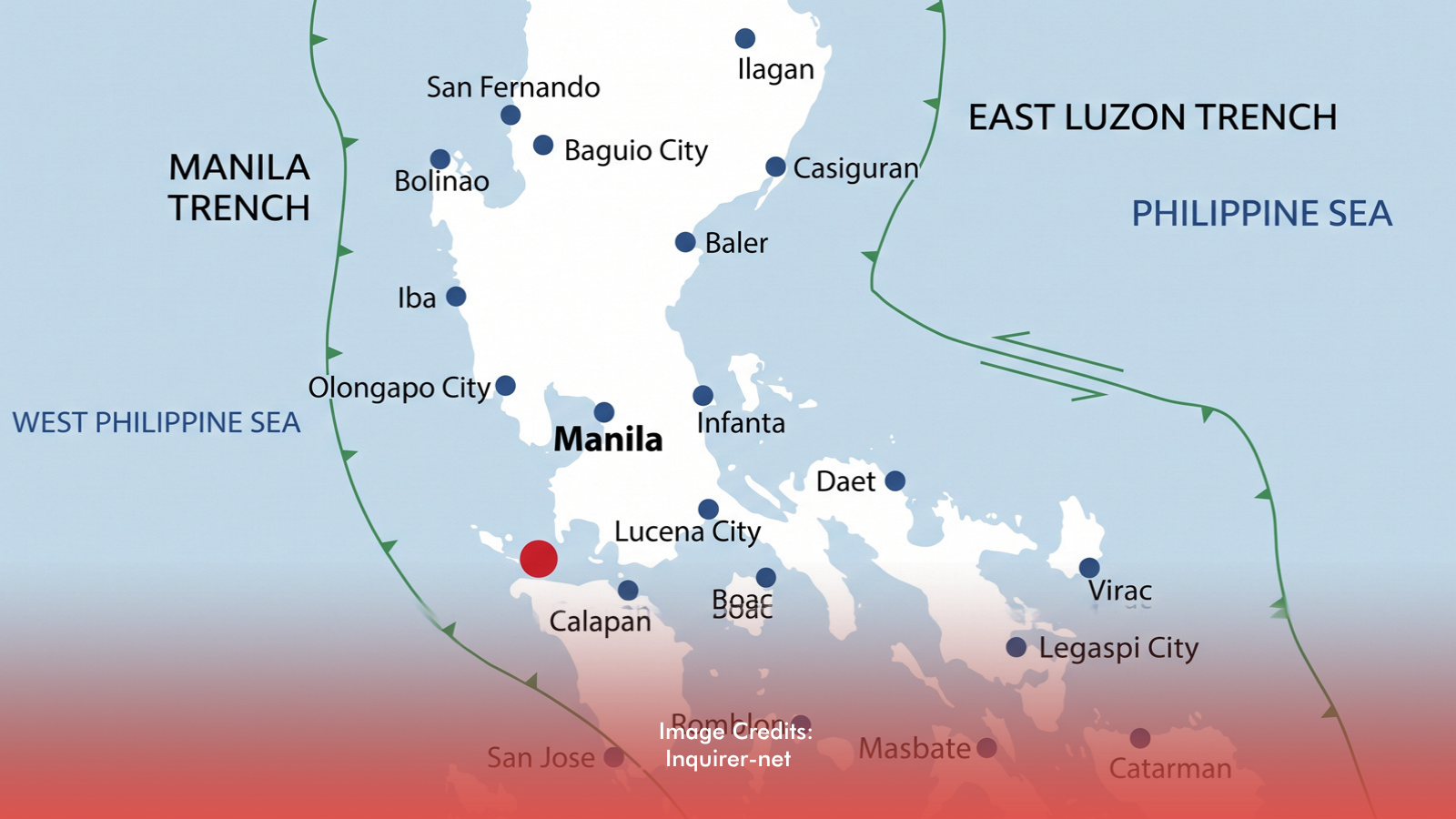
A magnitude 8.3 earthquake along the Manila Trench could generate a tsunami with waves reaching up to 5.5 meters, the Philippine Institute of Volcanology and Seismology (Phivolcs) warned on Tuesday, October 13, as it urged coastal communities to prepare for potential disasters.
During a briefing ahead of World Tsunami Awareness Day on November 5, Phivolcs Deputy Director Dr. Ma. Mylene Martinez-Villegas discussed tsunami scenarios and the importance of recognizing natural warning signs.
The agency also modeled a separate earthquake scenario involving the West Valley Fault, where a magnitude 7.2 earthquake, commonly known as the “Big One,” could cause severe damage on land. Unlike an offshore earthquake along the Manila Trench, this scenario primarily concerns ground shaking and its effects on communities and infrastructure.
Phivolcs emphasized that these figures are based on hazard modeling. They are not predictions that an earthquake or tsunami will occur at a specific time.
66 Provinces Face Tsunami Risk
The Philippines remains vulnerable to tsunamis because of its location along several active tectonic trenches. Phivolcs said 66 of the country's 82 provinces have coastal communities exposed to tsunami hazards.
Potential sources include the Manila Trench, Philippine Trench, and Cotabato Trench. Tsunamis may also reach Philippine shores following powerful earthquakes originating elsewhere in the Pacific.
In Metro Manila, Phivolcs identified Valenzuela, Navotas, Malabon, Manila, Pasay, Las Piñas, and Parañaque as areas exposed to potential tsunamis generated by movement along the Manila Trench.
The Office of Civil Defense in the National Capital Region also noted that Makati could face risks through the Pasig River corridor.
Tsunamis Can Arrive Within Minutes
One of the greatest dangers is how quickly a tsunami may reach the coast after an earthquake. Villegas said a locally generated tsunami could arrive within five to 20 minutes, leaving residents little time to wait for official warnings.
Phivolcs urged people in coastal areas to recognize natural warning signs and evacuate immediately when necessary.
These include:
- Strong or prolonged earthquake shaking, especially near the coast.
- Sudden recession of seawater, exposing parts of the seabed that are normally underwater.
- An unusual loud roaring sound coming from the ocean.
Anyone near the coast who experiences strong shaking or notices these warning signs should move immediately to higher ground or farther inland, following established evacuation routes. Do not wait for an official alert or attempt to approach the shoreline to observe the sea.
Phivolcs stressed that preparedness, public awareness, and a quick response are essential to reducing casualties when a tsunami threatens coastal communities.