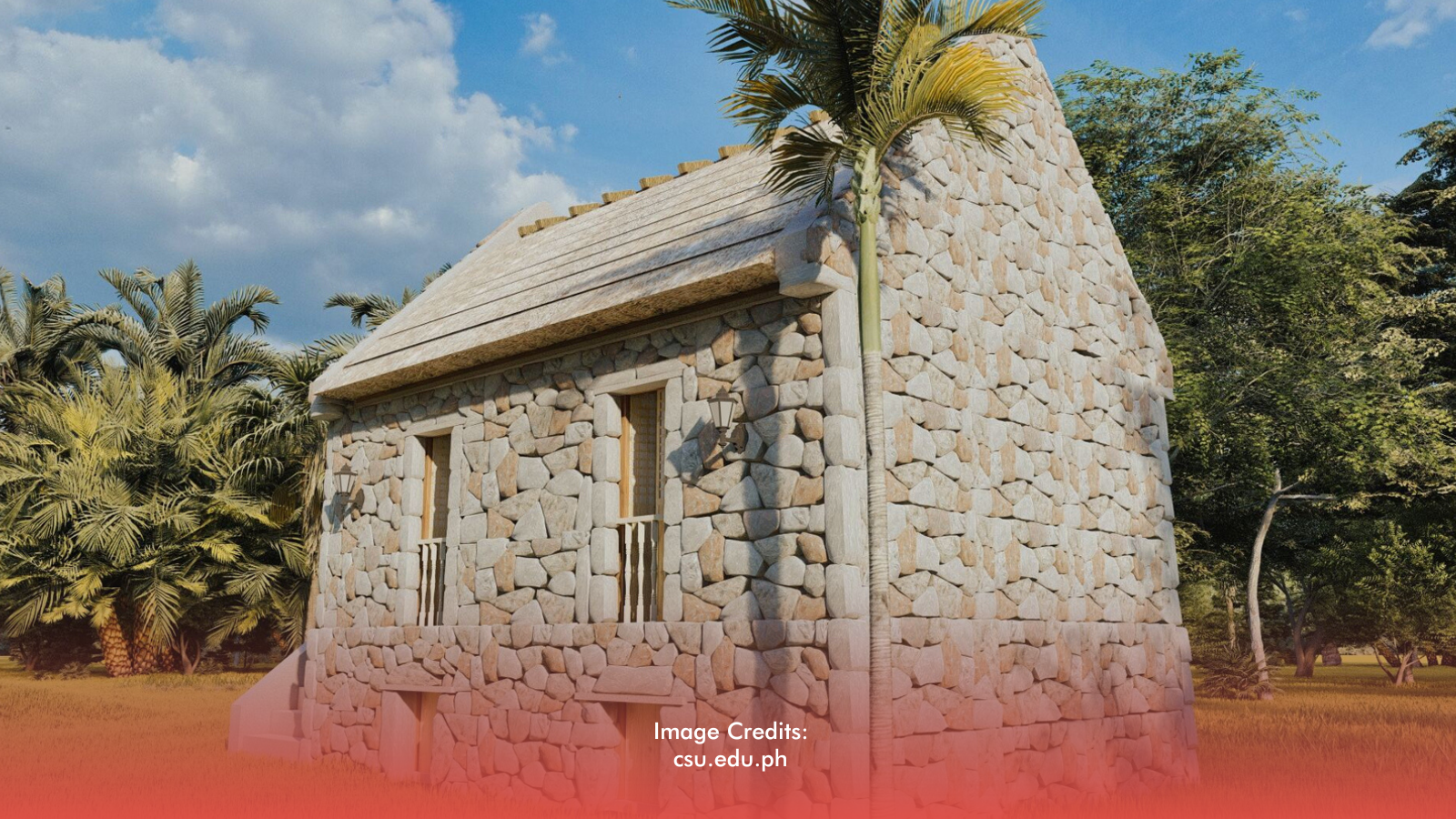
In a quiet village overlooking the sea, a milestone in cultural preservation and disaster resilience was celebrated on December 6. Scientists, local officials, and community elders gathered for the inauguration of the Modern Resilient Ivatan House, a model home that honors the Ivatan people’s architectural tradition while integrating modern engineering for safety.
Developed by the Cagayan State University-Ivatan Houses Project Team with support from the Department of Science and Technology–Philippine Council for Industry, Energy and Emerging Technology Research and Development (DOST-PCIEERD), the house merges the iconic stone-and-thatch design of Ivatan homes with structural reinforcements to withstand strong typhoons and earthquakes. The project comes at a crucial time, as younger generations are showing less interest in learning traditional construction skills.
Science and Tradition in Harmony
DOST-PCIEERD Executive Director Dr. Enrico Paringit described the project as proof that “science and culture are not adversaries but companions.” Using tools like STAAD Pro and ETABS, engineers reinforced foundations, walls, and beams while keeping the home’s exterior faithful to traditional aesthetics.
“This is more than construction; it is continuity,” Paringit said. “Innovation can protect heritage, ensuring the community passes down not just a house, but an identity,” he added.
CSU Aparri professor Dr. Audy Quebral, who led the research, emphasized that modernization was done with respect for tradition. The project also received formal support through Batanes’ Sangguniang Panlalawigan Resolution No. 73, Series of 2024, encouraging adoption of the design while recognizing the Ivatan people as rightful cultural custodians.
Keeping a Culture Alive
The event also highlighted a deeper challenge: the fading of traditional skills. Uyugan Mayor James Richard Cabugao noted that fewer young people are learning stone house repair, once passed down through apprenticeships and community labor. High repair costs and modern preferences also make traditional homes less appealing.
“Identity siya ng Batanes…nakakakaba kung mawala,” Cabugao said. (Batanes’ identity…it’s frightening to imagine it disappearing.) He hopes the modern model will inspire families to rebuild or maintain stone homes safely and affordably.
For Paringit and Quebral, the house is more than a structure—it is a symbol of hope.
“We have built a home that doesn’t just resist storms—it outlives them, carrying forward culture and knowledge for generations to come.”