
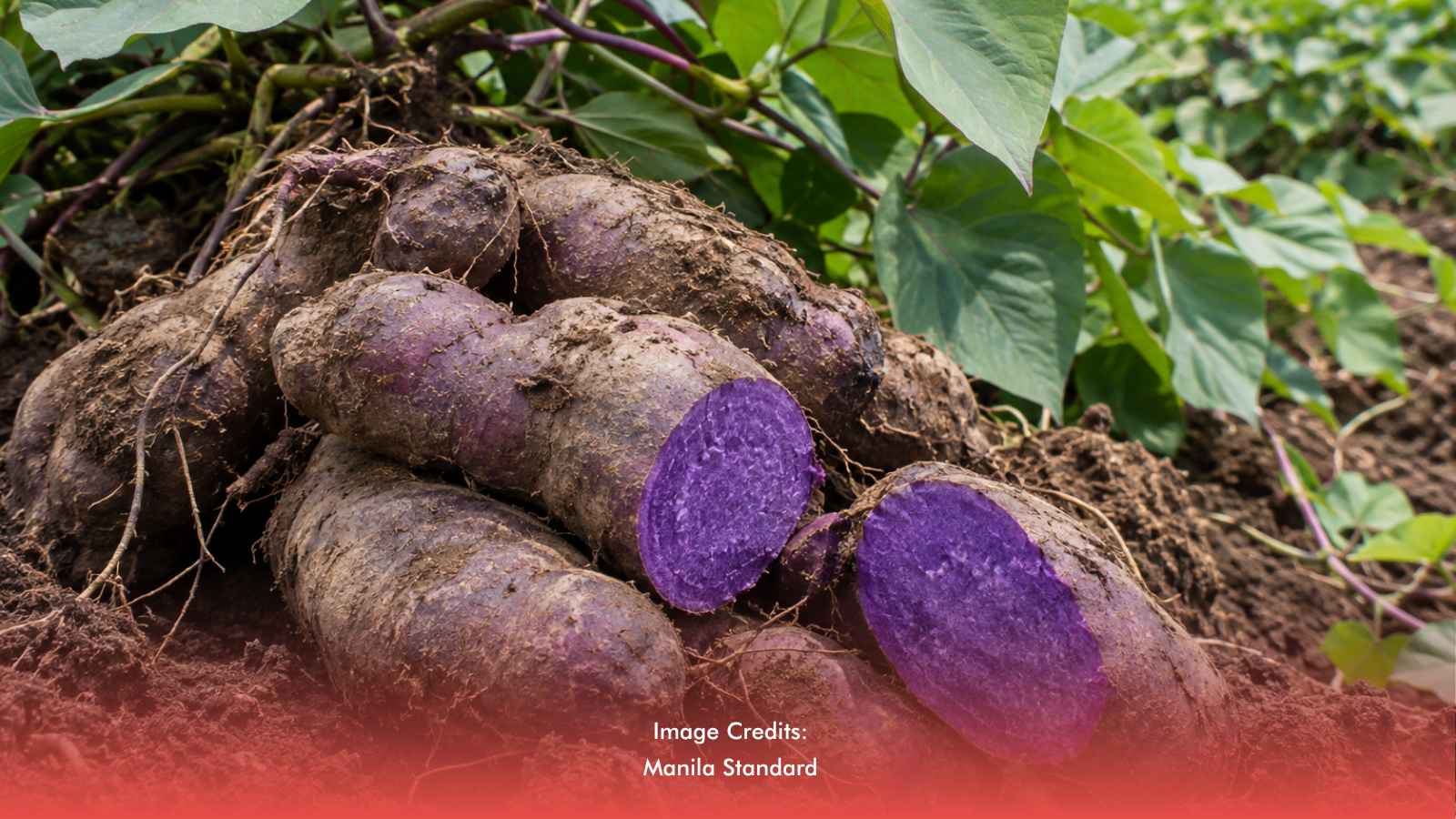
The world is getting a taste of Philippine ube, and the growing appetite is turning the humble purple yam into a promising export crop. For reference, the Department of Trade and Industry (DTI) cited that the Philippines earned $3.06 million from ube and ube-based product exports in 2025. But as international demand grows, the country now faces a new challenge: making sure local farmers and producers can supply enough ube to keep up.
Humble Origins
Ube has long been familiar to Filipinos, with its integration in halaya, champorado, cakes, ice cream, and other desserts. Now it’s attracting food manufacturers and consumers overseas.
According to DTI, 359 new products featuring ube were launched globally, with Japan, China, and the United States emerging as major innovation hubs.
The opportunity isn’t limited to exporting fresh ube, though. Processed products can turn the crop into higher-value ingredients that can reach more markets while creating more opportunities for Filipino producers.
Global Shipments
The export opportunity is already translating into actual shipments.
In April, Quirino shipped 1.2 tons of ube powder to Japan, its largest single ube export shipment at the time. The province has since completed seven shipments to Japan, totaling more than four tons and generating around ?4.4 million in sales.
The initiative has benefited more than 500 local farmers, showing how global demand can create opportunities beyond the country’s major cultural agricultural centers.
The Challenge
However, growing demand has also exposed weaknesses in the local supply chain.
Back in August, farmers, processors, traders, exporters, researchers, and government agencies formed the United Ube PH Association Inc. to help build a more coordinated national ube industry. Fast forward to September, when the DA indefinitely suspended exports of fresh ube and propagative planning materials to help secure enough planting material for local production. Processed ube products can still be exported.
The government is now looking at propagation technologies, community nurseries, and other measures to expand the country’s supply of quality planting materials.
Strengthening the Opportunity
The global appetite for ube also means an opportunity to build a stronger value chain around a crop that Filipino farmers have cultivated for generations. But for the Philippines to fully benefit from this, we need to make sure there is enough ube to go around.