
The Department of Science and Technology (DOST) has strengthened the country’s push toward artificial intelligence (AI) adoption with the launch of the National AI Center for Research and Innovation (NAICRI), signaling a more coordinated and strategic national effort.
DOST Secretary Renato Solidum Jr. said the establishment of NAICRI reflects the Philippines’ deliberate move to embrace AI as a transformative, general-purpose technology comparable to electricity and the internet.
From Fragmented Projects to National Strategy
NAICRI will serve as the central hub for AI research, computing resources, and capacity-building initiatives across government. It will also lead the implementation of the National AI Strategy for the Philippines (NAIS-PH), shifting efforts from fragmented, project-based initiatives to a coordinated and scalable framework.
“Artificial intelligence is reshaping how industries operate, how governments deliver services, and how nations compete,” Solidum said, noting that the new center translates the country’s AI ambitions into operational capability.
Closing Gaps, Building Local Strength
Solidum said that while over 80 percent of digital data in the country covers basic infrastructure, only about 15 percent has adopted advanced AI technologies, with uneven distribution across regions. Still, he emphasized that the Philippines is “not very late” in overall AI readiness, ranking above 50 percent globally.
Rather than competing with major powers in developing large language models, he said the country’s advantage lies in building a sovereign dataset tailored to national priorities.
He acknowledged structural challenges, including limited advanced computing power, a shortage of specialized AI talent, and governance frameworks that have yet to keep pace with rapid technological change. Addressing these gaps, he said, is crucial to staying competitive in an increasingly AI-driven global economy.
Sustainable and Human-Centered Adoption
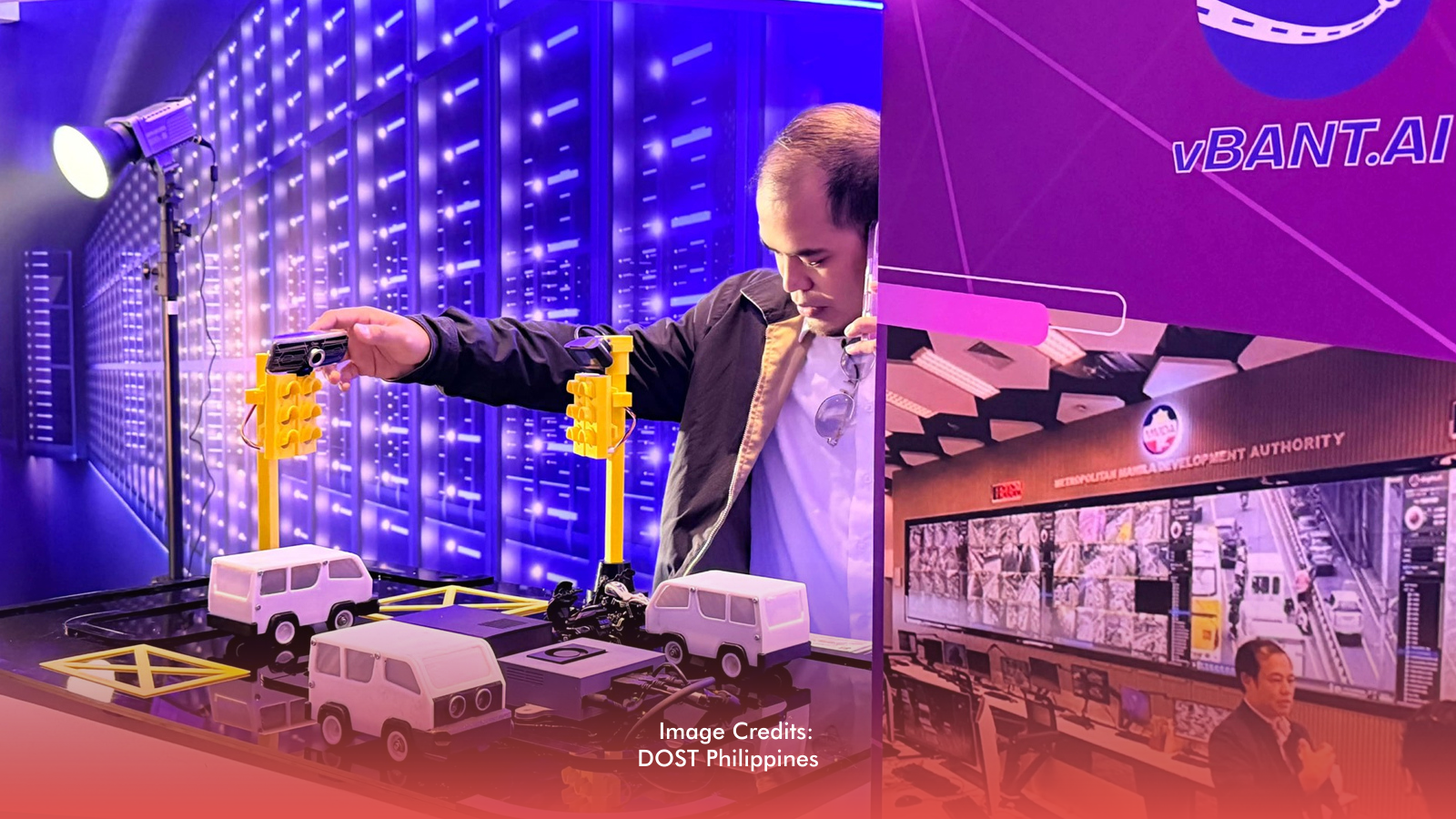
Currently, NAICRI supports five AI infrastructure initiatives covering disaster resilience, agriculture, education, business, traffic management, and information distribution.
Amid concerns over AI’s high energy and water consumption, Solidum stressed the need for sustainable systems and strong coordination with local governments to ensure responsible adoption.
He also reiterated DOST’s push for a “human-centered” AI framework and its Three-Horizon Approach, which prioritizes boosting productivity among micro, small, and medium enterprises through technology-driven solutions.