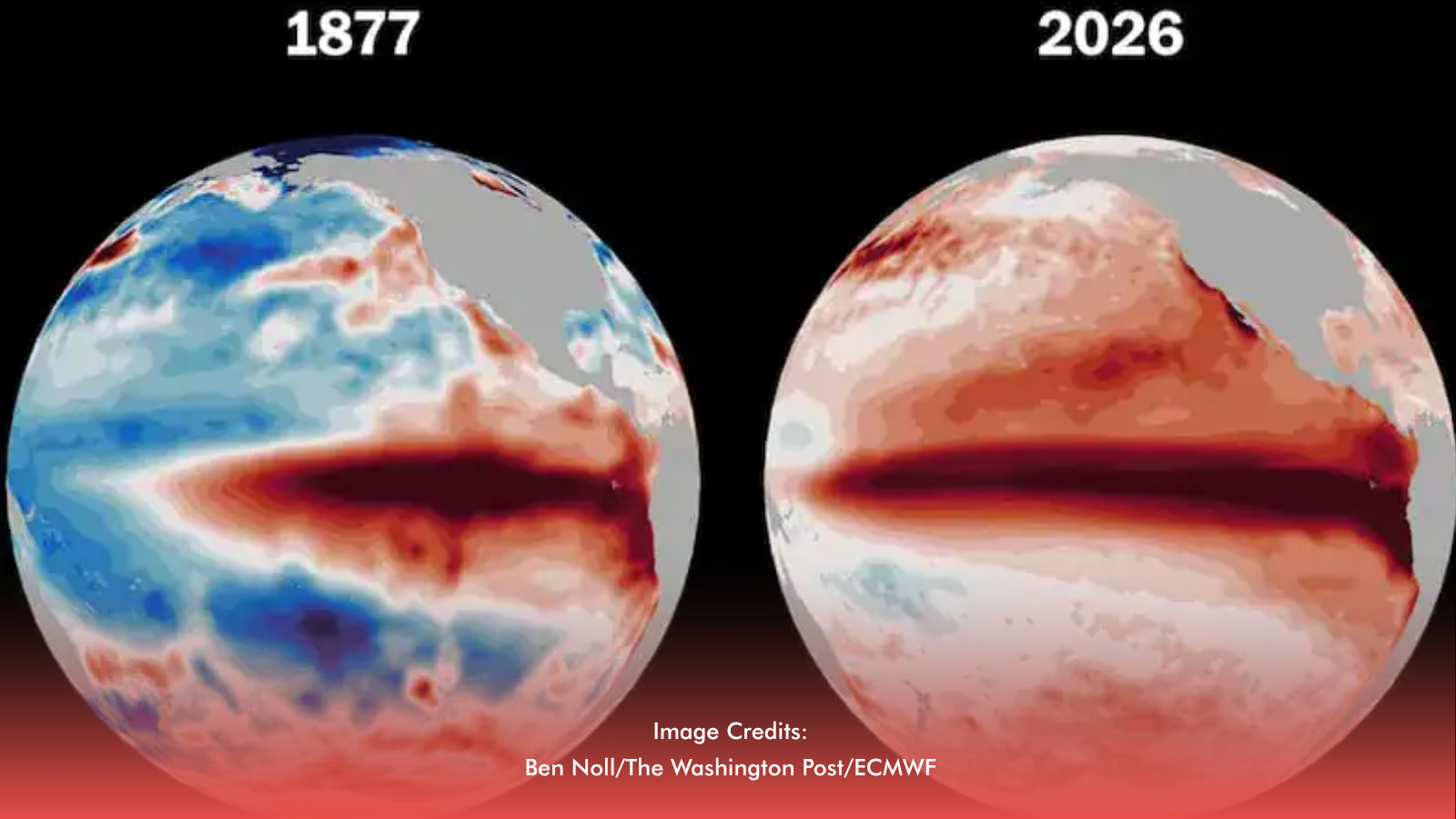
The Philippines may be heading into just its fourth confirmed Super El Niño since the 1950s. Early signs suggest it could also be the strongest on record.
Forecasters measure El Niño using the Oceanic Niño Index, which tracks how much warmer the central Pacific is than average. Only three El Niño events have crossed the Super El Niño threshold since 1950.
Parts of the Pacific have already warmed more than 3 degrees Celsius above normal this year. One model now puts the chance of this event becoming the strongest on record at 69 percent.
PAGASA is also warning of a very strong event. The agency puts the odds at 81 percent between October 2026 and January 2027, with conditions expected to persist through the first half of next year.
What History Shows
PAGASA records 19 El Niño events between 1950 and 2010, seven of which were classified as strong. Only two reached Super El Niño levels: 1982 to 1983 and 1997 to 1998.
Farmers who lived through those years still remember the impact. Rainfall dropped by as much as half in affected areas, triggering drought across the country.
Hundreds of thousands of hectares of farmland were damaged, with losses reaching billions of pesos. This year's event is projected to cause a similar level of economic damage, with estimated direct and indirect costs of P286.8 billion.
Where Things Stand
The current El Niño has developed more slowly than the events of 1982 and 1997. That has given scientists more time to monitor its development.
PAGASA first flagged weak El Niño conditions in mid-2026 and has watched them strengthen in the months since. The agency now expects the event to peak between October and December.
Western Visayas is already on alert for dry spells.
There is one potential upside: El Niño years typically bring fewer typhoons overall. However, fewer storms does not necessarily mean weaker ones. Typhoons that do form can still become powerful.
Getting Ready
A few lessons from previous El Niño events stand out.
- Water. Store what you can. Water pressure can drop, and supply interruptions can happen sooner than expected.
- Power. Hydroelectric output can fall as dams and reservoirs run low, while demand for air conditioning rises with the heat. In the past, this combination has contributed to power shortages and brownouts.
- Health. The risk of dehydration and heatstroke increases, especially for children, older people, and outdoor workers.
- Storms. Fewer typhoons do not mean weaker ones. Any cyclone that forms can still strengthen significantly before making landfall.
The Philippines has experienced two Super El Niño events before. What sets the current situation apart is the early warning.
PAGASA has been tracking the developing event since March, giving households, farmers, and local governments something earlier generations did not have: months to prepare.