Repeated fuel price increases are eating into jeepney drivers’ earnings and stretching commuters’ budgets, according to a report by Bulatlat republished by Davao Today.
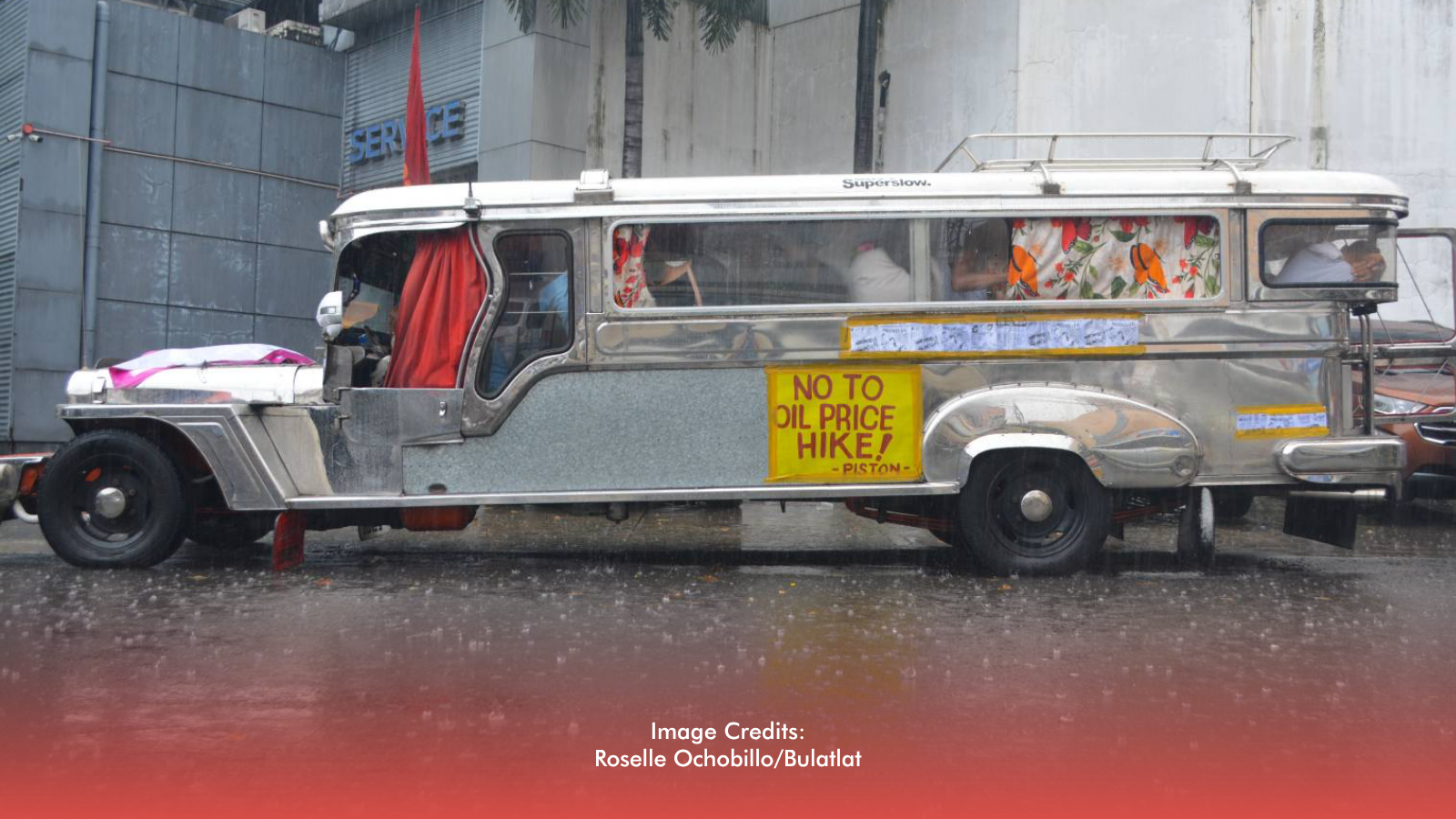
Jeepney fares recently went up by P1. But drivers say the real problem is the price of diesel, which keeps rising.
Editor’s note: Although this story ran on Davao Today, the drivers and commuter interviewed are based in Metro Manila. The story was originally reported by Bulatlat.
Working Longer, Earning Less
Teody Bermejo, 52, has driven a jeepney for about 30 years. He works from around 4 a.m. to 9 p.m., up to 16 hours a day, according to the report.
When diesel cost around P50 to P55 per liter, he could take home about P1,000, sometimes P1,500. Now he brings home only P500 to P600.
“Diesel prices have increased by around P52 to P55, while they only added P1 to the fare. There is a huge difference,” Bermejo said.
He has four children in school. One had to stop college for now and find work to help the family.
Evicted, Living in a Jeep
Janet “Arja” Tumbaga Pocsidio, 50, a member of Piston Women, helps run a Cubao–Divisoria route. When diesel hit around P140 to P145 per liter, the family’s driving income became too small, she said. Some days her husband earned only P70 to P80.
The family stopped running their jeepney at times. Pocsidio worked as a barker, a person who calls out routes and gathers passengers, earning P250 to P400 a day.
They could no longer pay their P6,000 monthly rent and were evicted. “We ended up sleeping in our jeep,” she told Bulatlat. The family later stayed at the Piston office in San Juan for about four months.
Commuters Feel It Too
Government worker Bench Cuabo said his usual P15 fare is now P17, and when drivers have no change, he sometimes pays P20. When jeepneys are scarce, he takes a taxi, which costs much more.
“The fare increases because of the rising cost of fuel but the transportation remains the same, no changes,” he said. He suggested suspending fuel excise taxes and raising workers’ wages.
What Drivers Want
Transport groups, including the Pagkakaisa ng mga Samahang Tsuper at Opereytor Nationwide (PISTON), held a nationwide strike on September 29 and 30. They called for lower fuel prices and relief from fuel taxes.
Bermejo said a rollback in diesel prices is the most urgent fix. If that’s not possible, he wants the value-added tax (VAT) and excise tax on fuel temporarily removed.
During the protest on September 29, 78-year-old Piston driver Elmer “Tatay Elmer” Cordero was rushed to the hospital after a heart attack, according to the group.
Why It Matters
For drivers, the issue isn’t whether passengers can pay one more peso. It’s whether a day on the road can still cover food, rent, and school for the family waiting at home.