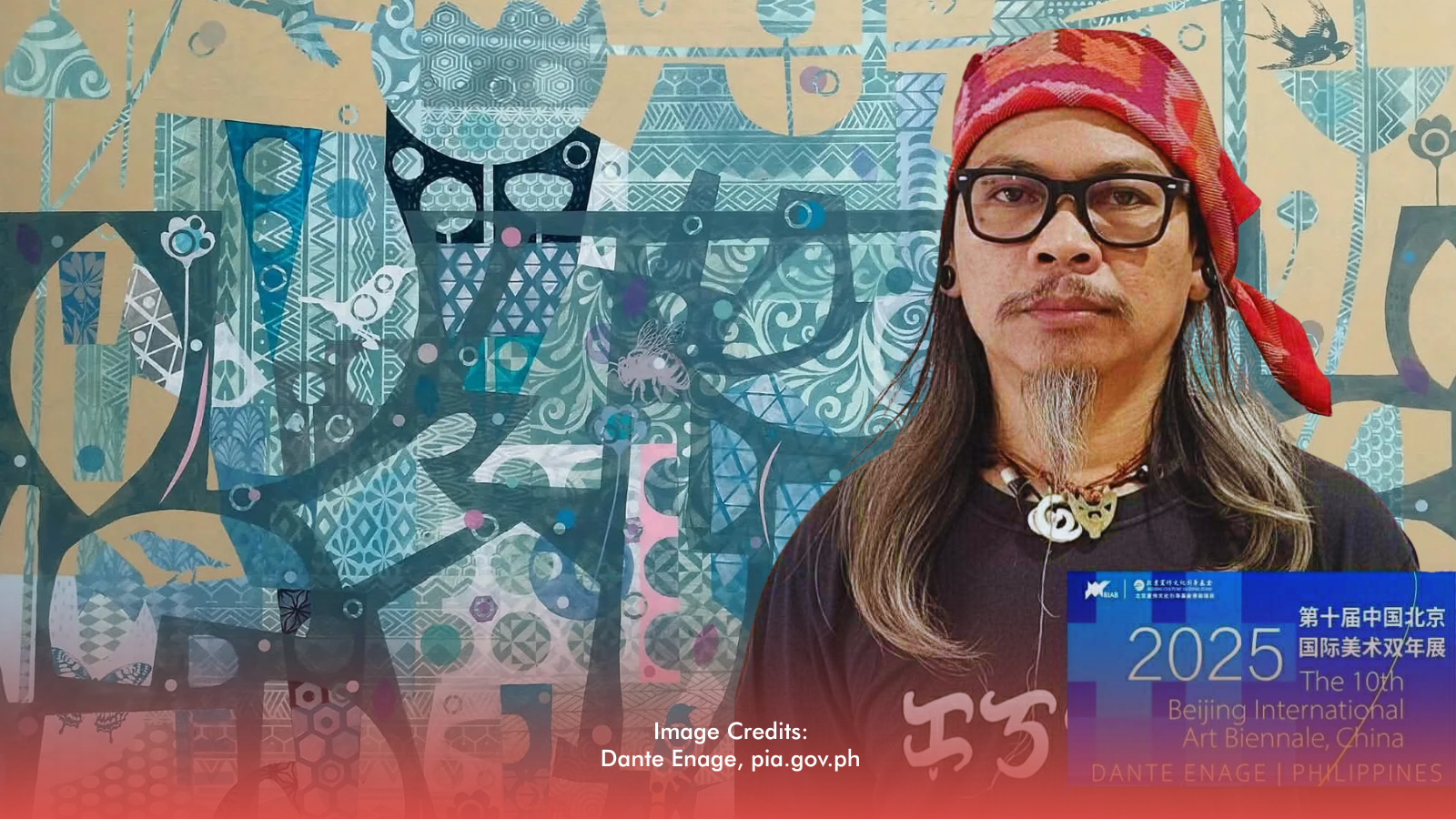
A visual artist from Tacloban City is placing Filipino contemporary art on the global stage. Dante Enage has been selected as the Philippines’ official representative to the Beijing International Art Biennale, one of the world’s most prestigious art exhibitions that brings together painters and sculptors from around the globe for cultural exchange and dialogue.
From Tacloban, To the World
Enage’s inclusion in the Biennale marks a significant milestone in a career shaped far from major metropolitan art centers. Born and raised in Tacloban City, his artistic voice was formed through lived experience rather than formal exposure to elite gallery spaces. Like many in Eastern Visayas, he witnessed and endured the devastation of Typhoon Yolanda (Haiyan), an event that later influenced the recurring themes of resilience and survival in his work.
Art Rooted in Experience, Not Privilege
Instead of distancing himself from his roots, Enage carried them into his creative practice. Working with limited resources and fewer opportunities, he developed a visual language grounded in community memory and cultural identity. His artworks often explore the balance between fragility and strength, reflecting both environmental realities and the enduring Filipino spirit.
“Patterned Paradise 1”: Tradition Reimagined
For the Beijing International Art Biennale, Enage presents “Patterned Paradise 1,” a large-scale acrylic on canvas that blends traditional Filipino imagery with contemporary forms. Geometric patterns inspired by Pintados tattoos and Baybayin script are layered with natural elements, suggesting harmony while also pointing to the vulnerability of both culture and environment.
The work functions as both a personal reflection and a collective narrative, grounded in Philippine heritage yet accessible to a global audience.
A Win for Regional Filipino Artists
Beyond personal recognition, Enage’s selection highlights the growing presence of regional Filipino artists in international art spaces. His participation challenges the notion that meaningful artistic contributions must come from cultural capitals, emphasizing that talent and vision can emerge from anywhere in the country.