In 1905, a man named José Nuñez was living in Nueva Ecija when a family asked him to treat their sister, who was vomiting violently and had reportedly lost much of her sight. Her brothers believed a mangkukulam had bewitched her.
Nuñez explained that he did not believe in witches and was not a doctor, but the family insisted. He asked someone to bring branches of anona, or custard apple, a plant believed to repel witches. The vomiting stopped and did not return until the following day. For three days, he observed that the attacks ceased whenever he mentioned anona.
Despite the unusual coincidence, Nuñez remained unconvinced that witchcraft was responsible. He noted that such beliefs continued to exist in the popular mind.
What Is a Mangkukulam?
A mangkukulam is someone believed to use kulam, or supernatural curses, to cause illness or suffering. The term is associated with Tagalog folklore, while barang is traditionally associated with Cebuano-speaking communities in the Visayas. Practitioners may be called mambabarang, barangan or mamalarang, depending on the region.
These figures differ from the aswang, a broad category of supernatural beings in Philippine folklore often associated with shape-shifting and predatory behavior.
Anthropologist Richard Lieban, who studied sorcery in Cebu and Negros Oriental during the 1950s and 1960s, found that the practitioners he interviewed did not necessarily consider themselves witches. In local belief, an aswang might be regarded as inherently evil, while a sorcerer was an ordinary person believed to have learned techniques for causing harm.
How Does Kulam Supposedly Work?
Traditional accounts often describe a method involving an object that represents the intended victim.
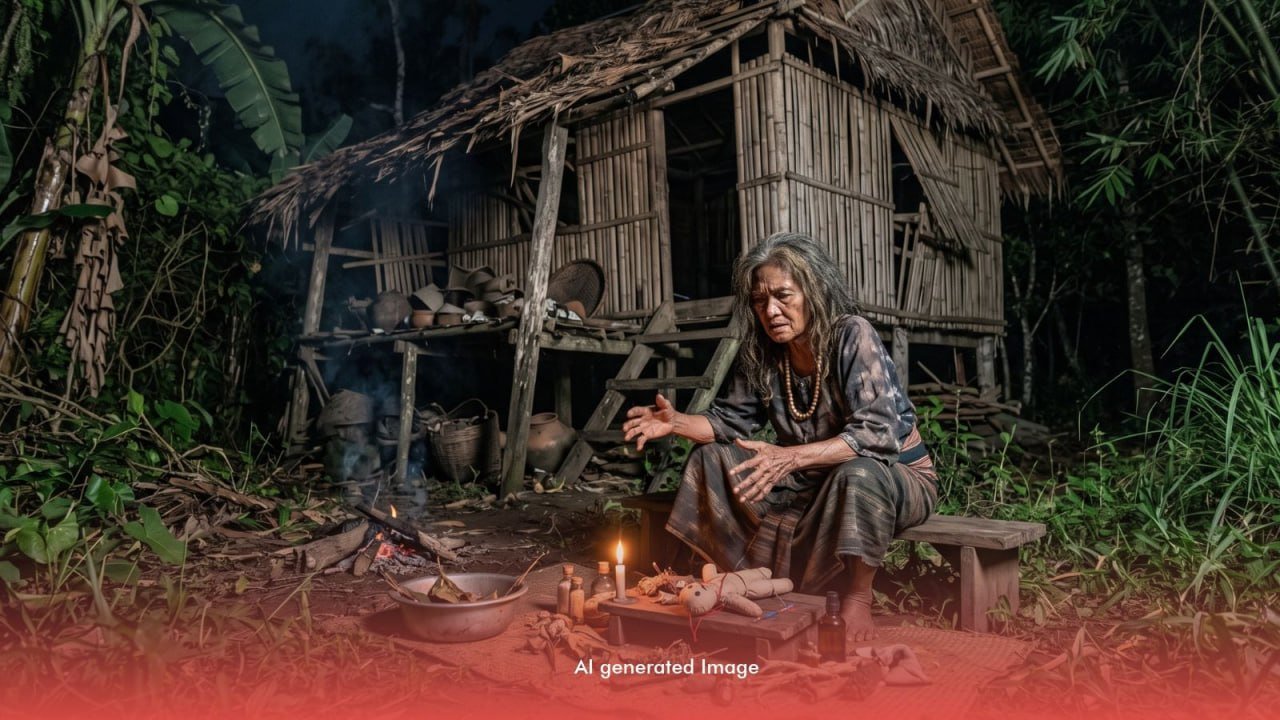
Nuñez documented the abubut, a small woven box said to contain a rag doll and a pincushion. According to the belief, inserting a pin into the doll causes pain in the corresponding part of the victim's body. Headaches, boils, swellings and internal tumors were among the conditions attributed to kulam.
Other practices involve boiling something associated with the victim, such as hair, saliva or clothing. In Cebuano accounts, this method is called la-ga, meaning “boil.”
Did You Know? In 1589, Spanish friar Juan de Plasencia recorded several types of spiritual practitioners among early Tagalog communities. These included the mancocolam, associated with mysterious fire and illness, and the mangagauay, who supposedly used charms to cause sickness while pretending to heal. His writings document historical beliefs, not scientific evidence of supernatural powers.
What Is Barang?
Barang is a form of sorcery in which insects or other small creatures are believed to cause illness. Lieban described it as one of the most frequently discussed forms of sorcery in the Cebuano-speaking region.
According to accounts he collected, a barangan keeps insects in a bamboo tube and uses paper bearing the victim's name and address as part of a ritual. The insects are supposedly directed to enter the victim's body and attack internal organs, causing pain, swelling or bleeding. These claims are part of folklore, not medically established explanations for disease.
Siquijor is particularly associated with sorcery and folk healing, although similar beliefs exist in Bohol and other parts of the Visayas.
Did You Know? Some barang traditions describe the supposed insects as having seven legs, with a thread tied around the seventh. However, beetles documented by Lieban were identified as Alphitobius laevigatus, a black fungus beetle associated with stored grain. The specimens had six legs, highlighting the difference between traditional descriptions and scientific observation.
Legends of Kulam and Barang
Several stories illustrate how these beliefs have been passed down through generations.
- The dancing wax figure: Nuñez recorded a story about a healer who placed a small wax figure in boiling water. Witnesses claimed it moved on the surface instead of melting. A man then reportedly arrived, hopping as though walking on thorns, and begged the healer to lift the supposed curse.
- The curse sent back: In some Cebuano traditions, a healer wraps insects believed to cause barang in black cloth and boils them. Believers say the sorcerer then suffers the same illness. This reversal is called balisung.
- The seven Fridays: Some Siquijor healing traditions involve gathering ingredients during the seven Fridays of Lent, including in forests, coastal areas and old cemeteries.
These stories remain part of regional folklore, but their supernatural claims have not been scientifically verified.
Who Fights Back? The Albularyo and the Mananambal
People who believe they have been cursed may seek help from traditional healers.
In Tagalog-speaking communities, an albularyo may use herbs, oils, prayer and traditional rituals. In the Visayas, a similar practitioner is known as a mananambal. Some are believed to know counter-sorcery as well as healing practices.
Siquijor is known for traditional methods such as bolo-bolo, in which a healer blows through a straw into a container of water with a stone inside. The bubbles are interpreted as drawing out the supposed source of an illness. Another practice, to-ob, involves smoking the patient with a mixture of ingredients.
The island's association with the supernatural also has a historical dimension. Spanish sailors who reportedly sighted Siquijor in 1565 called it Isla del Fuego, or “Island of Fire,” because of the fireflies seen among its trees.
Since 2006, Siquijor's provincial government has held a Holy Week Healing Festival to promote traditional healing and challenge the island's reputation as a place of witchcraft.
Where Did These Beliefs Come From?
Plasencia's 1589 writings show that beliefs in curses and supernatural healing existed during the early Spanish colonial period. Lieban also observed similarities between local sorcery traditions and those in other parts of Southeast Asia.
Such beliefs can offer explanations for illnesses that people struggle to understand. They may also provide ways to explain misfortune or settle personal conflicts. In Lieban's accounts, some practitioners described sorcery as punishment for grievances such as damaged fishing nets or stolen coconuts.
The Real Harm of Witchcraft Accusations
Although kulam and barang belong to folklore, accusations can have serious consequences.
In 2025, a 37-year-old man in Kibawe, Bukidnon, reportedly beat a 75-year-old woman unconscious and set her on fire because he believed she had cursed him. Police filed murder charges.
Traditional responses to suspected curses have also involved dangerous practices. Nuñez recorded supposed treatments that included beating sick people with a dried ray's tail and bathing them in boiling water.
Persistent pain, lumps, swelling and vomiting can indicate medical conditions that require proper treatment. Anyone experiencing these symptoms should consult a qualified health professional rather than relying solely on traditional explanations.
Traditional Beliefs and Protective Practices
Filipino folklore includes several practices believed to protect against sorcery:
- Anona branches: Early 20th-century Tagalog accounts describe anona as a plant believed to repel witches.
- Amulets: Some communities use blessed objects or protective symbols as part of their spiritual traditions.
- Personal belongings: Certain stories warn against allowing others to obtain hair, clothing or other personal items for use in rituals.
- Medical care: Unexplained or persistent symptoms should be assessed by a qualified health professional.
Kulam, barang and traditional healing remain important parts of Philippine folklore. Understanding these traditions helps preserve cultural history, but distinguishing belief from evidence is equally important. No accusation of witchcraft should ever be treated as proof of wrongdoing or used to justify violence.