Eight surviving Spanish colonial stone cemeteries in Iloilo are the focus of a new book documenting the province’s artistic traditions and historical heritage, offering a closer look at structures that remain part of its cultural landscape.
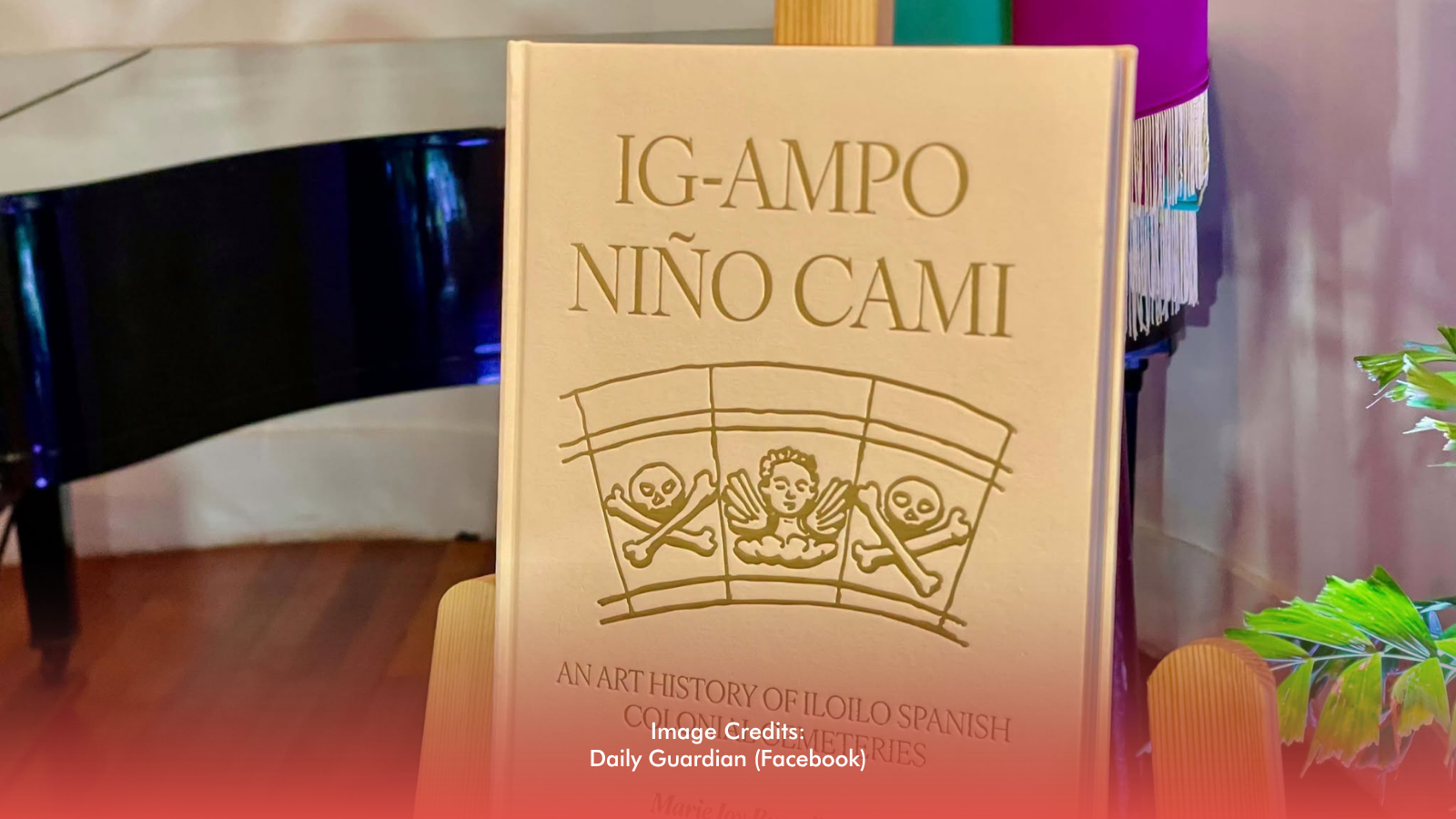
Titled Ig-Ampo Niño Cami: An Art History of Iloilo Spanish Colonial Cemeteries, the book was launched on Oct. 6 by the University of the Philippines Visayas (UPV) Division of Humanities in partnership with the National Historical Commission of the Philippines (NHCP). The launch took place at the Museum of Art and Cultural Heritage Performance Hall in the UP Visayas Iloilo City campus Main Building.
RELATED: [Palace Names 10 New National Artists]
Eight Cemeteries Preserve a Record of Iloilo’s Past
The publication examines Spanish colonial stone cemeteries in Cabatuan, Dingle, Janiuay, Miagao, Oton, Pototan, San Joaquin, and Santa Barbara. By documenting their art history, the book records a significant part of Philippine history and cultural heritage, particularly the legacy preserved in Iloilo’s historic sites.
In her review of the work, Rona Repancol, a faculty member of the Department of History at the University of Santo Tomas, noted that the research began as a master’s thesis completed in 1995.
The manuscript remained unpublished for three decades. Sumagaysay reflected that a lack of confidence and grit, alongside the demands of motherhood and her work in academe, had led her to set the project aside.
Its publication eventually moved forward after the NHCP extended an unexpected invitation in late 2025, giving the decades-old research a new opportunity to reach readers.
Explaining the title, Sumagaysay said, “‘Ig-Ampo Niño Cami’, the books title is actually the engraving on a stone tablet – a memento mori from the cemetery of Sta. Barbara,” Prof. Sumagaysay said.
Book Copies Shared With Academic and Cultural Institutions
The NHCP was represented at the launch by Regalado Trota Jose Jr. and Executive Director Carminda R. Arevalo.
Copies of the book were presented to the UPV Center for West Visayan Studies, University of San Agustin, Central Philippine University, National Museum of the Philippines-Iloilo, West Visayas State University, and Iloilo Science and Technology University, extending access to the research across academic and cultural institutions.
Sumagaysay serves as an assistant professor 7 at the UPV Division of Humanities under the College of Arts and Sciences. She earned her master’s degree in art history from UP Diliman, and her academic interests include local heritage and food.
The book puts a record of Iloilo’s history into public view, preserving details of its colonial cemeteries that might otherwise remain unfamiliar to many Filipinos. Documenting these sites helps communities understand their past and recognize the cultural value of places that are often overlooked.
RELATED: [Tabi-Tabi Po: Hear the Tik-Tik? The Manananggal May Be Near]