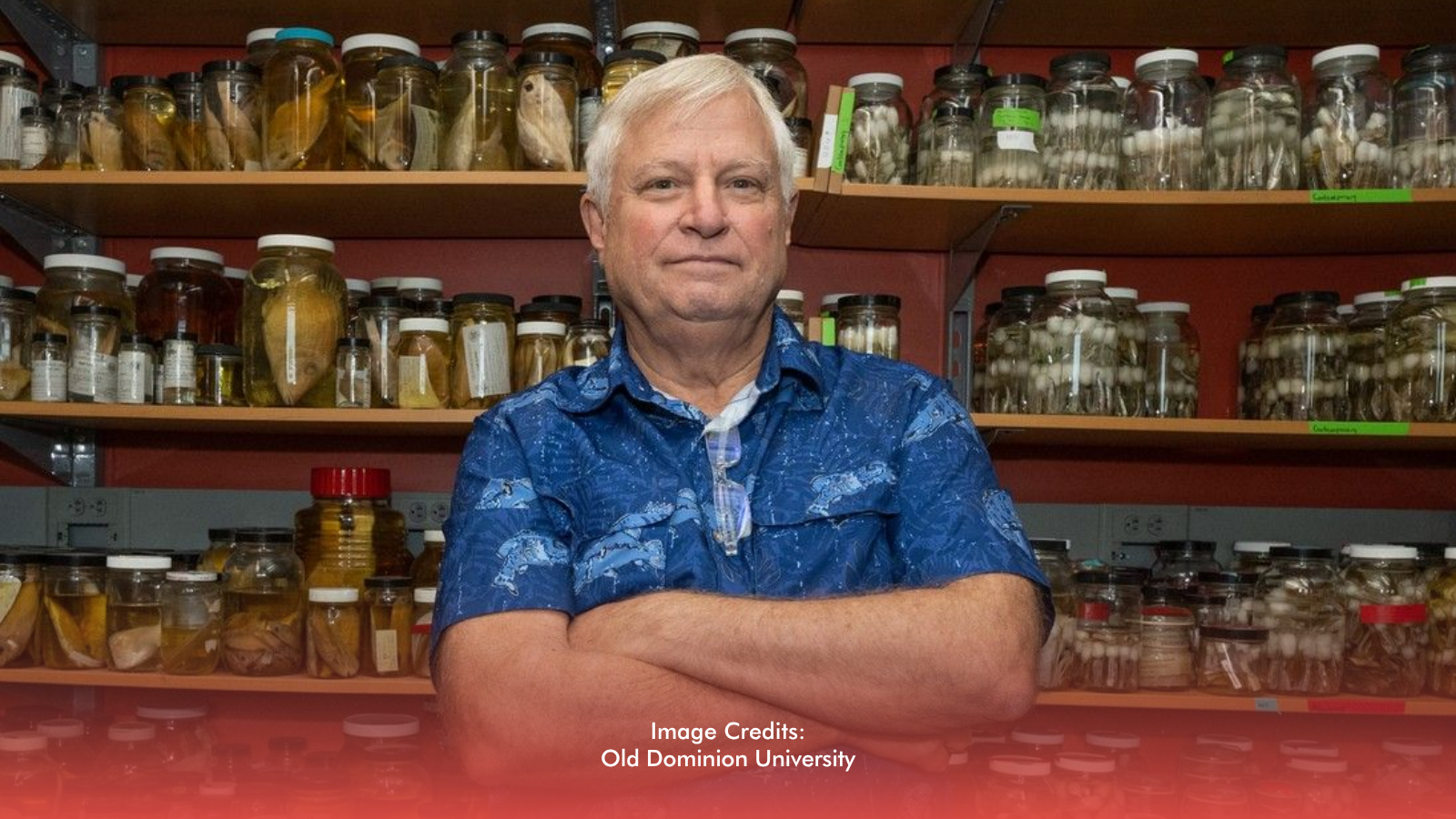
For more than half a century, American marine biologist Kent Carpenter studied the extraordinary life beneath Philippine waters.
His research helped establish the central Philippines as the global epicenter of marine shore fish diversity, strengthening the scientific case for protecting some of the country’s most threatened reefs.
On July 12, the 73-year-old scientist was shot dead inside his home in Barangay Ajong, Sibulan, Negros Oriental.
Three masked men reportedly forced their way into the residence while Carpenter and his Filipino partner were watching television. One of the intruders shot him in the head. His partner was assaulted and injured, while a laptop, cash, and a backpack were reportedly taken from the house.
Police announced on July 16 that three suspects, including the alleged gunman and lookout, had been arrested in Sibulan. Two other suspects were still being pursued. Authorities have yet to announce a final motive for the killing.
A Life Devoted to Philippine Waters
Carpenter’s relationship with the Philippines began in 1975, when he arrived as a young Peace Corps volunteer and was assigned to conduct coral reef research for the Bureau of Fisheries and Aquatic Resources.
What began as an overseas assignment became a lifelong scientific commitment.
He continued returning to the Philippines for research over the next 50 years, working with Filipino scientists and institutions on coral reefs, fisheries, marine species, and biodiversity conservation.
Carpenter later became a professor and eminent scholar at Old Dominion University in Virginia. He also served as an adjunct professor and longtime research associate at Silliman University’s Institute of Environmental and Marine Sciences in Dumaguete City.
His partnership with Silliman began in the 1970s and contributed to the university’s development as an internationally recognized center for marine and coastal research.
The “Center of the Center”
Carpenter’s most influential Philippine research came in a 2005 study with ichthyologist Victor Springer.
After examining distribution records for 2,983 marine species, the researchers found that the central Philippine islands contained a greater concentration of marine species per unit area than any other area included in their analysis.
The study described the Philippines as the “center of the center of marine shore fish biodiversity.”
It provided scientific evidence that the country was not merely part of the biodiverse Coral Triangle. Its waters represented the region’s richest concentration of marine shore fish life.
The research also identified the Verde Island Passage, located between Batangas and Mindoro, as a particularly important center of biodiversity.
That finding influenced how scientists, environmental groups, and conservation institutions viewed the passage. Carpenter later supported efforts to obtain stronger international protection for the area, including its possible nomination as a UNESCO World Heritage Site.
Science That Guided Conservation
Carpenter’s work extended far beyond documenting fish species.
For more than 20 years, he led the Global Marine Species Assessment, which brought together hundreds of experts to evaluate the extinction risks faced by almost 20,000 marine fishes, corals, and other marine organisms for the International Union for Conservation of Nature Red List.
These assessments helped governments and conservation organizations determine which species were declining, where ecosystems faced the greatest pressure, and which areas required urgent protection.
The IUCN said Carpenter’s work helped transform the scientific understanding of extinction risks in the world’s oceans and provided an important foundation for international conservation policy.
Even shortly before his death, he remained active in Philippine research. Carpenter was listed as a co-author of a recent survey of the Tubbataha Reefs Natural Park that documented 534 fish species in the protected reef system.
The study added to the scientific record of one of the Philippines’ most important marine protected areas and showed the value of sustained research and conservation.
Big Loss to Philippine Science
Tributes from universities, scientists, and conservation groups described Carpenter not only as an accomplished researcher but also as a generous mentor who shared his knowledge with younger scientists.
Silliman University said his work transformed the global understanding of Philippine marine biodiversity. The IUCN credited him with mentoring generations of conservation professionals and strengthening scientific institutions around the world.
His death is therefore more than the loss of a visiting foreign scientist.
The Philippines lost one of the researchers who helped the world understand why its waters matter.
Carpenter spent decades documenting the richness of Philippine seas and warning that such biodiversity could not be taken for granted. His research showed that the country holds an exceptional concentration of marine life, but also carries an equally exceptional responsibility to protect it.
As police pursue the remaining suspects and determine the circumstances behind his killing, calls for justice continue across the scientific community.
The reefs Carpenter studied remain under pressure from climate change, pollution, destructive development and overfishing. Protecting them, and continuing the scientific work he devoted his life to, may be the most enduring way to honor his legacy.