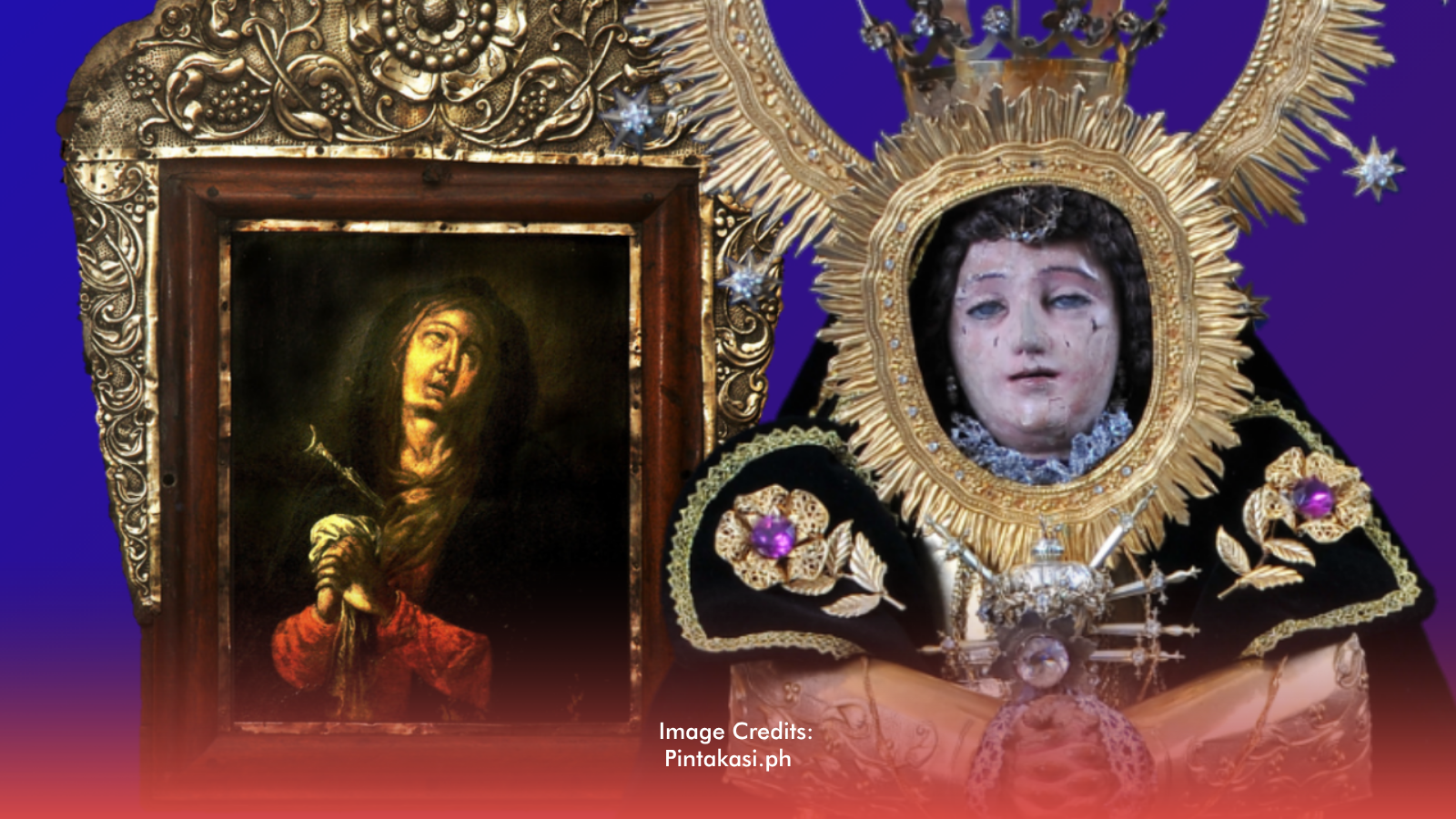
In 1788, fishermen on Laguna de Bay pulled a small painting of the Virgin Mary from the water. When the crowd gathered on the shore, something unexpected happened. They began to sing and dance. No one planned it. No one organized it. And in the two and a half centuries since, no one has been able to stop it.
That moment is the origin of the Turumba Festival, the longest uninterrupted religious festival in the Philippines, held in the town of Pakil, Laguna. Its name comes from the Tagalog phrase natumba sa lakí ng tuwa, or “trembled in great joy.” It is a fitting description of both the event and the tradition it created.
A Calendar Built on Devotion
Most Philippine fiestas orbit a single feast day, but the Turumba Festival refuses that structure. Instead, it unfolds across seven major celebrations between Lent and Pentecost Sunday, each honoring one of the Seven Sorrows of the Virgin Mary. It’s a devotional framework that gives the festival its internal logic and its name, the Lupi, from the Tagalog word for "to fold," referring to the novena booklet devotees fold shut to mark the end of each cycle. The first celebration falls on the Friday before Palm Sunday. The last falls on the Sunday nearest September 15, commemorating the date the image was found.
At the close of each Lupi procession, devotees do not walk home in silence. They dance through the streets to the Awit ng Turumba, a hymn that tells the Virgin's story, the movements rising organically from the crowd rather than being rehearsed in advance. Scholars have traced both indigenous Filipino ritual elements and Hispanic colonial influences, in the dance's structure, a layering that makes it a living document of cultural contact and survival.
A Film Made from Experience
In 1981, filmmaker and National Artist Kidlat Tahimik was commissioned by German broadcaster Zweites Deutsches Fernsehen to document the festival. The resulting film, released internationally in 1983 simply as Turumba, did something more than document.
The story follows a Pakil family of papier-mâché artisans who make figurines for the festival season, and who receive an order from a German buyer to produce thousands of pieces for the Munich Olympics. The quiet rhythms of their workshop collapse under the weight of industrial demand. The film's conscience is the grandmother, the family's master artisan, who watches what the order does to the work she has spent her life perfecting.
Tahimik was not an outside observer. He had sold souvenirs at the 1972 Munich Olympics himself, and the film draws directly on that experience. Turumba is recognized as a work of Third Cinema, a movement built on resistance to neocolonialism, and its central argument is that what a culture makes for itself and what it makes for export are not the same thing.
Turumba Outlasted Every Force That Should Have Broken It
During the 1851 fire that gutted much of Pakil's church, three hundred religious prints of the Virgin reportedly emerged unburned, an event that deepened local devotion and carried the festival's reputation outward to surrounding provinces.
José Rizal included the Turumba in the sixth chapter of Noli Me Tangere, noting the devotees who came to pray for children, thereby embedding Pakil's tradition in the national literary canon.
In 2023, the original oil painting received its pontifical coronation, presided over by the Apostolic Nuncio to the Philippines, drawing the largest gathering in Pakil's recorded history.
Each of these events, separated by decades, sometimes centuries, points toward the same conclusion. The Turumba is not a festival that survived despite adversity. It is a festival that found new weight because of it.
That continuity matters beyond the religious. The dance, the novena, the procession, the figurines on market stalls, these are not separate traditions. They are a single thread connecting a community to its own history.
For a country whose identity was systematically disrupted by colonial rule, a festival that has run without interruption for over two centuries, in its own language, on its own terms, to its own rhythm, is something more than a cultural artifact. It is an argument. And it is still made every year in a town where most visitors pass by without stopping.