For families caring for persons with disabilities, emergency preparedness is not only about knowing where to go or who to call for help. It can also mean knowing how to recognize an emergency and take appropriate action when a loved one suddenly needs immediate assistance.
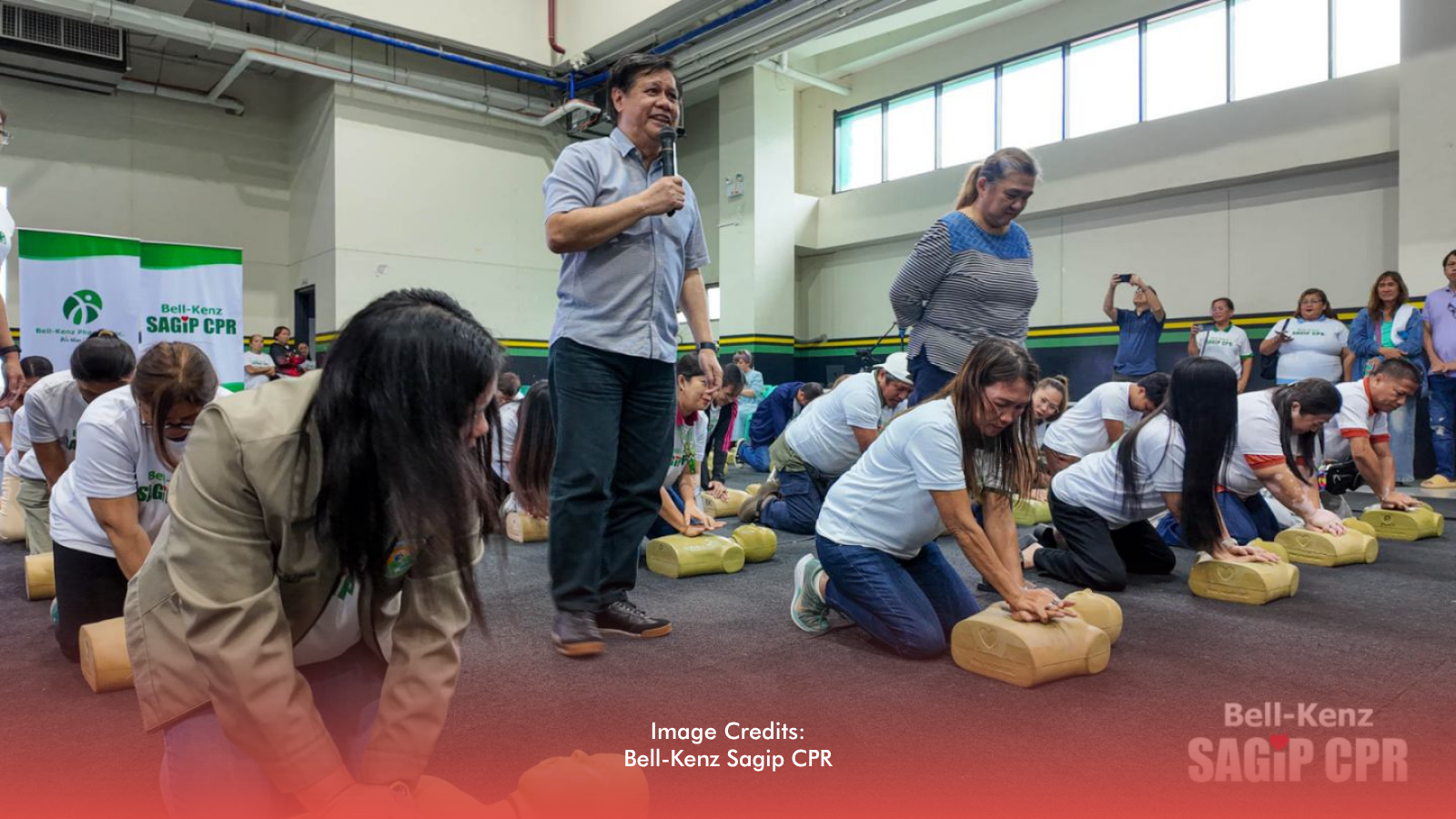
This was the focus of Bell-Kenz Pharma's latest Sagip CPR activity in Dasmariñas City, where persons with disabilities, their families, and caregivers received hands-on training in basic lifesaving skills. The September 17 session was held at the Kolehiyo ng Lungsod ng Dasmariñas as part of the 23rd Cerebral Palsy Awareness and Protection Week.
RELATED: [PWDs as First Responders: Bell-Kenz Expands Sagip CPR in Mandaluyong]
Preparing the People Who Are Often Closest
Held under the theme “One Heart, One Nation: Uniting the Country Thru CPR Training,” the activity was conducted with the National Council on Disability Affairs (NCDA), Cerebral Palsied Association of the Philippines, Inc. (CPAP), and the City Government of Dasmariñas.
For many families caring for individuals with cerebral palsy, caregivers may be among the first people present when an emergency occurs at home or in the community. That makes basic emergency knowledge particularly relevant, from recognizing when something is wrong and calling for help to starting Hands-Only CPR and locating an AED when appropriate.
Participants received instruction on heart health, Hands-Only CPR, and AED use through lectures, demonstrations, and hands-on return demonstrations. Depending on their abilities and circumstances, participants can also contribute in different ways during an emergency, such as alerting responders, calling for assistance, finding an AED, or helping guide emergency personnel to the scene.
“Preparedness becomes more meaningful when it is shared,” said Patrick Larraga, Corporate Communications and Public Affairs Head of Bell-Kenz Pharma. “Through Sagip CPR, we hope that what participants learn today will not stay in the training room. It will be carried into their homes, workplaces, and communities.”
The National Council on Disability Affairs also emphasized the importance of including persons with disabilities in emergency preparedness efforts. Jayme J. Mariano, Chief of the Information, Education and Communication Division of the NCDA, said CPR knowledge can help build confidence and prepare PWDs to respond during emergencies based on their abilities.
Making Lifesaving Knowledge a Family Skill
The family-based approach broadens the reach of CPR education beyond the individual participant. When PWDs, caregivers, and family members learn the basics together, the knowledge can become part of how a household prepares for unexpected emergencies.
The Department of Health estimates that about 1% to 2% of Filipinos live with cerebral palsy, putting the number at roughly one million people nationwide. For their families and caregivers, having basic CPR knowledge can add another layer of preparedness for emergencies that may occur at home or in the community.
For Bell-Kenz Pharma, the Dasmariñas training is part of the continuing Sagip CPR campaign to make basic lifesaving education more accessible across communities. By bringing the training directly to PWDs, families, and caregivers, the program also reinforces the idea that emergency preparedness is something communities can build together.
“When an emergency happens, every second matters, and the people already at home or nearby may be the first ones able to respond,” Larraga said.
Through the continuing Sagip CPR campaign, Bell-Kenz Pharma aims to bring basic lifesaving education closer to Filipino families and communities. By equipping persons with disabilities, their families, and caregivers with practical emergency-response skills, the company continues to promote a more inclusive culture of preparedness where more people are ready to act when help is needed.
RELATED: [Bell-Kenz Extends Support to Leptospirosis-Affected Communities and Frontliners]