For years, one of Metro Manila's most persistent urban legends turned an ordinary shopping trip into a source of fear.
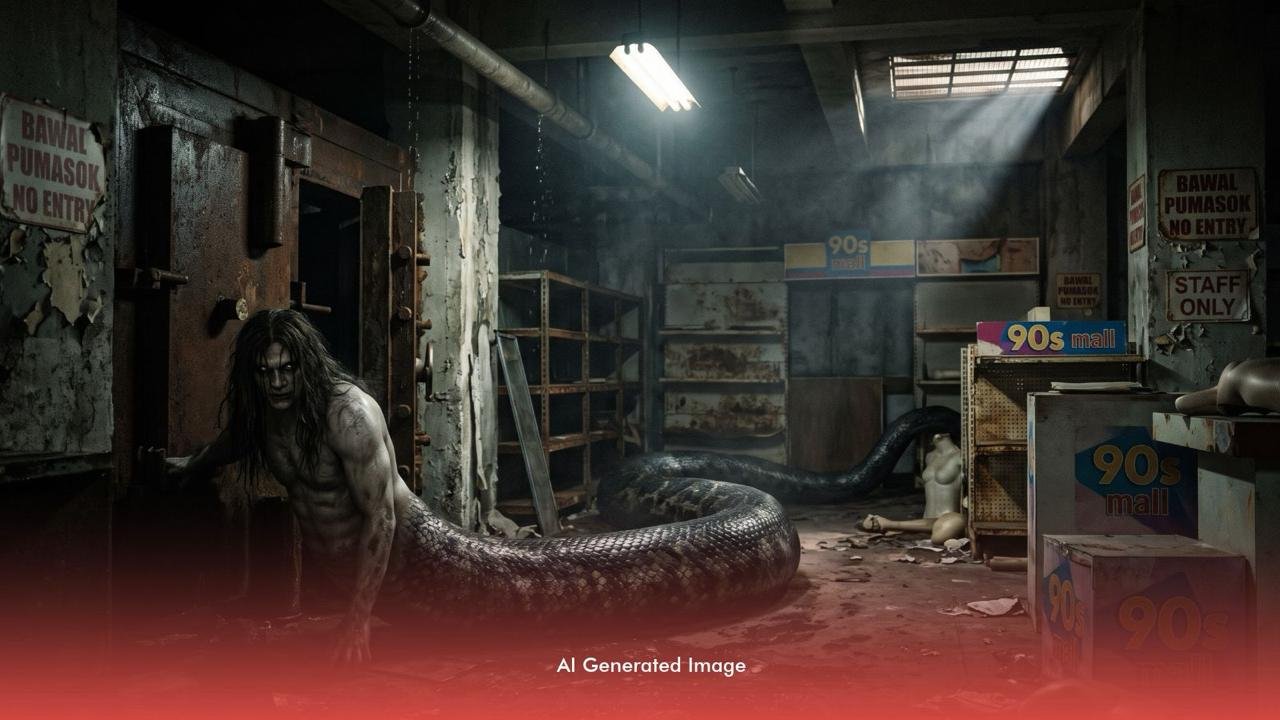
The story claimed that a giant snake man lived beneath Robinsons Galleria, waiting for unsuspecting women to enter a fitting room before a hidden trapdoor opened beneath them. Some versions even connected the creature to the wealthy family behind the mall.
The rumor grew more elaborate with every retelling, eventually involving actress Alice Dixson, an alleged encounter, and a supposed million-peso payoff.
But there is one important detail: there is no credible evidence that the snake man ever existed.
What Is the Robinsons Snake-Man Legend?
The Robinsons Galleria snake-man legend circulated in the Philippines during the late twentieth century. Its details varied, but the central claim remained the same: a half-human, half-snake creature supposedly lived in secret spaces beneath the shopping mall.
In some versions, women entering fitting rooms would fall through trapdoors and disappear into hidden underground passages. Other tellings claimed that the creature was connected to the family behind the mall.
These claims became part of Philippine urban folklore, blending fears about unfamiliar spaces, powerful families, and mysterious disappearances.
However, the alleged creature, trapdoors, and cover-up have not been substantiated. The story is best understood as an urban legend, not a factual account of events at the mall.
Why Was Alice Dixson Linked to the Legend?
Actress Alice Dixson became the most recognizable person associated with the rumor.
Over time, versions of the story claimed that Dixson had encountered the snake man and narrowly escaped. Some also alleged that she received a large sum of money in exchange for keeping the incident secret.
The details changed depending on who told the story, helping it survive for years despite the lack of supporting evidence.
In July 2020, Dixson publicly addressed the rumor in a video, offering her own account of how it began.
What Did Alice Dixson Actually Say?
In an account reported by GMA News in July 2020, Dixson recalled changing costumes in a mall bathroom and playfully using the Filipino word tuklaw, referring to a snakebite.
According to her recollection, gossip about a snakebite began circulating afterward and eventually developed into the much more elaborate snake-man story.
Dixson rejected the central claims associated with the legend, including the alleged trapdoor incident and the supposed enormous payment to keep quiet.
She also reflected on how not addressing the rumor earlier may have allowed it to spread.
Did You Know? The story's supposed silence became part of its appeal. While some versions portrayed Dixson's lack of comment as evidence of a cover-up, she later explained publicly how her name became attached to the rumor.
Her account is significant because the legend had long been repeated as though she were a firsthand witness who had agreed to conceal the truth. Her public explanation offered a different account of how her name became part of the story.
How Did the Snake-Man Story Become So Popular?
The legend combined several ingredients that make urban rumors particularly memorable.
First, it placed something frightening in an ordinary setting. Shopping malls are familiar public spaces, but fitting rooms offer privacy and can make people feel vulnerable.
Second, the story introduced secrecy and wealth. By suggesting that powerful people were hiding a monstrous secret, it gave the rumor an apparent explanation for why nobody could supposedly prove it.
Finally, attaching the story to a celebrity made it easier to remember and repeat.
Each retelling could add a new detail, from secret tunnels to alleged witnesses and hush money. Because the story changed so easily, it could continue circulating even when individual versions were challenged.
Was There Ever Evidence of a Snake Man?
No credible evidence establishes that the creature, alleged abductions, trapdoors, or cover-up existed as described.
A story being repeated for decades does not make it true. Nor does the absence of a public response prove that someone is hiding a secret.
This distinction matters because the legend involves identifiable people and a real business. Repeating unsupported allegations as facts can unfairly damage reputations.
Dixson's 2020 public account provides a documented source for understanding her perspective and her connection to the rumor. It does not, by itself, establish every detail of how the legend originally spread.
Why Does the Legend Still Matter?
The Robinsons snake-man story is a fascinating example of how misinformation can spread without social media.
Before viral posts and online videos, rumors traveled through conversations, gossip columns, television, and word of mouth. Each person who retold the story could unintentionally make it sound more convincing.
Social media later gave old urban legends new audiences, allowing stories once confined to particular communities to circulate across generations.
The lesson remains relevant today: a dramatic claim can feel believable when enough people repeat it, especially when it involves a familiar place or a famous person. But popularity is not proof.
Three Details That Kept the Legend Alive
- The trapdoor: A fitting-room floor supposedly opened beneath unsuspecting shoppers, creating a frightening image that was easy to retell.
- The celebrity connection: Alice Dixson's name gave the rumor a recognizable figure, making it seem more credible to some listeners.
- The alleged payoff: The supposed payment offered an explanation for the lack of public confirmation, even though no credible evidence established that it happened.
The snake man beneath Robinsons Galleria remains a fixture of Philippine urban folklore, not a verified creature hiding beneath a shopping mall.
Perhaps the real mystery is not what lurked beneath the fitting-room floor, but how a rumor became so convincing that generations of Filipinos continued to remember it.