
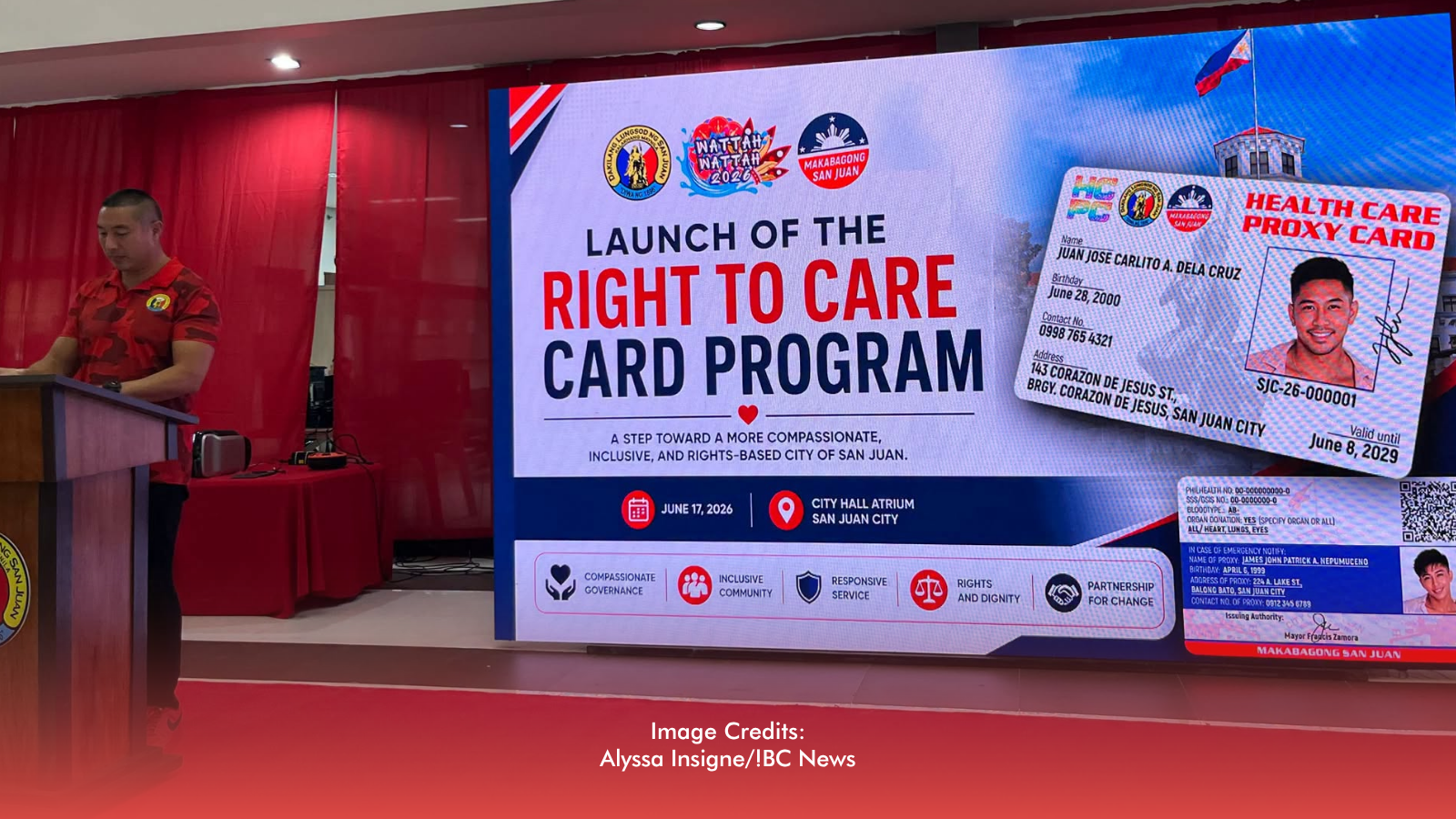
LGBTQ+ couples and live-in partners in San Juan City now have access to a program designed to ensure that a trusted person can make medical decisions on their behalf during emergencies or situations where they are unable to communicate.
The city government recently launched the Right To Care Card, an initiative that formally recognizes a designated health care proxy who can act according to a resident’s wishes in matters involving medical treatment and health care. The program was introduced by Mayor Francis Zamora during the city's 19th Cityhood Anniversary celebration as part of efforts to promote inclusivity and strengthen the protection of residents' rights.
The first group of beneficiaries included 17 couples who successfully completed the requirements needed to obtain the card.
RELATED: [PH Third In Asia For LGBTQ+ Acceptance]
How the Program Works
Under the initiative, residents may appoint a health care proxy through a notarized special power of attorney (SPA). The document outlines the medical and health care decisions that the designated individual may carry out if the resident becomes ill, injured, or otherwise incapable of making decisions.
City officials emphasized that the authority of the proxy is not based on personal judgment but on the specific instructions and preferences indicated by the resident in the SPA.
“The Right To Care Card is not a piece of plastic. It is peace of mind. It is dignity. It is autonomy. It is empowerment,” Zamora said.
The card serves as official verification that the health care proxy has been registered with the city government. It also includes a unique QR code that can be used by authorized health care providers to access and verify the registered SPA. Through the system, medical personnel can confirm both the identity of the authorized representative and the scope of decisions that person is permitted to make.
Requirements and Validity
The program was established through City Ordinance 16, Series of 2025, and later expanded through City Ordinance 22, Series of 2026, collectively known as the San Juan Healthcare Proxy Ordinance.
To qualify, applicants must be at least 18 years old, possess full legal capacity, and be bona fide residents of San Juan City. The chosen health care proxy must also meet the same legal requirements.
Applicants are required to submit an application form, a government-issued ID showing a San Juan address, recent 1x1 photographs of both parties, and a notarized SPA. The City Gender and Development Office will review applications, conduct verification procedures, and require applicants and proxies to attend an orientation seminar covering their rights, responsibilities, and the limitations of the proxy arrangement.
The Right To Care Card remains valid for three years unless it is revoked by the resident, replaced by a new SPA, invalidated by a court ruling, or terminated under existing laws.
For San Juan residents, particularly LGBTQ+ couples and live-in partners, the program provides added assurance that their health care preferences can be respected during critical situations. More broadly, it highlights growing efforts by local governments to address gaps in medical decision-making and promote inclusive policies that recognize diverse family and partnership arrangements.
RELATED:[PH Femme Dance: Vogue, Queer Artistry, and Self-Expression through Movement]