
The Asian Development Bank has approved a $1.5-billion loan to help the Philippines cushion the economic fallout of the Middle East conflict and finance emergency support for households and workers hit by higher fuel and living costs (Philstar / Inquirer Business).
What the Money Is For
ADB said the loan will help fund the government’s Unified Package for Livelihoods, Industry, Food and Transport (UPLIFT) program: fare discounts; fuel and fertilizer subsidies; medical packages; and cash assistance for poor and vulnerable households, public transport operators and drivers, and small-scale farmers and fisherfolk. Support may also help returning OFWs.
Countercyclical Facility
The money comes from ADB’s Countercyclical Support Facility. “Every week this crisis continues to ask more of people who have little left to give,” ADB President Masato Kanda said, according to Philstar. “With this financing, we are backing the Philippines’ determination to keep its people secure and its future within its own hands.”
Why the Philippines Is Exposed
The country relies on imports for fuel and fertilizer. About 1.1 million OFWs were deployed in the Middle East last year, accounting for roughly 18 percent of $35.6 billion in total remittances in 2025 (Philstar). Kanda had earlier offered $1.75 billion in additional support; ADB also raised financing for a universal health-care subprogram by $250 million to $750 million. DOF has endorsed suspending the excise tax on LPG and kerosene—but not on diesel and gasoline.
Growth Context
Inquirer Business noted ADB announced the loan a day after cutting its Philippine growth outlook to 3.3 percent for 2026 (from 3.8 percent) and 5.1 percent for 2027 (from 5.3 percent), citing the prolonged Middle East conflict, weak government spending, and climate-related shocks.
Business & Tech
ADB Approves $1.5-Billion Crisis-Response Loan for Philippines
by Written by Carina Dimaculangan
on Sep 25, 2026 | 01:00 PM
Edited: Sep 25, 2026 | 04:06 PM
Edited: Sep 25, 2026 | 04:06 PM
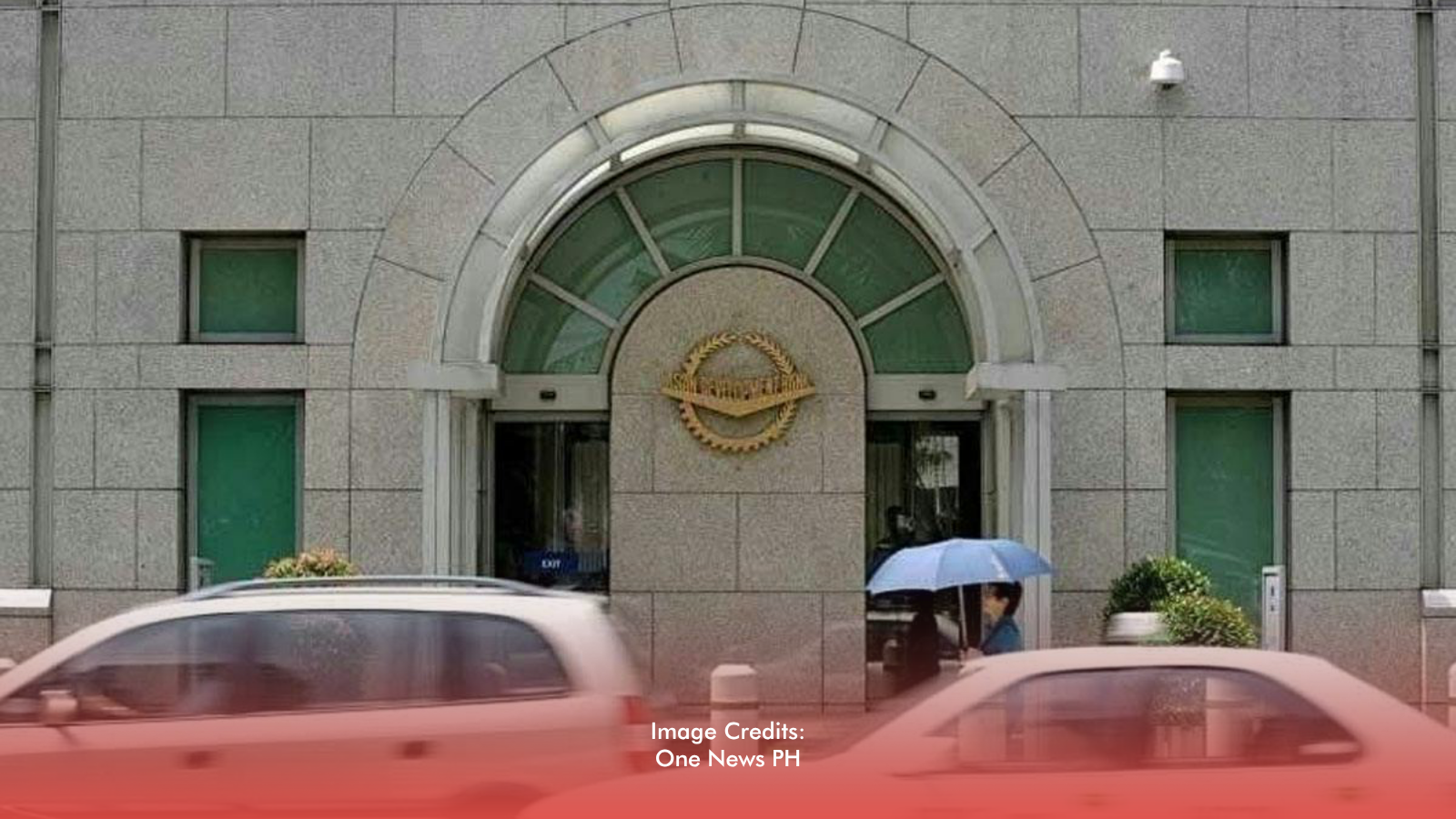
ADB said the loan will help fund the government’s UPLIFT program.
Read More:
POPULAR POST

September 25, 2026
Bomb Threats Hit Metro Schools After South Cotabato Shooting; NBI Reports Arrests
by Written by Carina Dimaculangan
September 25, 2026
Senate’s Lower Conviction Threshold for VP Sara Faces Supreme Court Challenge
by Written by Carina Dimaculangan
September 25, 2026
Tropical Storm Queenie (Surigae) Enters PAR; May Intensify Into a Typhoon
by Written by Carina Dimaculangan
September 25, 2026