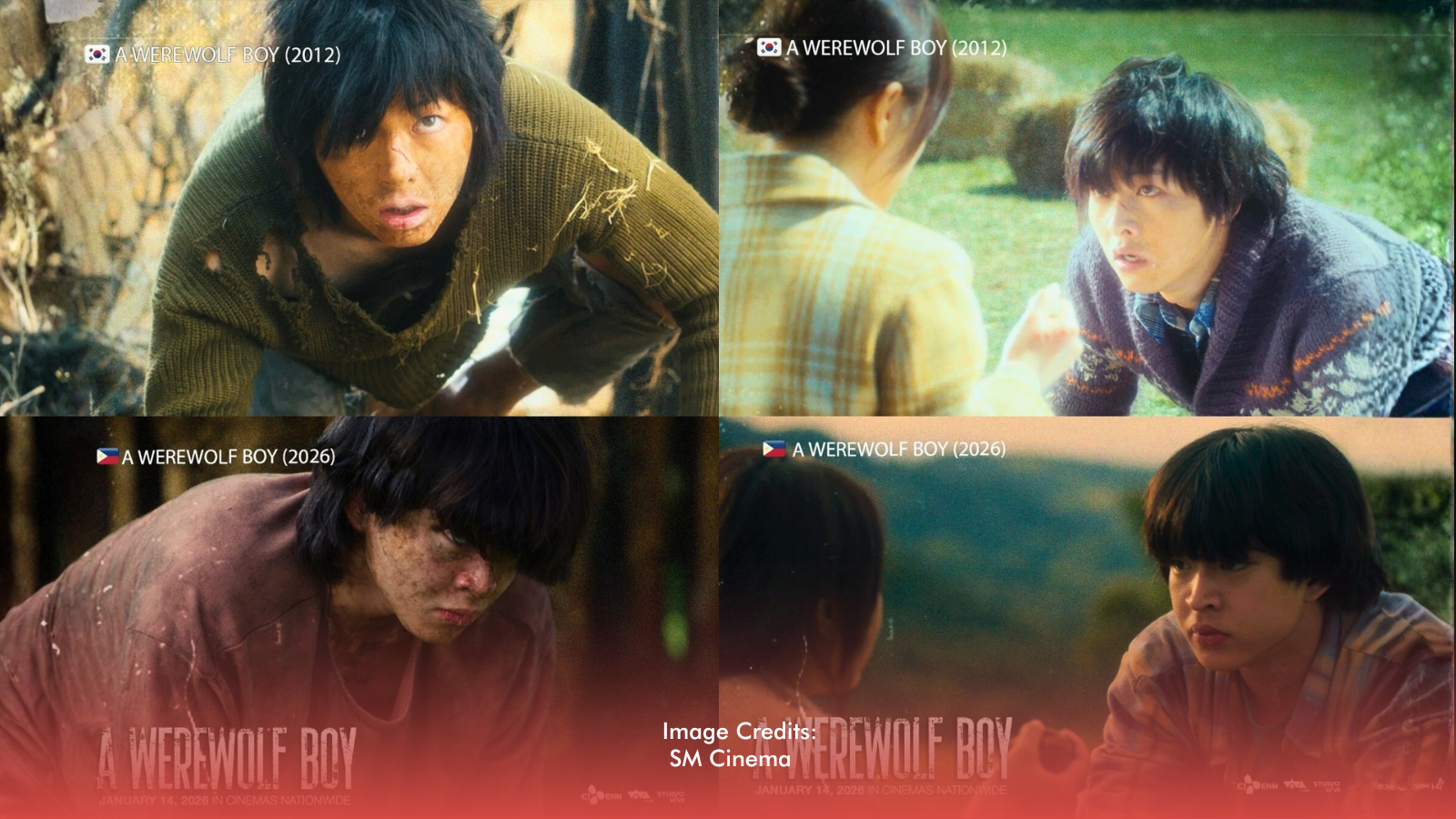
Adapting a beloved K-movie is risky. The 2012 film A Werewolf Boy is remembered for its tenderness, restraint, and emotional weight. When its Filipino adaptation arrived last January 14, 2026, expectations were naturally high. The question was never just about whether it could be remade, but whether it could be as impactful and sincere as the original.
Surprisingly, A Werewolf Boy (2026) manages to stand on its own. It delivers a gentle and culturally grounded retelling that, while imperfect, feels honest in its intentions.
A Familiar Story Rooted in Filipino Life
The film follows Sara (Angela Muji), a girl from Manila who moves to the province and meets a mysterious boy (Rabin Angeles) with animalistic tendencies, later called “Good Boy.” What unfolds is a story about care, loyalty, and a form of love defined by patience rather than possession.
The plot stays close to the original Korean version, but the adaptation succeeds in localizing its spirit. The setting, dialogue, and emotional cues feel distinctly Filipino. Lines are rewritten to sound natural, and the rural backdrop filmed in Taal, Batangas grounds the fantasy in a recognizable environment.
This is not a loud or overly romantic love story. It leans toward quiet devotion and restraint, themes that resonate deeply in Filipino storytelling, shaped by sacrifice and waiting.
Clear Direction and Emotional Intent
Director Crisanto B. Aquino has a firm grasp of the film’s emotional direction. Much like his earlier work My Future You (2024), the film prioritizes warmth and accessibility. Some scenes, however, move slowly, and quite a few moments feel disconnected - especially when compared to the tighter narrative of the original film.
There are instances where questions are left unanswered, which slightly weakens certain emotional beats. Still, the overall mood remains consistent, and the film knows what it wants to hit emotionally.
Performances That Carry the Film
Rabin Angeles stands out as the film’s strongest element. His portrayal of “Good Boy” relies heavily on physicality and restraint, making the character feel raw and believable. His performance gives the fantasy aspect of the film a sense of humane grounding.
Angela Muji’s performance bears resemblance to Kathryn Bernardo’s early roles. She brings sincerity and softness to Sara, though the chemistry between the leads does not reach the same emotional intensity as the original. It works, but it does not overwhelm.
Candy Pangilinan provides effective comic relief, allowing lighter moments to exist naturally within the drama. Albie Casiño convincingly plays the antagonist, while Lorna Tolentino delivers one of the film’s most emotionally impactful scenes toward the end.
Strong Visuals with Noticeable Gaps
Visually, the film succeeds. Cinematography and sound design work well together, highlighting rural landscapes and using muted tones that support the story’s emotional weight.
However, attention to detail is inconsistent. Small anachronisms occasionally break immersion, though not as egregiously as in other Filipino remakes. For example, the 2022 remake of Miracle in Cell No. 7 was criticized for copying scenes wholesale, including modern props that didn’t fit the 1997 setting. In contrast, A Werewolf Boy makes a clear effort to feel local, with Filipino dialogue, humor that lands naturally, and a setting that supports the narrative rather than just imitating it.
Final Thoughts
A Werewolf Boy (2026) succeeds because it understands the kind of story it is telling. It does not rely on spectacle or unnecessary reinvention. Instead, it focuses on emotional sincerity and cultural grounding.
The film has its flaws. Some scenes lack clarity, and its closeness to the original sometimes limits its own voice. Even so, it remains heartfelt and resonant.
At a ticket price of less than PHP300, the film delivers solid value. It keeps the audience engaged until the end and avoids dragging despite its length. The emotional payoff lingers, making it a film worth revisiting, even if not immediately.
But not every Korean film needs a Filipino adaptation. When done with care, however, the result can still feel meaningful. In this case, the story lands with quiet, emotional truth.
MORE LIKE THIS: [Netflix Movie Review: Sunshine and the Harsh Realities of Teen Pregnancy in PH]