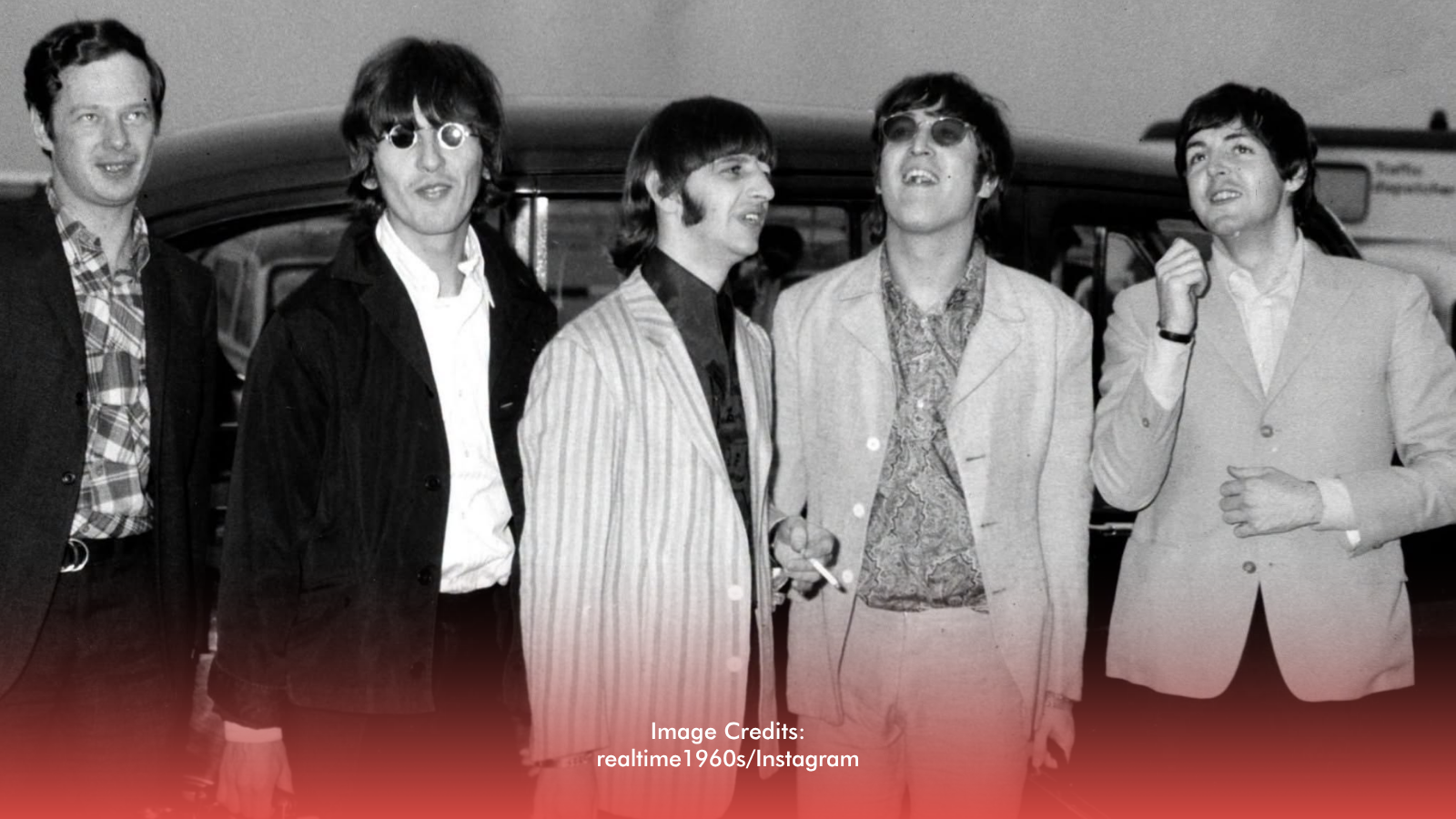
In July 1966, the Beatles arrived in Manila as the most famous band in the world. Two days later, they fled the Philippines, frightened, exhausted, and convinced that an innocent scheduling dispute had placed them in real danger.
The episode has often been reduced to a simple story: the Beatles insulted First Lady Imelda Marcos by refusing an invitation to Malacañang Palace, and the country turned against them.
The truth was more complicated.
It involved an invitation the band apparently never accepted, a promoter who created expectations he could not fulfil, and a political establishment that treated a social embarrassment as an offence requiring punishment.
Beatlemania Comes To Manila
The Beatles landed in Manila on July 3, 1966, after performing in Japan. Their visit came at the height of Beatlemania, with enormous crowds following their movements and tens of thousands expected at two concerts at the Rizal Memorial Football Stadium the following day.
Ferdinand Marcos had become president only months earlier, while Imelda Marcos was cultivating an image of elegance, glamour, and international influence. A visit by the Beatles offered the new administration an opportunity to place the Philippines at the centre of a global cultural event.
A reception was organized at Malacañang Palace on the morning of July 4. Imelda Marcos, members of her family, and hundreds of guests, including children, waited for the musicians to arrive.
They never did.
Palace Invitation Gone Wrong
According to David Guerrero’s recent book, You Won’t See Me: When the Beatles Ghosted Imelda, members of the tour’s local and international organization gave palace officials the impression that the Beatles would attend the event.
The band’s manager, Brian Epstein, maintained that no appearance had been agreed upon. Epstein had also adopted a general policy against taking the group to official receptions during tours. When representatives arrived to collect the musicians from their hotel, he refused to let them go.
From the Beatles’ perspective, they were declining an engagement that had never been confirmed.
From the palace’s perspective, the world’s biggest music stars had left the first family and hundreds of guests waiting in front of television cameras.
The misunderstanding quickly became a national controversy. Newspapers reported that the group had insulted the president’s family. The Beatles, who still performed their two scheduled concerts that day, suddenly found themselves portrayed not as visiting entertainers but as arrogant foreigners who had humiliated the country.
When The Welcome Turned Hostile
By the following morning, the atmosphere had changed.
The band’s police protection disappeared. Hotel services became difficult to obtain. Their journey to the airport was obstructed, and at the terminal, they received little assistance with their equipment and luggage.
Members of the group and their entourage later described being shoved, kicked, and struck as uniformed personnel and hostile individuals watched or participated. Paul McCartney recalled the party being pushed across the airport lounge, while John Lennon sarcastically observed that ordinary passengers were not normally kicked.
Some dramatic retellings have suggested that all four Beatles were severely beaten. Guerrero’s reconstruction is more cautious. He argues that the clearest documented physical attack involved their driver, Alf Bicknell, while other members of the party were subjected to jostling, threats, and intimidation.
What is not seriously disputed is that official protection had vanished at precisely the moment the group needed it most.
The band was also confronted with a tax demand before leaving, even though contractual arrangements reportedly placed responsibility for local taxes on the promoter. Epstein ultimately handed over money so the party could board its flight.
Don't Blame an Entire Nation
The Beatles’ Manila experience has sometimes been retold as though an entire nation united against them. That interpretation overlooks the Filipino fans who had enthusiastically welcomed the band and who continued to admire their music long after the controversy.
Thousands of people had attended the concerts. Many who gathered near the airport were reportedly there to see the group depart, not to attack them. Guerrero argues that the lasting narrative has unfairly allowed the actions of officials and loyalists to define the relationship between the Beatles and the Filipino public.
The distinction matters.
The incident was not simply a conflict between a British band and the Philippines. It was a demonstration of what can happen when political pride is confused with national dignity and when the machinery of the state is used to settle a personal grievance.