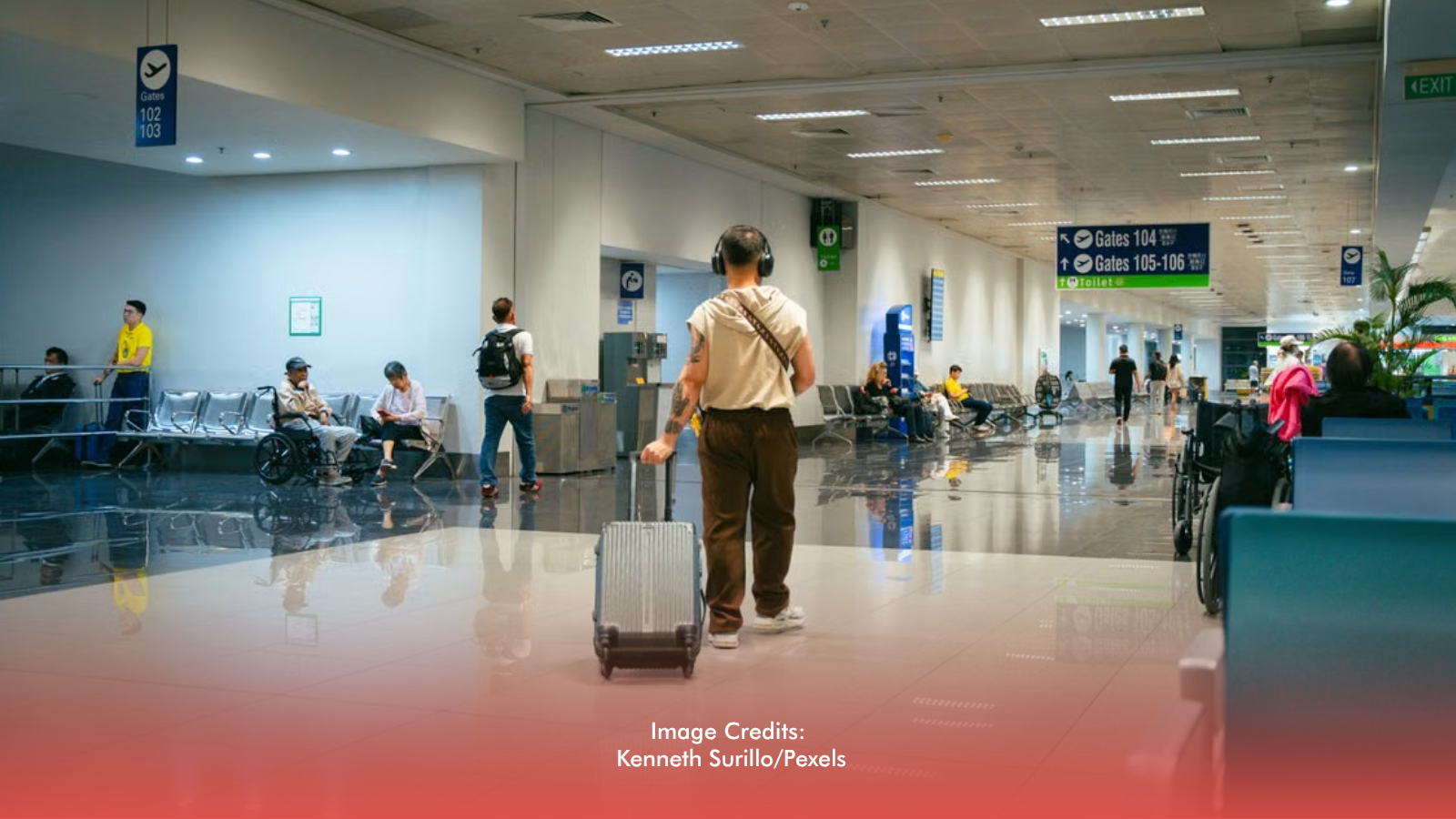
The Philippine government continues to repatriate overseas Filipino workers (OFWs) affected by the ongoing tensions in the Middle East, with the Department of Migrant Workers (DMW) assuring the public that assistance and contingency measures remain in place. As of July, the government has safely repatriated 10,580 OFWs, overseas Filipinos, and their dependents from conflict-affected areas. The DMW said it remains prepared to assist those who wish to return while continuing to monitor developments in the region.
"Our duty does not end once our workers are safely home. We continue to provide assistance to help them recover and rebuild their livelihoods," DMW officials have consistently emphasized through their reintegration initiatives.
For many Filipino families, however, the journey does not end at the airport.
Beyond Repatriation
For decades, OFWs have served as one of the country's strongest economic pillars. According to the Bangko Sentral ng Pilipinas (BSP), cash remittances from overseas Filipinos consistently reach billions of US dollars every month, supporting household spending on food, education, healthcare, housing, and small businesses across the country.
Economists have long regarded remittances as one of the Philippines' most stable sources of foreign exchange and domestic consumption, helping cushion the economy during periods of uncertainty.
If tensions in the Middle East continue to escalate and force more Filipinos to return home, the effects could extend beyond individual families. Communities that rely heavily on overseas income may experience reduced spending, while local businesses could also feel the impact of weaker household purchasing power.
The concern is not simply about workers coming home. It is about whether enough jobs and livelihood opportunities will be available once they return.
Reintegration Is the Harder Task
The government has repeatedly assured displaced workers that assistance extends beyond repatriation.
Last June, President Ferdinand Marcos Jr. approved an additional P3 billion to strengthen the government's repatriation and reintegration programs for displaced OFWs. The funding is intended not only for transportation back to the Philippines but also for employment assistance, livelihood opportunities, entrepreneurship support, and redeployment programs.
Executive Secretary Ralph Recto explained the President's directive:
"Ang utos n'ya ay hindi puwedeng paglapag dito, bahala na kayo," says Executive Secretary Ralph Recto. "Ang gusto ng Pangulo, may hatid sa probinsya sa lubhang nangangailangan, at higit sa lahat mga economic opportunities."
DMW Secretary Hans Leo Cacdac, on the other hand, has likewise said that contingency measures, designated exit points, and inter-agency coordination remain in place should conditions in the Middle East deteriorate further.
Still, even with these programs, a larger wave of returning workers would inevitably place greater pressure on government resources. Reintegration is often the more difficult challenge because it requires sustainable employment and long-term income opportunities rather than short-term financial assistance alone.
Why Should Every Filipino Care?
The story is not just about foreign policy or conflict overseas.
It is about parents whose monthly remittances pay for tuition, families that rely on overseas income to meet everyday expenses, and communities where migration has become a major source of economic stability.
Every repatriation flight represents relief for loved ones who have escaped danger. At the same time, it also marks the beginning of a new challenge: rebuilding a livelihood back home.
As tensions in the Middle East continue, the Philippines faces a dual responsibility. The first is ensuring that every Filipino who wants to come home can do so safely. The second, and perhaps more difficult task, is ensuring that returning workers have meaningful opportunities to start over.
The true measure of preparedness is not only how quickly Filipinos are brought back, but how effectively they can begin again once they arrive.