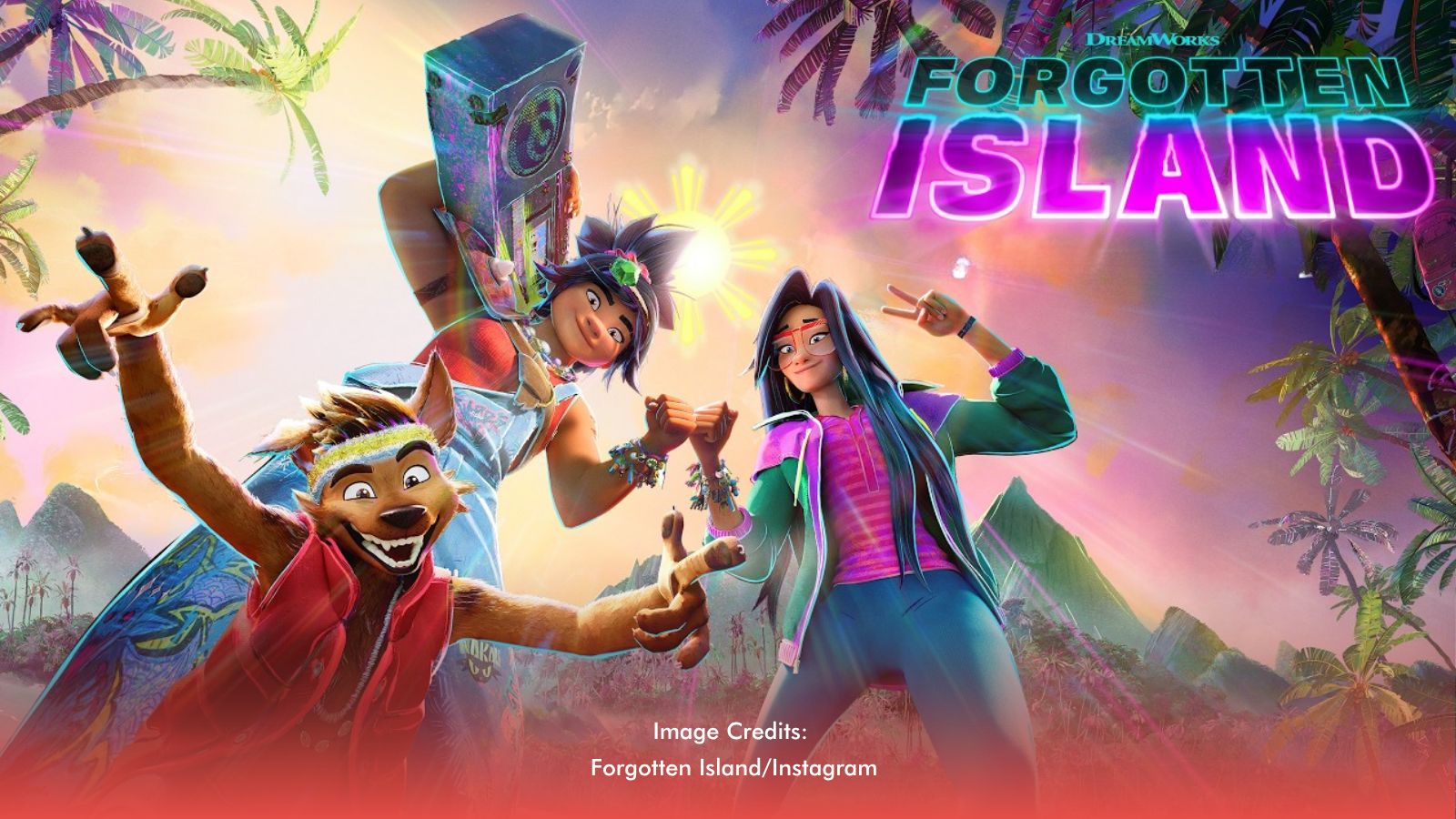
"Forgotten Island" is DreamWorks' newest animated adventure, following childhood best friends Jo and Raissa as an impending separation tests their bond and sends them on a journey to Nakali, a mystical island inspired entirely by Philippine folklore. The film features creatures from Filipino mythology, including a Tiyanak, a Manananggal voiced by Lea Salonga, a Kapre played by Jo Koy, and a kingdom of duwende. These elements come to life through a visual style inspired by 1990s Filipino design, accompanied by a score featuring the kulintang and bamboo organ.
The film is a lovingly crafted celebration of Filipino culture and imagination. Beneath its fantastical setting, however, lies a story that may resonate even more deeply with Filipino audiences: the experience of leaving loved ones behind and trying to hold on to the bonds that distance can test.
A Story About Leaving, Set Inside a World of Magic
Without giving away how the plot unfolds, the emotional heart of "Forgotten Island" centers on two best friends facing a looming goodbye and the fear of what distance might do to a bond that has always felt unbreakable. The uncertainty surrounding their separation is something many viewers can recognize from their own lives.
For Filipino families around the world, distance is a familiar part of life. Millions of overseas Filipino workers spend years working under contracts in the Gulf, while others build lives in Europe, Australia, Japan, Canada, and dozens of other countries. Back home, families and friends wait for reunions, counting the days until the next visit or homecoming. The destinations may differ, but the emotions surrounding each goodbye remain familiar.
The film's mythology also touches on a concern that many members of the Filipino diaspora carry quietly. Distance can gradually weaken connections to a shared language, traditions, and cultural identity unless people make an effort to preserve them. For families spread across countries and generations, staying connected often means finding ways to keep their heritage alive even when home is far away.
One Culture, Scattered Across Every Continent
"Forgotten Island" also stands out for its visual ambition and all-Filipino principal cast, led by H.E.R. and Liza Soberano, alongside Dolly de Leon, Manny Jacinto, and Jenny Slate. Its creative team brings together people whose experiences span different parts of Filipino culture, reinforcing one of the story's central ideas: cultural identity can belong to people living in different places without losing its shared roots.
Filipinos are often placed into neat categories such as "Filipino" and "Fil-Am," as though the diaspora primarily extends toward the United States. In reality, Filipino communities have established roots across the Middle East, Europe, East and Southeast Asia, North America, Australia, and beyond. Millions of people carry Filipino traditions, values, and experiences into vastly different cultural environments.
Each community has its own experiences of migration, belonging, and connection to the Philippines. "Forgotten Island" offers one perspective on what it means to preserve those connections while navigating change. Its story can also open the door to conversations about the many other ways Filipinos experience life away from home.
Why It Matters Beyond the Fantasy
Whether "Forgotten Island" becomes the awards-season contender DreamWorks hopes it will be, the film's emotional significance lies in its ability to give shape and a soundtrack to an experience familiar to Filipino families across generations and borders.
Nakali may be fictional, but the feelings at the center of the story are grounded in everyday life. They live in the farewells at airports, the long stretches between family visits, the video calls across time zones, and the efforts to keep traditions alive for children growing up far from their parents' homeland.
For Filipinos wherever they may be, "Forgotten Island" offers a reminder of how friendship, family, and cultural identity can endure through separation. Even when people find themselves on opposite sides of the world, the connections they share can remain a meaningful part of who they are.