
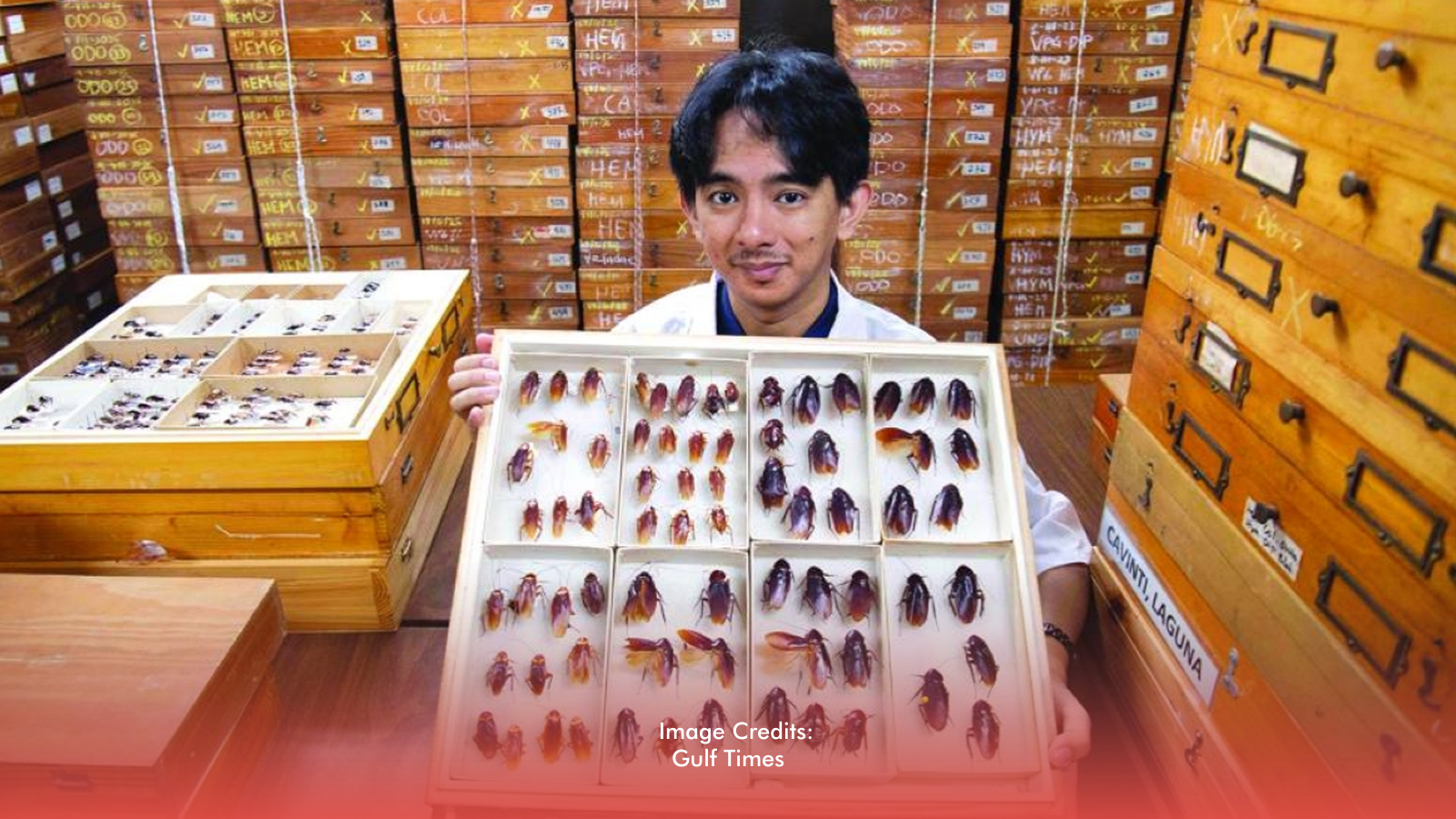
A headlamp beam cuts through the darkness of a Philippine rainforest as entomologist Cristian Lucanas searches the forest floor. Moments later, he lifts a cockroach with his bare hands, handling it effortlessly.
Lucanas, 31, a researcher at the University of the Philippines, has earned the nickname “Ipis Lord,” using the Filipino word for cockroach, for his work studying the insects. He has already discovered 15 new species and hopes to change the public’s negative perception of cockroaches.
“I also hated cockroaches when I was a child,” Lucanas said. “Fear of them is natural, but people don’t realize how important they are to the environment.”
Cockroaches’ Role in Nature
While often seen as household pests, most cockroach species live far from humans and are crucial to ecosystems. Over 4,600 species have been identified worldwide, though Lucanas says the actual number could be two or three times higher. The Philippines has about 130 documented species, roughly three-fourths of which are unique to the country. Lucanas estimates another 200 species remain undiscovered.
Cockroaches feed on decaying plants, animals, and organic waste, recycling nutrients back into the soil. Without them, decomposition slows, soil fertility drops, and food chains supporting birds and spiders are disrupted.
Field Trips, Discoveries, and Conservation
Lucanas’s interest began 12 years ago during a bat cave field trip where cockroaches fed on guano. When his adviser could not identify the species, Lucanas realized he had found a research niche.
He often names new species after characters from J.R.R. Tolkien’s The Lord of the Rings, including Valar, Hobbitoblatta, and Nazgul.
Some species, especially cave and mountain cockroaches, face threats from habitat loss and tourism. Despite limited research funding, Lucanas remains committed to documenting the Philippines’ insect diversity and educating the public on their ecological importance.
“I’ll stick with this work,” he said. “It’s how I’ve built my reputation, and I enjoy it.”