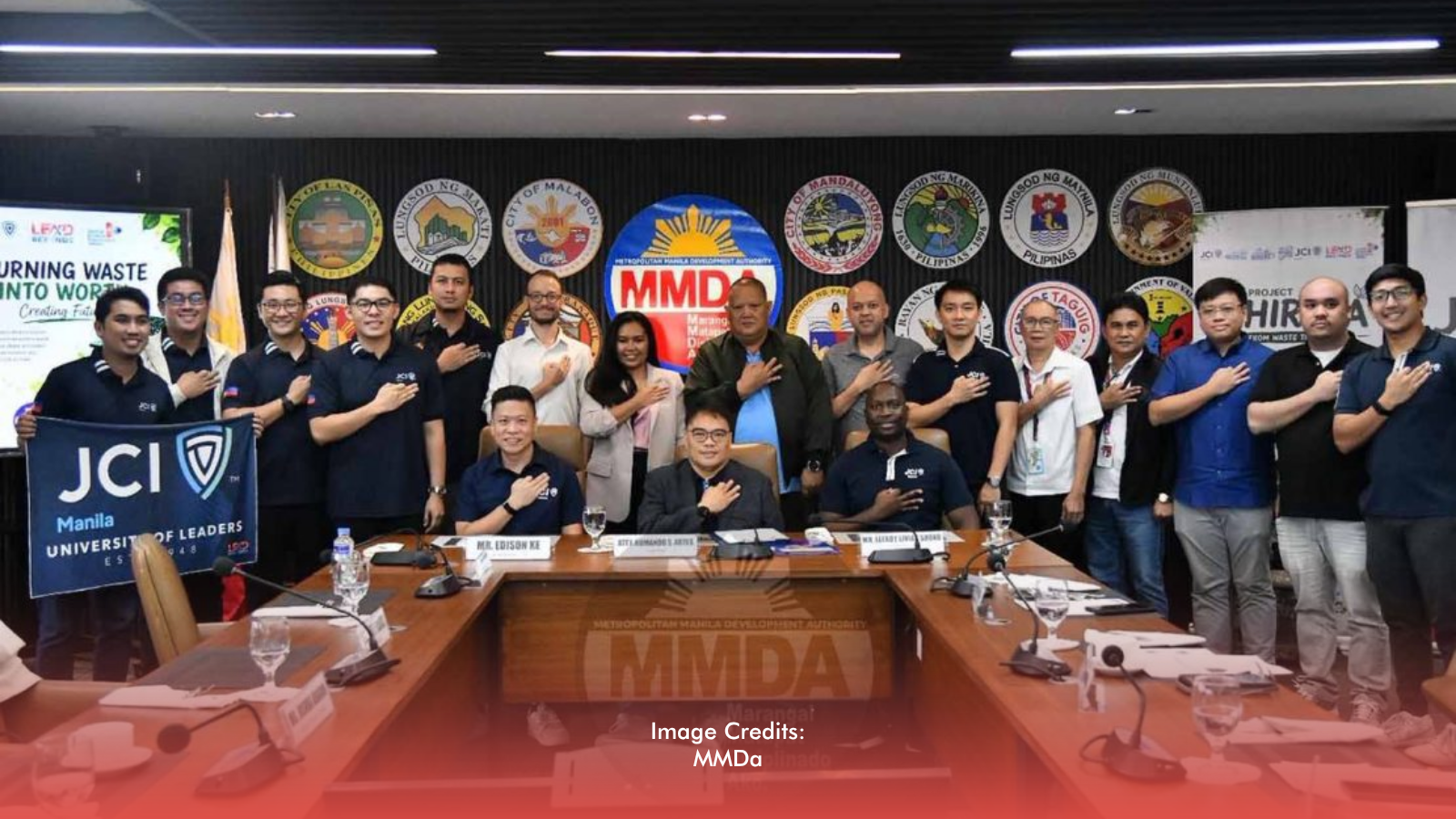
Plastic waste collected from community cleanup drives in Metro Manila will soon be transformed into school furniture under a new partnership between the Metropolitan Manila Development Authority (MMDA) and JCI Manila.
The initiative, known as Project Hiraya: Turning Waste into Worth, Creating Futures, was formally launched through a memorandum of agreement signed on June 4. The project combines environmental cleanup efforts with recycling activities to create practical resources for public schools while encouraging greater community involvement in waste management.
RELATED: [MMDA Expands Emergency Response With Flood Hotline 136]
Recycling Waste Into Useful Learning Resources
Through the partnership, plastic waste gathered during cleanup operations will be processed and repurposed into durable chairs and tables for public schools across Metro Manila. The project seeks to address two concerns at once, reducing plastic pollution and supporting educational institutions with much-needed furniture.
MMDA Chairman Don Artes said the initiative reflects the value of collaboration between government agencies and civic organizations in tackling environmental challenges. He noted that the program complements existing MMDA initiatives such as Bayanihan sa Estero and the Yes to Ayos campaign, both of which promote cleaner communities and responsible environmental practices.
Under the agreement, the MMDA will identify priority barangays, waterways, and open spaces where cleanup activities will be conducted. These areas will serve as collection points for plastic waste that can later be recycled into useful materials.
Community Action for Sustainability
JCI Manila will work alongside recycling partner Plastic Flamingo (PLAF) to convert the collected plastic waste into school furniture. The collaboration aims to demonstrate how discarded materials can be given a second life while reducing the volume of waste that ends up in waterways and landfills.
Edison Ke, JCI Manila President, said the project is designed to deliver more than just cleanup activities. He explained that the initiative promotes sustainability by encouraging collective action and responsible environmental stewardship while turning waste into valuable community assets.
Project Hiraya Chairman Leeroy Livias Shoko likewise emphasized that the partnership supports both environmental conservation and education by reducing plastic waste and providing resources that can benefit schools and local communities.
By linking environmental protection with educational support, the project offers a practical solution to plastic pollution while helping improve learning spaces for students. For many Filipinos, especially those in Metro Manila, initiatives like Project Hiraya demonstrate how community participation and recycling can create lasting benefits for both the environment and future generations.
RELATED: [MMDA Plans Innovative ‘Sponge City’ Concept To Tackle NCR Flooding]