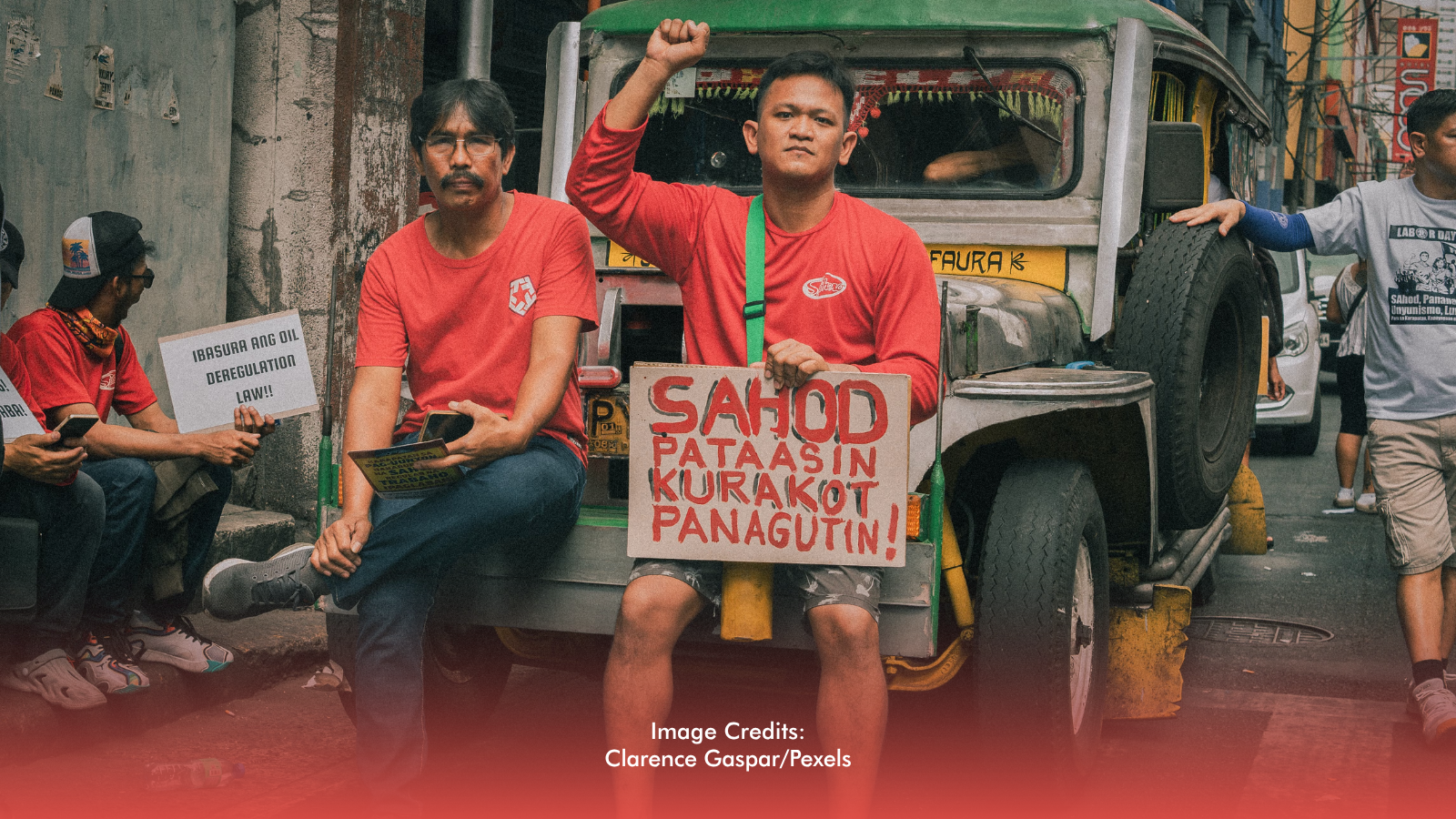
Whenever oil prices surge on global markets, a familiar rhythm takes over Philippine roads. Transport groups announce nationwide strikes, local governments scramble to offer free rides (libreng sakay), schools pivot to online classes, and millions of commuters face stranded morning routines.
The recent strikes led by transport group Manibela, protesting significant double-digit fuel price hikes, are just the latest chapter in a long-standing routine. Transport strikes have become a recurring feature of Filipino public life.
Why does this cycle keep repeating itself, and what will it actually take to break it?
Drivers Are Earning Less While Spending More
At the heart of every transport strike is a basic economic reality: drivers and small operators shoulder the burden of fuel price volatility.
When global petroleum prices rise, PUV drivers feel the impact instantly.
Double-digit increases in diesel prices mean drivers must spend thousands of additional pesos per week just to keep their vehicles running. Unlike corporate fleet systems, traditional jeepney drivers absorb pump price increases directly out of their daily earnings. Despite working 12 to 16 hours a day on crowded routes, drivers end their shifts with significantly reduced net income, leaving less for food, rent, and basic family necessities.
When fuel costs consume the majority of a driver’s daily quota, driving becomes a losing proposition. Leaving them with strikes as a measure of economic survival rather than choice.
A Lose-Lose Scenario
When public transportation grinds to a halt, the economic ripple effects extend far beyond the transport sector.
Inevitably, everyone loses: Drivers lose direct income for every day their vehicles remain idle. Commuters lose critical time, waiting in hours-long queues or paying inflated fares for alternative transit. Businesses lose productivity as employees arrive late or are unable to report to work. Students lose learning continuity as schools are forced to suspend face-to-face classes or shift back to remote modules.
Transport Strikes Are Only The Symptoms
It is easy to view transport strikes as the root cause of urban paralysis, but in reality, strikes are merely visible symptoms of structural problems in the national transit framework.
The country's heavy reliance on imported oil leaves domestic transport prices vulnerable to foreign geopolitical conflicts and market fluctuations. A public transport system reliant on individual daily quotas rather than structured, service-contracted public transit creates extreme financial vulnerability for transport workers. Alongside this, the broad inflation across food, utilities, and basic commodities leave drivers with virtually zero financial buffer when pump prices spike.
What Has to Change to Break the Cycle?
Temporary fuel subsidies, government libreng sakay programs, and short-term fare adjustments provide quick relief, but they do not solve the structural problem. To build a sustainable transport system, policy must focus on structural solutions.
Shifting drivers from a commission or boundary-based income model to guaranteed wages under government service contracts ensures income stability regardless of daily fuel price fluctuations. Additionally, the rollout of electric PUVs and expanding renewable energy infrastructure reduces national vulnerability to global oil market shocks. Lastly, implementing automated, transparent, and prompt fuel subsidies when oil prices cross critical thresholds prevents economic distress before it leads to strikes.
Until systemic issues in public transit and energy dependency are addressed, transport strikes will remain a recurring response to rising fuel prices.
Breaking the cycle requires building public transportation that protects both the workers who run it and the people who rely on it every day.