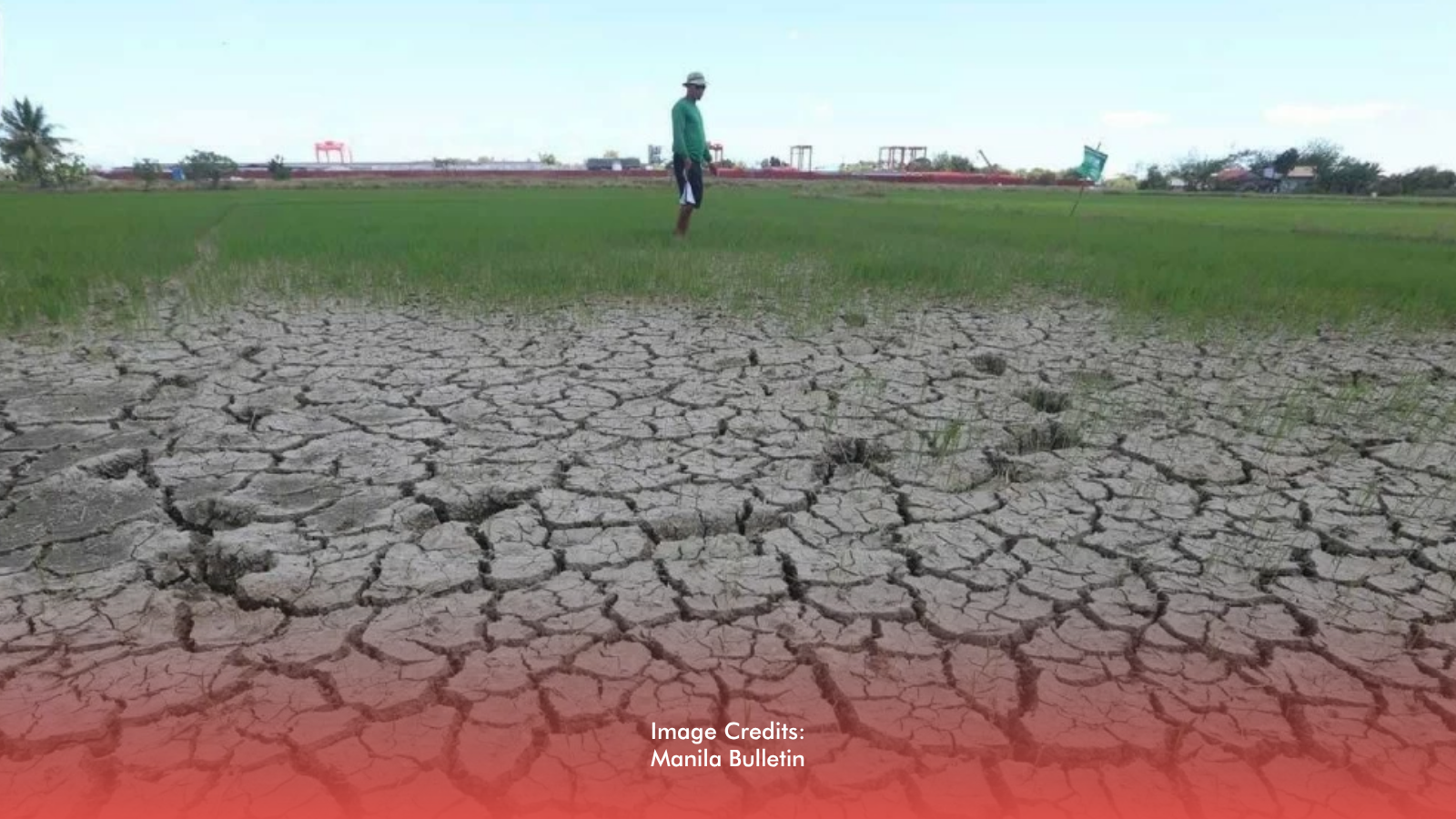
The Philippines could face a more severe El Niño in the months ahead, prompting calls for the government to put preventive measures in place before water shortages, drought and livelihood losses worsen.
Sen. Loren Legarda issued the call after the Philippine Atmospheric, Geophysical and Astronomical Services Administration (PAGASA) warned that the current strong El Niño in the tropical Pacific could intensify into a very strong El Niño between September and December and persist through the first half of 2027. The weather bureau also said the phenomenon increases the likelihood of below-normal rainfall and dry spells or drought in some parts of the country.
RELATED: [Habagat and El Niño: Too Much Water Now, Too Little Later]
Early Measures Needed in Vulnerable Areas
Legarda said preparation should begin in areas already at greater risk of drought and water stress, with government interventions tailored to their specific needs.
“El Niño is not a sudden disaster; we can see it coming. We cannot simply ‘think positive’ and wait until the farms have dried up, the water supply has been affected, and families have lost their income before taking action. Let us prepare while there is still time,” Legarda said.
Among the measures she proposed are water conservation and storage, irrigation support, drought-resilient crops and seeds, assistance for affected farmers and fisherfolk, and steps to prevent disruptions in food supplies.
She also urged Task Force El Niño, which was reactivated under Executive Order (EO) 53, to revise the Strategic El Niño National Action Plan according to current conditions. Legarda said the plan should clearly establish which agencies are responsible for water, food and energy security, health and public safety.
Under EO 53, the task force is required to revise and update the national action plan and oversee short- and long-term measures covering five critical areas: water security, food security, energy security, health and safety.
Funding Plan to Cover 2026 Through 2027
Legarda said existing government mechanisms can be used to fund preventive and adaptive measures. She was principal author and sponsor of the Climate Change Act of 2009 and principal sponsor of the law establishing the People’s Survival Fund (PSF), which provides at least 1 billion pesos annually for climate adaptation projects of local governments and community organizations.
The PSF can fund initiatives involving water-resource management, agriculture and fisheries, health, infrastructure, early warning systems, and contingency planning for drought-prone areas. Legarda also cited the Philippine Disaster Risk Reduction and Management Act, which she championed, as part of the country’s move toward prevention, preparedness, risk reduction and resilience.
While support for families that eventually lose income or livelihoods remains necessary, Legarda said such assistance should not be the government’s primary response to a climate event that can be forecast.
She called for an immediate, data-driven El Niño financing plan that identifies vulnerable areas, priority interventions, available 2026 funds and projected funding gaps through the first half of 2027. The assessment, she said, could help the Senate Committee on Finance determine possible adjustments or additional appropriations under the proposed 2027 national budget.
“We cannot prevent El Niño, but we can minimize its damage. True preparation takes place before families lose their water supply, crops, and livelihoods. Let us act while there is still time,” Legarda said.
The effects of a prolonged dry period can extend well beyond farms. Water availability, food prices, household incomes, and local livelihoods can all be affected, making early planning critical to limiting disruptions before communities are forced to respond to shortages after they have already taken hold.