
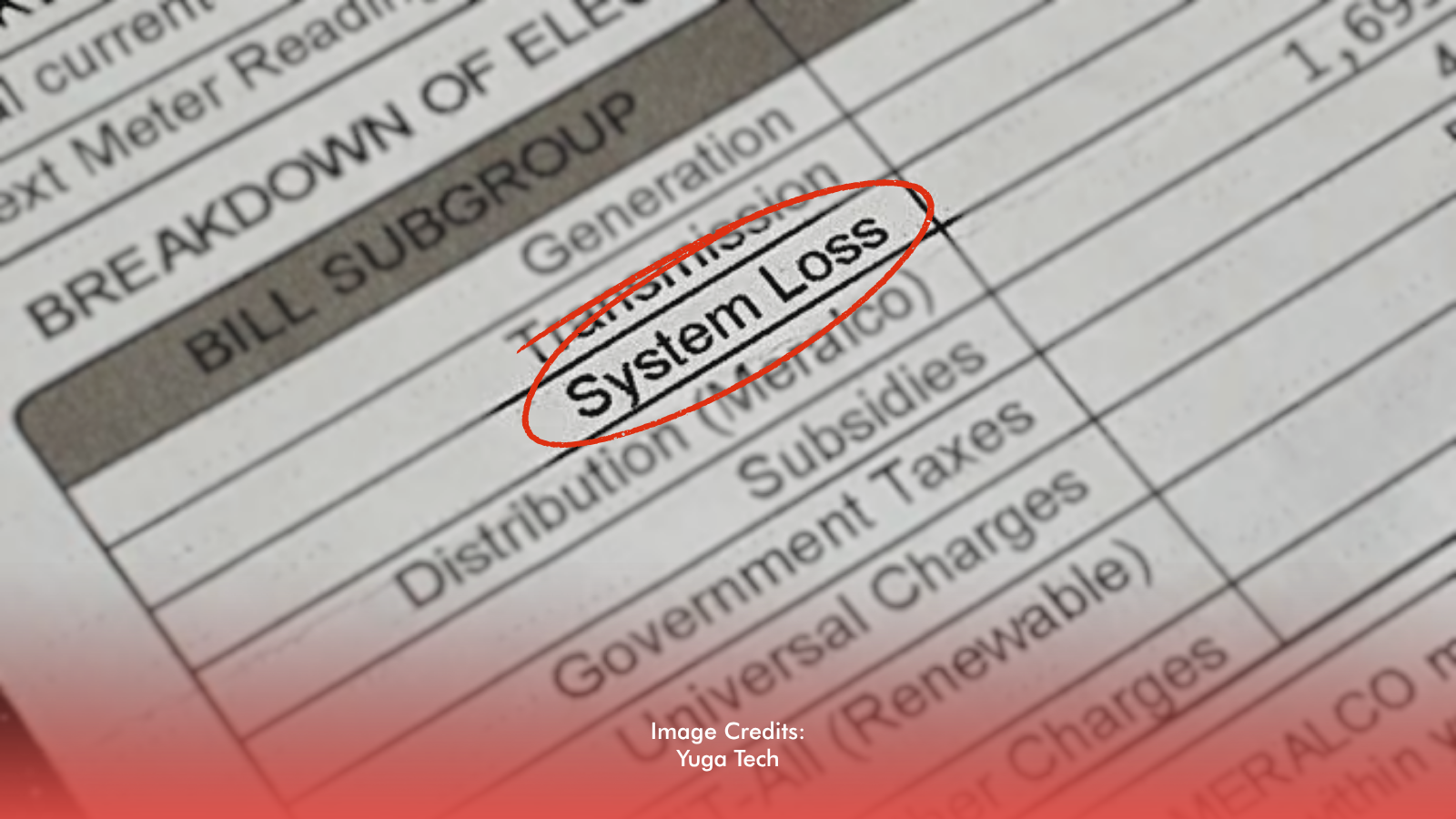
There’s one line from President Ferdinand Marcos Jr.’s fifth State of the Nation Address (SONA) that hits close to home: “Hindi naman kasalanan ng consumer kung bakit nagkaroon ng system loss.” For households burdened by rising electricity costs, his call to remove system loss charges felt like a step toward fairness. But while his push to amend the Electric Power Industry Reform Act (EPIRA) is welcome, it only begins a much larger conversation.
What Exactly Is a “System Loss”?
Under Republic Act No. 9136, or EPIRA, distribution utilities may recover a portion of system costs through consumers’ electricity bills, subject to limits set by the Energy Regulatory Commission (ERC). "System loss" refers to electricity lost before it reaches consumers, whether through technical causes (electricity dissipated as heat while travelling through wires and transformers) or non-technical causes (electricity theft, billing errors, or meter tampering).
For years, this charge has appeared on bills with little public outcry. This year’s SONA brought it forward by asking, "Why should households pay for electricity they never actually used?"
From Fairness to Reform
It’s easy to understand the president's demand. Consumers didn’t cause system loss, so why should they shoulder it? Still, removing the charge doesn’t exactly remove the losses themselves. Some technical losses are unavoidable, while others can be reduced through better infrastructure, stronger enforcement against power theft, and more efficient operations.
Moreover, calls to revisit EPIRA didn’t begin with this year’s SONA. Lawmakers have long proposed reviewing provisions on electricity costs and consumer protection. Meanwhile, the Department of Energy (DOE) stressed that any amendment must protect consumers while maintaining a reliable and financially sound power sector. So this recent address speeds up the opportunity to modernize the 25-year-old law.
More Than a Bill Slash
Removing system loss charges is a just first step. But lasting reform will depend on whether Congress also strengthens the country’s power system so that these losses continue to shrink over time. The true measure of success isn’t simply taking one charge off the bill; it’s building an electricity sector where consumers no longer have to pay for avoidable inefficiencies in the first place.