
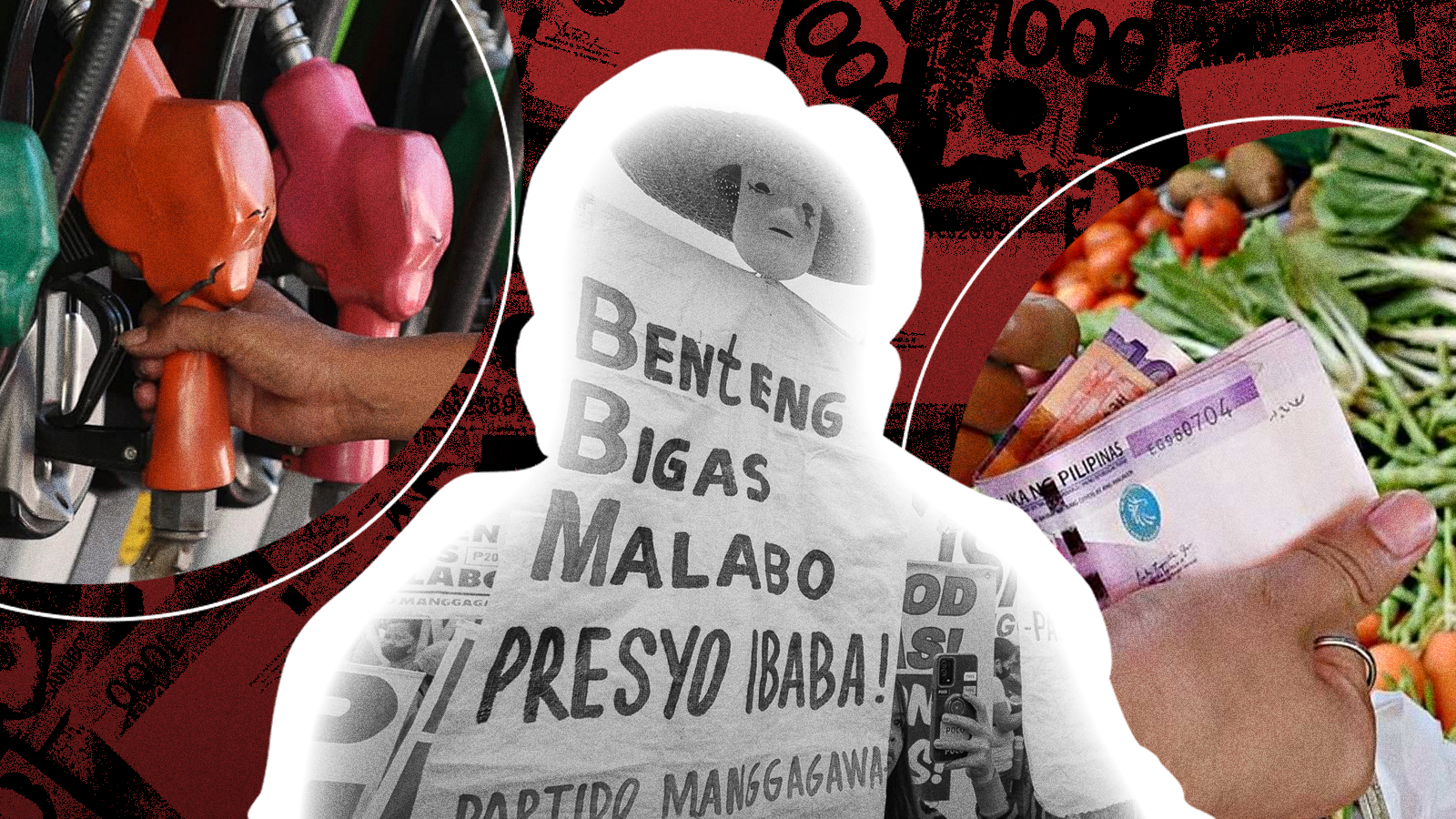
The Philippine economy is facing renewed pressure as the peso weakens, prices rise, and economic growth slows. On October 27, the peso closed at a record low of P64.17 against the US dollar, while inflation climbed to 7.2% in September from 6.1% in August. Economic growth, meanwhile, slowed to 2.3% in the second quarter of 2026, marking its fourth consecutive quarter of deceleration.
These figures are more than market movements or economic indicators. A weaker peso makes imported fuel, food, and production materials more expensive, while sustained inflation continues to reduce the purchasing power of household income. Businesses are also affected, as rising input costs and slower household spending can put pressure on operations and influence decisions on expansion, investment, and hiring.
RELATED: [11.7% Inflation for Western Visayas’ Poorest Families, Higher Than the Regional 9.2%]
When Economic Pressures Feel Familiar
The economic pressures Filipinos are experiencing today may feel all too familiar. The country had faced a similarly severe period of economic turmoil during the presidency of Ferdinand Marcos Sr.
The Philippines recorded strong economic growth during the 1970s, averaging 6.2% annually. However, this growth came alongside mounting economic vulnerabilities, including heavy dependence on foreign borrowing, inefficient investments, and weaknesses in economic management. External shocks further exposed these problems. By 1984, inflation had reached 50.3%, while GDP contracted by 7.0% that year and another 4.1% in 1985.
Decades later, the country is once again facing pressure on its currency, rising prices, and questions about its economic direction. With another Marcos in Malacañang, the historical parallels are difficult to overlook.
Under Ferdinand Marcos Jr., the IMF projected that the current account deficit would widen to 4.8% of GDP in 2026, partly due to higher oil import costs and the effects of El Niño on global rice prices. While the circumstances are different, the combination of domestic vulnerabilities and external pressures makes the country’s economic history difficult to ignore.
The Present Cost of Economic Uncertainty
The challenges today have their own circumstances. The IMF has identified the Middle East conflict and higher oil costs as external risks, while weaker private investment confidence, declining public construction investment, and a prolonged property-sector slowdown are among the domestic concerns. The CPBRD has also pointed to slowing household consumption and declining investment as signs of weakness in the economy.
For households, these pressures are felt in everyday expenses, from groceries and transportation to electricity and other basic needs. Even when inflation slows, prices do not automatically return to previous levels. It simply means they are increasing at a slower rate.
The Philippines is not facing the same crisis it endured in the 1980s. Global conditions and the country’s economic landscape have changed. But history shows how economic vulnerabilities can deepen when warning signs go unaddressed. External pressures are real, yet the government’s response will shape how deeply they affect Filipinos.
Strengthening local industries, managing public spending responsibly, protecting jobs, and keeping essential goods affordable are crucial to helping households withstand economic shocks. These are not simply policy priorities; they are measures that can determine whether families and businesses are able to weather prolonged uncertainty.
The crises of the past should be remembered as lessons in the consequences of economic decisions and the cost of failing to address warning signs. Economic performance must be measured not only through growth figures or government promises, but also by whether people’s lives are becoming more secure.
With the Marcos name once again at the center of national leadership, the question is whether the lessons of the past have truly been learned, or whether another generation of Filipinos will be left paying the price.
RELATED: [ADB Approves $1.5-Billion Crisis-Response Loan for Philippines]