According to Filipino folklore, hearing tik-tik-tik outside your window at night comes with a chilling warning. If the sound grows louder, the creature is supposedly far away. If it becomes faint, it may be getting closer.
This is just one of many stories surrounding the aswang, one of the Philippines’ most feared mythical creatures.
What Is an Aswang?
Aswang is an umbrella term for supernatural beings believed to prey on humans, their blood, organs, or corpses. Some supposedly appear as ordinary people during the day and reveal their true forms at night.
Folklorist Maximo Ramos grouped aswang traditions into five broad types: vampires, viscera suckers, weredogs, witches, and ghouls. However, these categories overlap, and beliefs vary across communities.
Did you know? A literature scholar documented around 50 regional names for aswang-type beings, though the list was considered incomplete. Names such as tiktik, wakwak, and kikik are also associated with birds or their calls.
What Does a Manananggal Look Like?
The manananggal is among the best-known versions of the aswang. Its name is linked to the Tagalog word tanggal, meaning to detach.
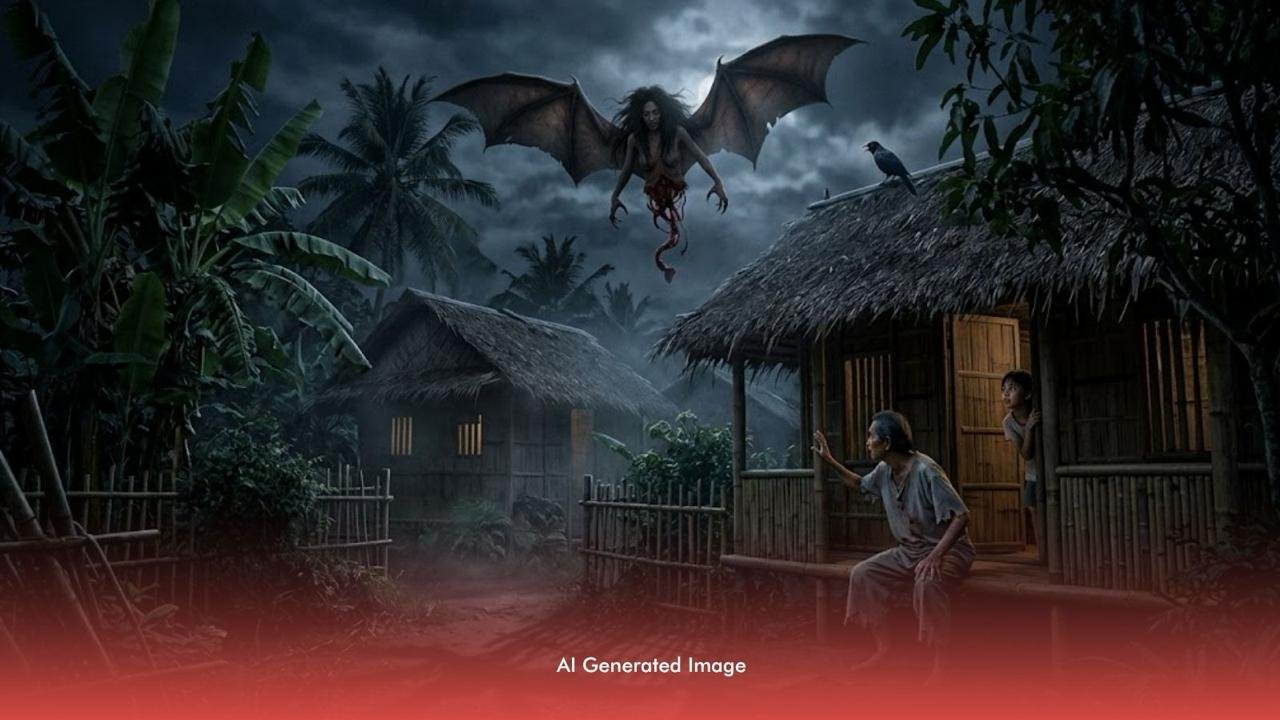
Folklore describes it as a woman who separates her upper body from her lower half at night, grows wings, and flies off in search of prey. Her legs remain behind while her torso flies with its entrails hanging below.
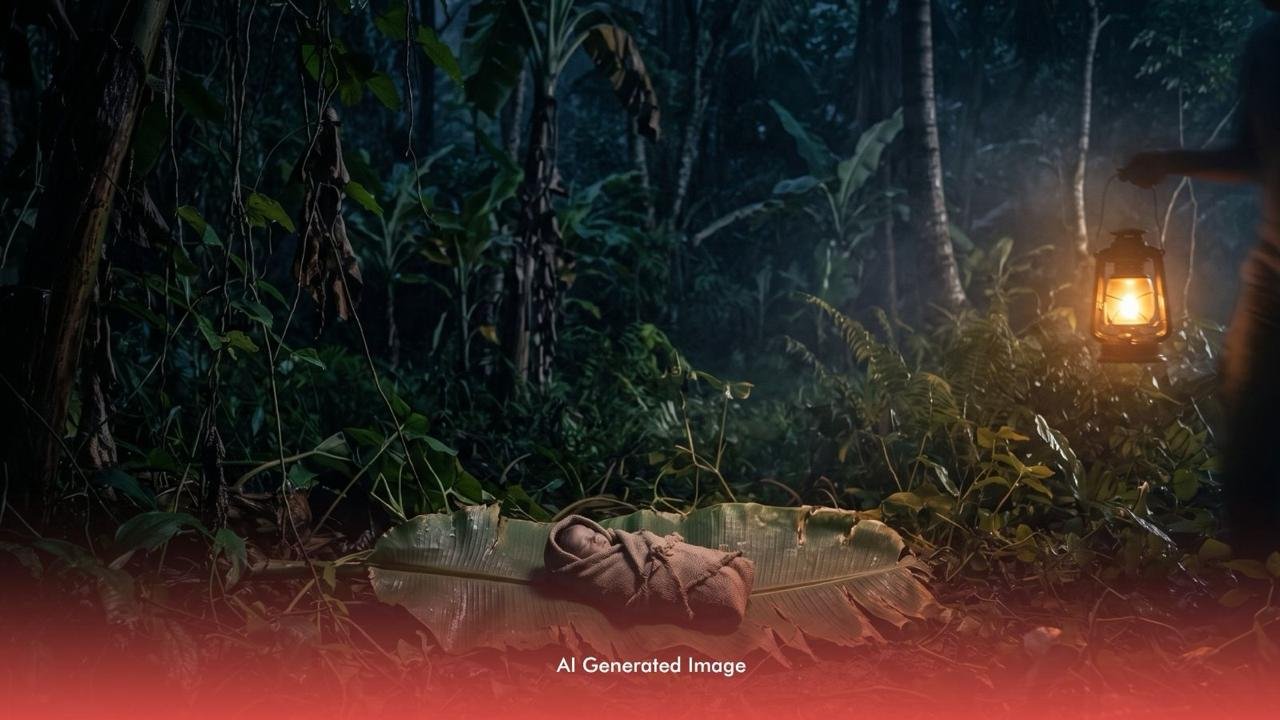
The creature supposedly targets pregnant women and the sick, using a long, thin tongue to reach through gaps in roofs or bamboo floors.
Its weakness, according to legend, is the lower body left behind. Salt, ash, or garlic is believed to prevent the two halves from rejoining before sunrise.
What Are the Regional Names?
Different regions have their own versions of the aswang. Mandurugo is associated with blood-drinking, while wakwakrefers to a creature linked to the sound of wings. Other names include ungo and mangalok.
In an Aklanon legend collected by folklorist Damiana Eugenio, the wakwak appears as a giant black bat that transforms into a long-haired woman without splitting its body in half.
The tik-tik, meanwhile, was described as a bird in an account written around 1731 by Augustinian friar Tomás Ortiz. It supposedly helped another creature locate houses where women were about to give birth.
Why Is Capiz Associated With Aswang?
Capiz, a province on Panay Island, is often portrayed as the aswang's home. Historical materials from the 1920s already documented aswang beliefs in Capiz and nearby areas.
The association has had real consequences for residents. An anthropologist who conducted fieldwork in Roxas City around 2000 found that some residents avoided discussing aswang beliefs. A local council had also objected to the 1999 film Sa Piling ng Aswang for using the name of Panitan, a real town in Capiz.
The province is also associated with lubag, or X-linked dystonia-parkinsonism, a rare genetic movement disorder found predominantly among Filipinos, with many patients tracing their maternal ancestry to Panay. Advocates have reported that some affected individuals were labeled as aswang, discouraging families from seeking medical care. However, a direct link between the disorder and Capiz's reputation has not been established.
Where Did the Aswang Belief Come From?
Spanish colonial records show that aswang beliefs date back centuries.
In 1589, Franciscan friar Juan de Plasencia described the osuang, a being believed to fly, kill people, and eat human flesh. He associated it with the Visayas and wrote that Tagalogs did not share the same belief.
He also mentioned the magtatangal, which supposedly flew at night without its head and entrails before reuniting with them by morning.
Some scholars interpret the aswang as a reversal of Filipino social values: instead of protecting the community, it preys on people, including members of its own family. Others suggest Spanish colonizers portrayed indigenous spiritual leaders, including babaylan, as evil to weaken their influence. However, direct evidence of a deliberate campaign to create the aswang image remains limited.
Did the CIA Use the Aswang Against the Huks?
In his 1972 memoir, American officer Edward Lansdale described an alleged psychological warfare operation during the early 1950s Huk rebellion.
According to Lansdale, operatives spread rumors of an aswang near a Huk encampment. Soldiers then allegedly killed a Huk fighter, punctured his neck, drained his body, and left it on a trail to make the death appear supernatural.
Lansdale claimed the Huk unit left the area the following morning. However, the account rests on his own recollection, and independent documentation confirming the specific incident has not been established.
When Aswang Accusations Turn Deadly
The most disturbing part of aswang folklore is the harm accusations can cause in real life.
In 2003, police in Cauayan, Negros Occidental, reported that an elderly couple had been beheaded by men who believed they were aswang. In 2014, police reported that a 79-year-old widow in Josefina, Zamboanga del Sur, was hacked to death by relatives who suspected her of being one.
Stigma can also lead to isolation. During fieldwork in Capiz, an anthropologist found that people rumored to be aswang included a widow who fished alone and an elderly man who struggled to walk. Both were already isolated, and the rumors worsened their situation.
The Aswang in Philippine Pop Culture
Aswang stories continue to influence Filipino horror films and art. José Nepomuceno's Manananggal (1927) is often cited as an early Filipino horror film, while Peque Gallaga's Manananggal segment in Shake, Rattle & Roll (1984) introduced the creature to another generation of moviegoers.
National Artist Carlos “Botong” Francisco also depicted a flying aswang with dangling entrails in his painting Progress Through Education.
Legends, Traditional Defenses, and Their Meaning
Folklore describes rituals and household practices believed to repel the aswang, including keeping houses brightly lit, making noise during wakes, covering gaps in roofs and floors, and using salt, garlic, or ash.
Did you know? Anthropologist Raul Pertierra noted that wakes were sometimes kept bright and noisy because people feared an aswang might steal a corpse. Families might leave lights on, play cards, and ensure someone stayed awake beside the coffin until morning.
These traditions reflect how deeply supernatural beliefs shaped community practices. Today, the aswang remains a powerful figure in Philippine folklore, preserved through regional stories, colonial accounts, films, and generations of storytelling.
But beyond the frightening tales lies a serious lesson: fear can turn ordinary people into targets. Legends may continue to fascinate us, but no one should be harmed, isolated, or denied medical care because others believe they are an aswang.