Public school construction will follow new requirements beginning 2027, with accessibility, health, disaster resilience, and learning conditions built into the design of future facilities.
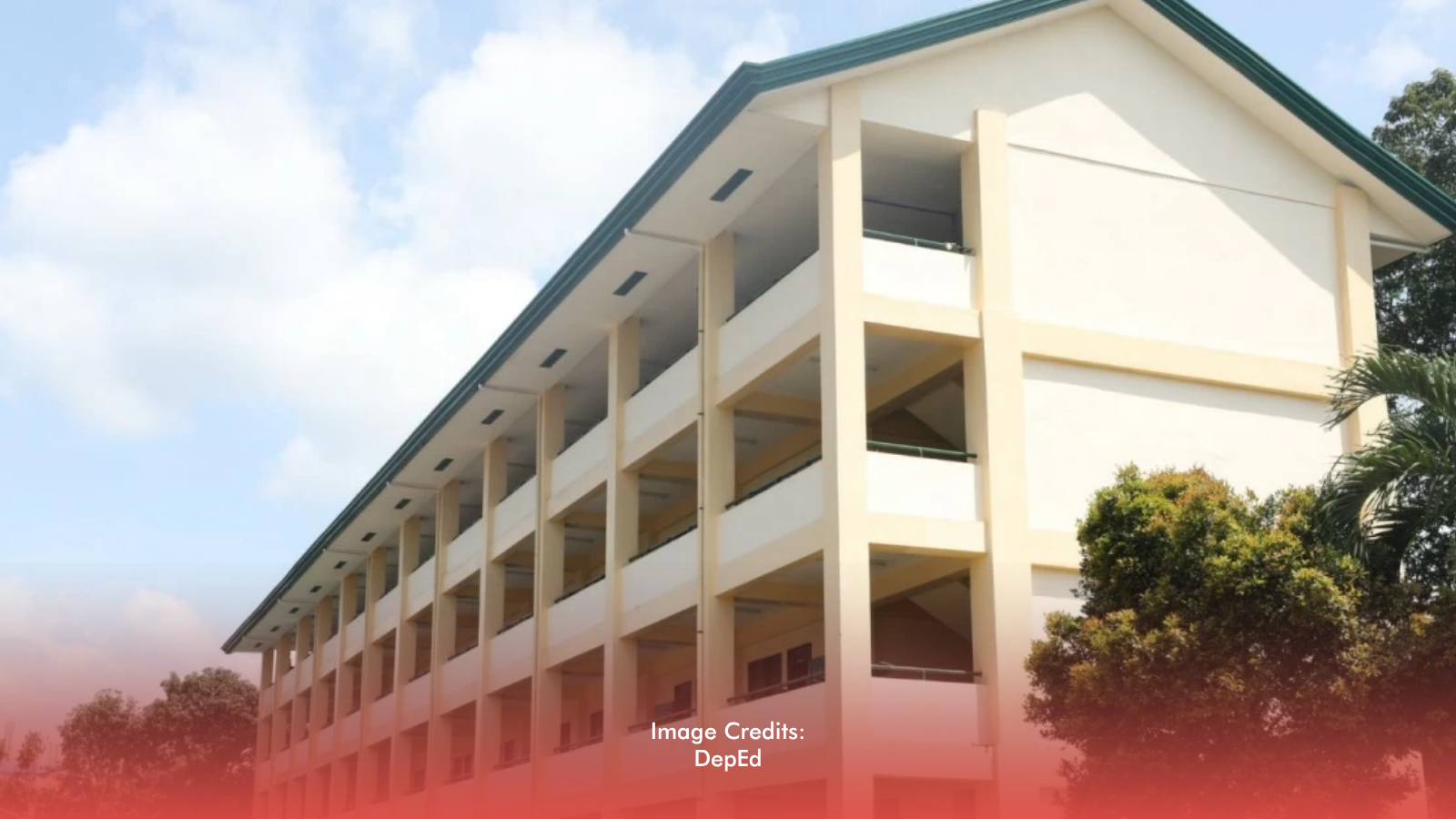
Education Secretary Sonny Angara issued DepEd Order 022 of 2026, which establishes the Enhanced Minimum Performance Standards and Specifications for public schools and updates building guidelines introduced in 2017 and 2021.
RELATED: [DSWD Seeks to Expand Parenting Program for Stronger Family Support]
New Schools to Follow Barrier-Free Design
The revised standards require upcoming public schools to be fully accessible to persons with disabilities (PWDs), while also ensuring that facilities are climate-resilient and "designed for optimal learning," according to the Department of Education.
"In line with President Marcos Jr.'s vision of an inclusive learning environment, these standards ensure that our schools respect learner dignity, protect their health, and welcome every Filipino child without exception," Angara said.
Accessibility requirements include standardized wheelchair ramps with a maximum 1:20 incline, non-skid surfaces, tactile paving with warning blocks for visually impaired learners, and sanitation facilities accessible to PWDs and equipped with safety handrails.
The updated framework also incorporates health requirements. "The updated framework integrates universal accessibility with health protocols across all upcoming facilities. All new school sites must feature standardized wheelchair ramps with a maximum 1:20 incline to be wheelchair-friendly, non-skid surfaces, tactile paving with warning blocks for visually impaired learners, and PWD-accessible sanitation facilities equipped with safety handrails," the DepEd said.
Water, Sanitation, and Hygiene (WASH) provisions will require gender-separated restrooms and accessible handwashing stations. Fixture ratios will be set at at least one female toilet per 20-25 female learners and one male toilet per 25-30 male learners.
Classroom design will also be standardized. General instruction rooms will cover 63 square meters and accommodate a maximum of 40 students, while continuous indoor cross-ventilation will be supported by a minimum 2.7-meter ceiling height, a 20 percent floor-to-window area ratio, wall- and ceiling-mounted fans, and unblocked air vents.
Schools to Be Built for Safety and Resilience
Furniture requirements will likewise cover learner safety and comfort. Desks must be lead-safe, ergonomic, and "suitable for both left- and right-handed learners," while at least 20 percent of furniture components must use sustainable bamboo pursuant to Executive Order 879.
The standards also raise structural requirements for new school buildings. They must be designed to withstand super typhoon winds of up to 340 [kilometers per hour] and major magnitude 8.0 earthquakes.
"Mandatory engineering standards include anchored roof trusses, fire-retardant materials, footings at least 600 [millimeters] deep, and specialized deep foundation micropiles or raft foundations for hazard-prone, weak-soil locations to guarantee a minimum structural design life requirement, subject to proper design, construction, maintenance, and site conditions," the DepEd said.
Campus security will include a 2-meter-high perimeter fence and controlled access gates intended to eliminate blind spots. DepEd will also standardize exterior colors to Baguio green for roofs, white for ceilings, cream for interior walls, ivory white for exterior walls, metallic gray for railings, and red for safety accents.
"Having one unified standard makes it easier for our partners and project engineers to build right the first time. Proper airflow, ergonomic seats, and barrier-free pathways are not luxury add-ons, but basic prerequisites for effective learning," Angara said.
The changes place accessibility and basic safety requirements within the design of public schools rather than treating them as additions after construction. With public schools serving communities across the country, the standards could shape whether learners with disabilities, as well as the wider student population, can enter, move through and learn in these facilities safely and comfortably.
RELATED: [DepEd May Miss 14,000-Teacher Hiring Target Without More Funds]