
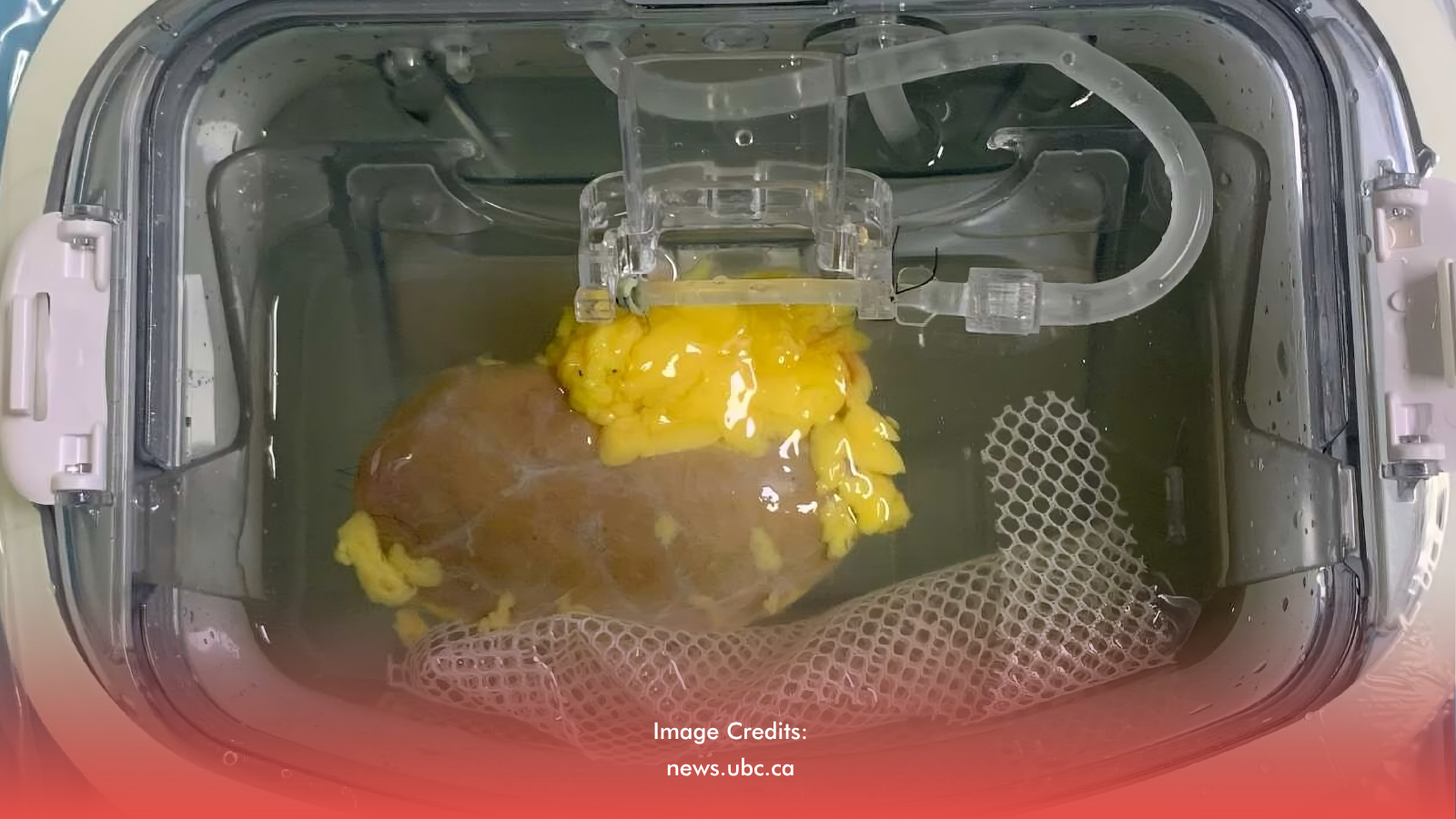
A year after researchers at the University of British Columbia (UBC) successfully tested an enzyme-converted kidney into a human model, the technology is moving into a new phase focused on clinical development, blood conversion, and emergency applications. But while the initial breakthrough marked an important step toward blood-type barriers in transplantation, the technology still needs further testing before it can be used in living patients.
What the First Test Showed
The original experiment, published in Nature Biomedical Engineering in October 2025, involved a kidney transplanted into a brain-dead recipient with the family’s consent.
The approach uses specially developed enzymes to remove the sugars that identify a type-A organ, effectively converting it toward universal type O. These sugars, known as “blood-type antigens,” can trigger an immune response when an organ is transplanted into someone with an incompatible blood type.
In the experiment, the converted kidney avoided hyperacute rejection for two days. By the third day, however, some blood-type markers began to reappear, causing a mild immune reaction.
The results showed that the approach could temporarily reduce the immediate immune response while also highlighting a key challenge: keeping the converted organ from regaining markers that can trigger rejection.
Beyond Kidneys
Since then, Avivo Biomedical has continued developing the enzyme platform for applications beyond organ transplantation.
The company is also working on technology that can cover different blood types toward type O, potentially helping create a blood supply that is less dependent on matching a donor and recipient’s blood types.
This year, Avivo was selected for NATO’s Defence Innovation Accelerator for the North Atlantic (DIANA) program, which includes work on whole-blood conversion. The company also received funding from Canada’s Department of National Defence for a project exploring a universal blood supply for battlefield use. This shows how the system could be vital in situations where compatible blood is difficult to source quickly, including emergencies and military settings.
Passing Clinical Trials
Researchers still need to conduct additional preclinical studies and serve regulatory approvals before enzyme-converted organs can be tested in living patients.
For kidney transplantation, the potential remains significant. Patients with type O blood can generally receive only type O kidneys; removing this barrier could eventually expand the pool of organs available waiting for a transplant. For now, the UBC technology remains a promising proof of concept rather than a ready-to-use treatment.