Bohol continues to attract more visitors, bringing greater activity to its beaches, dive sites, resorts, and coastal communities. With the province recording 1,427,362 tourist arrivals in 2025, a 4.18% increase from the previous year, the growth also raises an important question: how can communities prepare for the growing number of people moving through their destinations?
Tourism safety is often associated with hotels, resorts, tour operators, and other establishments, but they are only part of the picture. The residents, workers, fisherfolk, barangay personnel, and other people who live and work around these destinations are also part of the tourism ecosystem and may be among those closest to an emergency.
RELATED: [Bell-Kenz Brings Sagip CPR to Families of Filipinos With Cerebral Palsy]
Putting Emergency Preparedness in the Community
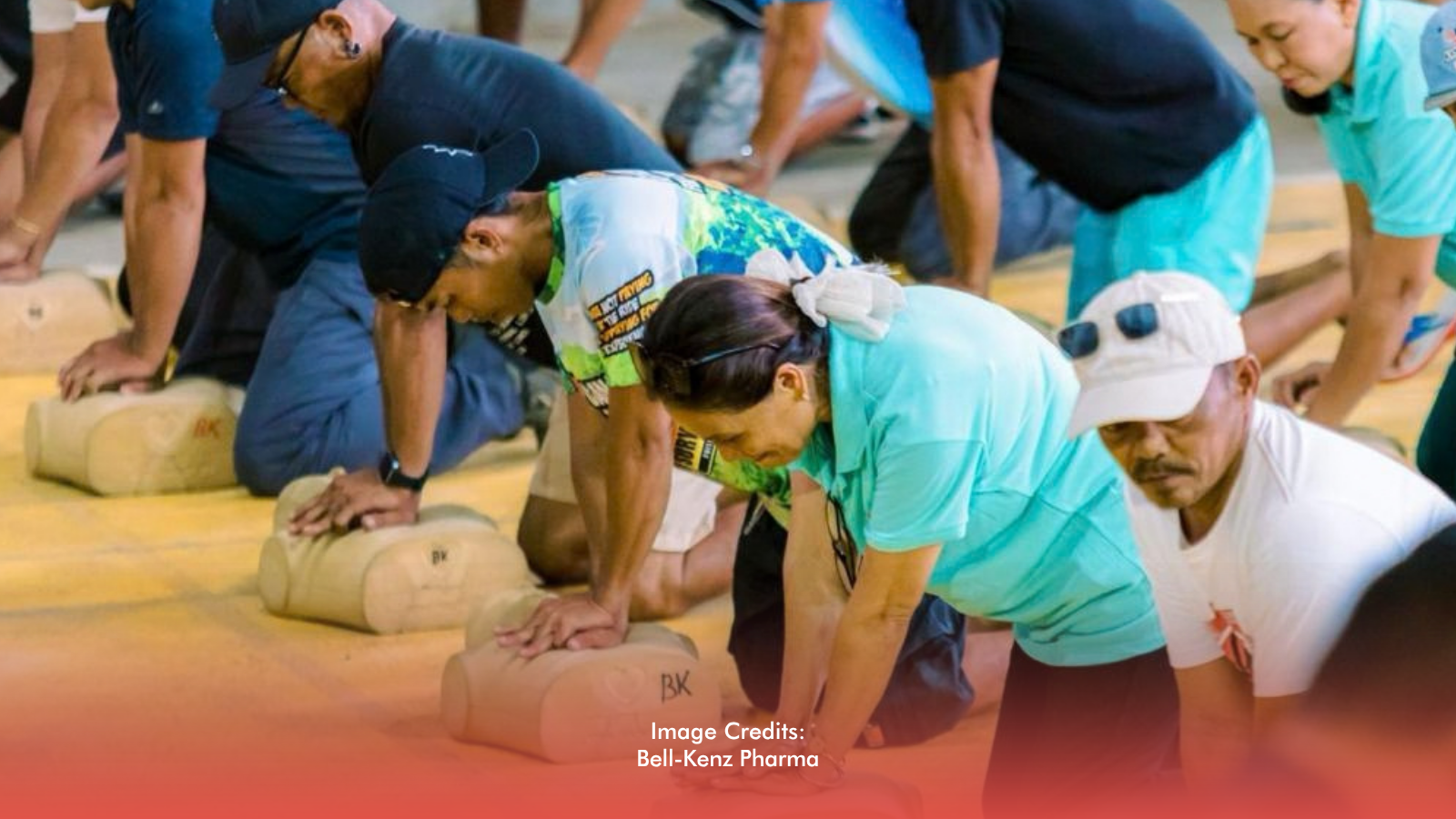
That was the focus of a recent Sagip CPR training held in Panglao, where community members from Panglao and Dauis gathered to learn basic emergency-response skills. Conducted at the Panglao Cultural Center on September 21, the training brought together fisherfolk, persons with disabilities, disaster risk reduction and management officers, barangay health workers, solo parents, and other local stakeholders.
Participants learned Hands-Only CPR and automated external defibrillator (AED) use, alongside a drowning prevention module based on the Drowning Chain of Survival. The training covered practical steps that can be taken during a water-related emergency, including recognizing distress, calling for help, providing flotation, safely removing a person from the water, and giving appropriate care.
The need for this kind of community readiness becomes more relevant as visitor activity continues to expand. Panglao Island recorded 62,240 tourists during the 2025 Christmas long break alone, while the Bohol-Panglao International Airport handled 2.22 million passengers throughout 2025.
“Tourism and safety must go hand in hand,” said Patrick Larraga, Corporate Communications and Public Affairs Head of Bell-Kenz Pharma. “When residents are equipped with life-saving knowledge, they become an important part of creating safer and more prepared destinations for everyone.”
Prepared Communities Are Part of Tourism Readiness
For destinations built around water, preparedness cannot stop at the edge of a resort property. The same coastal areas visited by tourists are also where people live, work, commute, fish, and carry out their daily routines.
That makes community-based emergency education relevant not only to visitors but also to the people who are part of the destination year-round. A trained resident or worker may be closer to someone in distress than a professional responder, particularly in places where several communities and tourism activities share the same coastline.
The Sagip CPR training also reflects a broader approach to tourism readiness by preparing communities alongside the establishments that serve visitors. By giving more people basic skills in CPR, AED use, and drowning prevention, preparedness can become part of everyday community life rather than something limited to designated tourism facilities.
The Panglao and Dauis training is part of Bell-Kenz Pharma’s continuing Sagip CPR efforts to help communities build the skills needed to respond to emergencies and contribute to safer destinations for both residents and visitors. With more travelers visiting the province, the initiative puts a spotlight on the importance of strengthening emergency preparedness alongside the communities that welcome and support them.
RELATED: [PWDs as First Responders: Bell-Kenz Expands Sagip CPR in Mandaluyong]