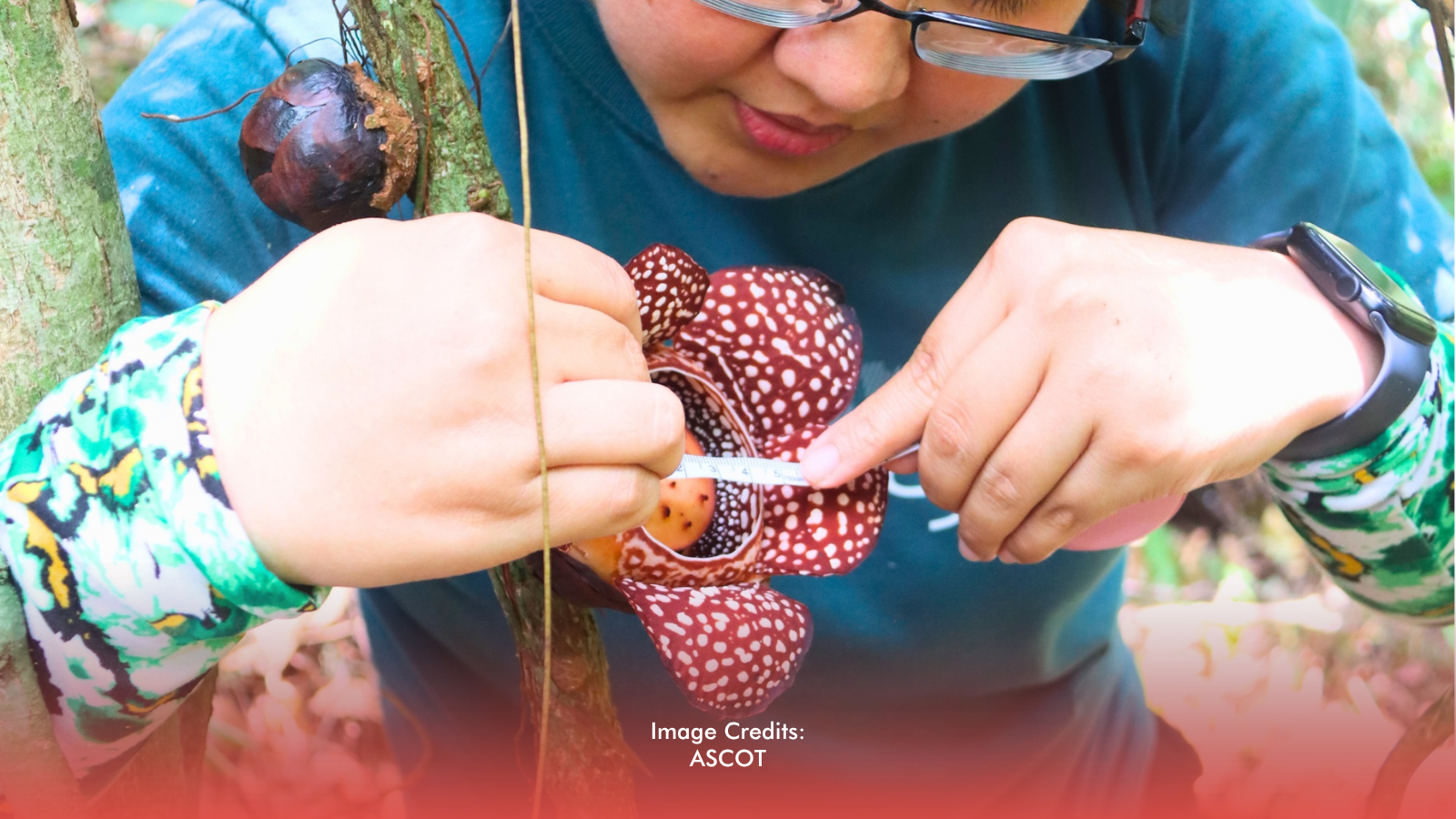
A rare sighting of the Rafflesia lagascae has once again been recorded in the Sierra Madre range inside Aurora Memorial National Park in Maria Aurora, Aurora, marking its second documented appearance in the area for two consecutive years. The finding adds another layer of importance to the protected landscape, which continues to reveal unique ecological treasures through ongoing field studies.
RELATED: [Greener Graduates: Mandaue Makes Tree Planting Part Of School Requirements]
Continued Discovery in a Protected Forest
The bloom was documented by researchers from the Aurora State College of Technology (ASCOT) during a fieldwork activity aimed at supporting biodiversity monitoring and conservation efforts within the national park. The repeated appearance of the species in the same area has further strengthened scientific interest in the site’s ecological stability and richness.
ASCOT President Renato Reyes highlighted how scientific research plays a key role in reinforcing environmental protection efforts, especially in areas considered ecologically sensitive. He stressed that safeguarding such habitats requires both institutional action and public awareness.
"The collection, disturbance, or poaching of Rafflesia and other protected species is strictly prohibited," said Reyes, urging visitors to practice responsible tourism and coordinate with local authorities to help preserve the region's natural heritage.
Ecological Value and Conservation Reminder
Belonging to the Rafflesia genus, widely recognized for producing the largest flowers in the world, the Rafflesia lagascae is considered smaller compared to other species in the group, but it remains ecologically important due to its highly specific habitat requirements. Its continued presence in the Sierra Madre underscores the importance of maintaining intact forest ecosystems where such rare species can survive.
Reyes noted that the repeated documentation of the bloom reflects ongoing conservation efforts in Aurora, while also contributing to broader scientific understanding of the region’s biodiversity. He added that protecting these ecosystems is essential in preserving species that are highly sensitive to environmental changes.
"We urge visitors to practice responsible tourism and coordinate with local authorities to help preserve the region's natural heritage,” said Reyes as he encouraged the public to support conservation efforts.
Researchers from ASCOT also emphasized their continued commitment to documenting and protecting the area’s biodiversity, viewing their work as part of a wider effort to address environmental degradation and climate-related threats. The Rafflesia sighting, though rare and short-lived, serves as a reminder of how fragile yet valuable these ecosystems are.
For the Philippines, discoveries like this highlight the importance of protecting forest reserves such as Aurora Memorial National Park, not only for scientific value but also for ecological balance, local pride, and long-term environmental sustainability that directly benefits communities relying on healthy natural systems.