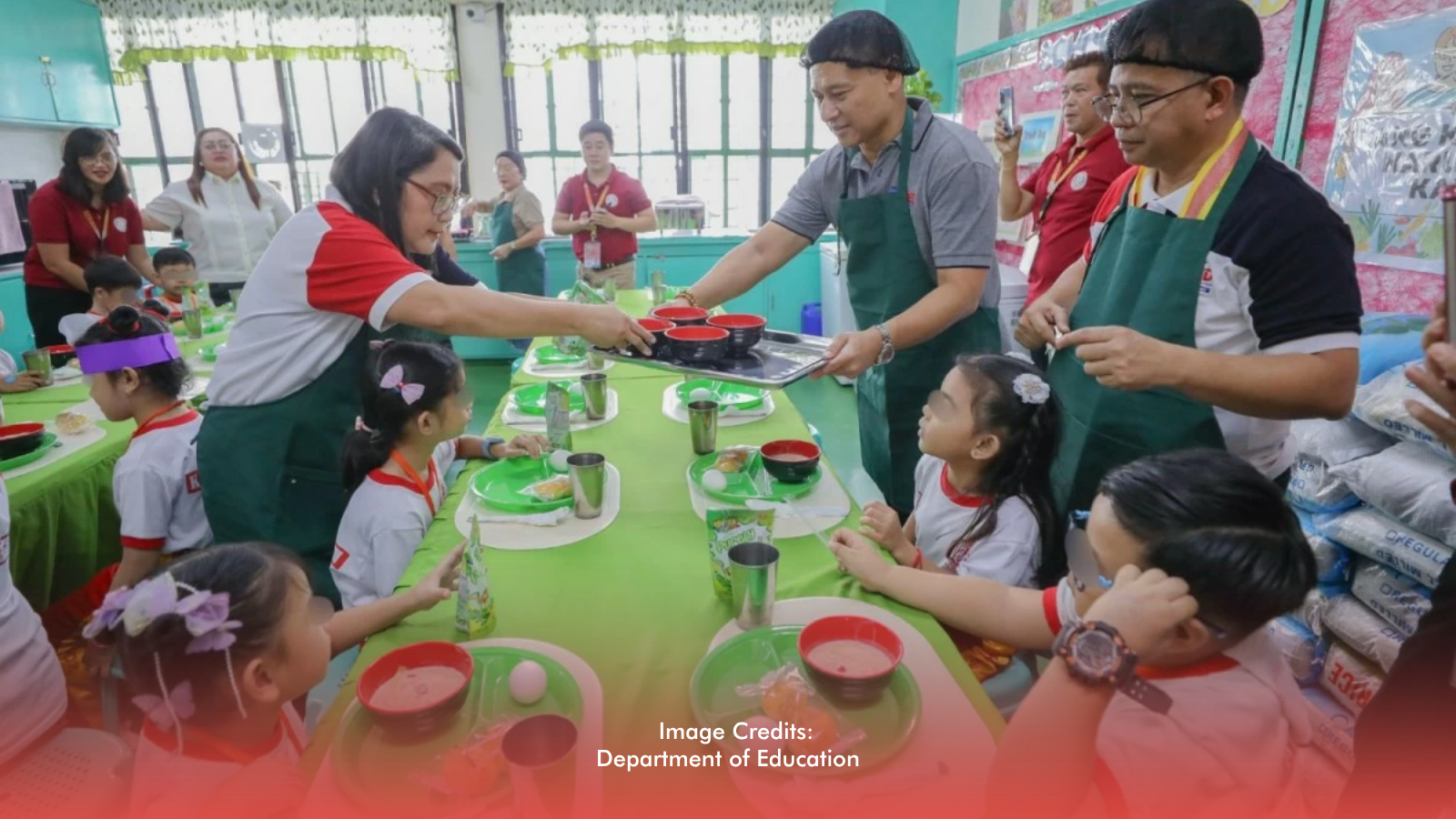
The Department of Education (DepEd) is rolling out its largest-ever School-Based Feeding Program (SBFP) for School Year 2026–2027, backed by a record P25.6 billion budget aimed at addressing student hunger and improving learning outcomes nationwide. The expanded initiative is expected to reach 4.63 million learners, marking a significant scale-up compared to previous years.
“We are fulfilling President Bongbong Marcos’ directive to end the cycle of malnutrition in our schools by giving our learners the health to reach their goals,” Angara said, stressing the long-term vision of the initiative.
By integrating nutrition into the education system, the program moves beyond short-term relief and aims to build a foundation for sustained learning readiness among Filipino students.
RELATED: [DepEd Boosts Teacher Promotions with Expanded Career Progression System]
Wider Reach and Longer Feeding Duration
The program is part of the government’s broader push to tackle malnutrition in schools while strengthening student participation and academic performance. Leading the launch were Ferdinand Marcos Jr. and Sonny Angara during a feeding activity at Jose Zurbito Sr. Elementary School in Masbate City, signaling the administration’s intensified focus on nutrition as a key pillar of education.
For the upcoming school year, the SBFP will cover a broader group of beneficiaries, including kindergarten to Grade 1 learners, undernourished students from Grades 2 to 6, pregnant adolescent learners, and other vulnerable groups beyond Grade 6. This expansion reflects a more inclusive approach to addressing hunger among students across different levels.
Data from DepEd shows a steady increase in the program’s reach over recent years. From serving 1.67 million learners in 2023, the number rose to 2.11 million in 2024 and 3.39 million in 2025. The consistent growth highlights the government’s effort to widen access to daily meals in schools.
Budget allocations have also increased significantly. The program operated on P3.3 billion in 2022 for 30 feeding days covering 3.48 million learners. Funding rose to P5.7 billion in 2023 to support 120 feeding days, followed by P11.7 billion in 2024 for 175 feeding days. For 2026–2027, the extension to 200 feeding days aims to ensure sustained nutritional support throughout the school year.
Beyond Nutrition: Supporting Learning Outcomes
Education officials emphasized that the feeding program is not solely about providing meals but also about improving student performance and well-being. Teachers have observed better attendance rates and stronger classroom engagement among learners who benefit from regular meals, underscoring the link between nutrition and academic success.
For many families across the Philippines, especially those facing economic challenges, the expanded feeding program provides critical daily support, helping ensure that children can stay in school, focus on their studies, and pursue better opportunities for the future.
RELATED: [PH To Shift To Three-Term Academic Year Starting 2026–2027]